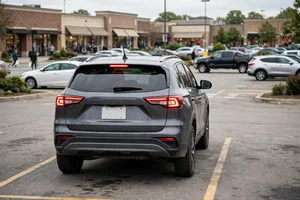
Rear cross traffic alert is a driver assist system that warns you when a car, truck, or person crosses behind your car while you reverse. Rear radar sensors in the bumper scan up to 65 feet to each side, and the car beeps and flashes a warning when it sees cross traffic. It is most useful when you back out of a parking space with a blocked view.
You back out of a parking space between two tall SUVs, and you cannot see the lane behind you. A car speeds past, and you brake just in time. That blind reverse is what rear cross traffic alert is built to fix. In this guide you will learn what is rear cross traffic alert, how the sensors work, when it warns you, how it differs from blind spot monitoring, which cars have it in 2026, and what it cannot see. You will also see how the system differs from blind spot monitoring, which cars have it as standard in 2026, and the limits that mean you still need to look both ways before you reverse. That full picture helps you use the warning with confidence.
What is rear cross traffic alert?
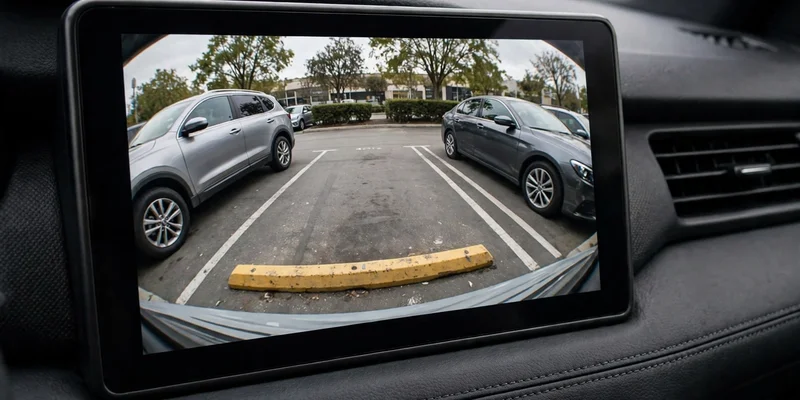
Rear cross traffic alert is a safety system that watches for traffic crossing behind your car while you reverse and warns you with a beep, a light, and a message on the screen.
The system is often called RCTA, and it works only in reverse. RCTA is part of the wider ADAS in cars family, which groups driver assist tools like forward collision warning and lane departure warning.
- RCTA watches the lane behind you. Radar in the rear bumper scans left and right while you reverse. A 2023 Toyota RAV4 scans about 65 feet to each side, which covers a full parking lane.
- It warns, it does not drive for you. A beep and a flashing arrow tell you which side the car comes from. You still need to brake, since most base RCTA systems do not brake on their own.
A real example from a grocery lot
Karen in Phoenix backed her 2022 Honda CR-V out of a space between two pickup trucks.
How does rear cross traffic alert work?
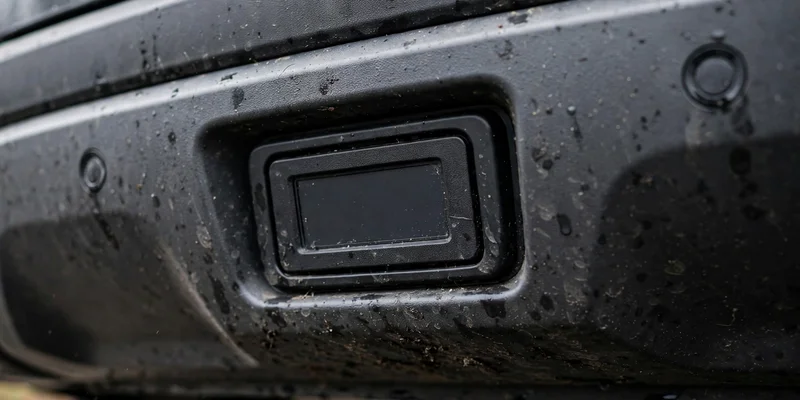
Rear cross traffic alert works with radar sensors in the rear bumper that send radio waves to each side and read the echo from moving cars.
Radar sees through light rain and dust better than a camera, and it can spot a car behind a parked SUV. How automatic emergency braking works uses a similar radar idea at the front, and RCTA applies it to the rear.
- Radar sensors: two units in the rear bumper. Each sensor covers one side, and together they scan up to 65 feet. A 2024 Subaru Outback uses two rear radar units that wake up the moment you shift to reverse.
- Speed check: only moving traffic triggers a warning. A parked car does not set off RCTA, but a car moving at 5 to 20 miles per hour does. That filter cuts false alarms from parked cars and walls.
A real example from a rainy day
Tom in Seattle reversed his 2023 Ford Escape out of a driveway in heavy rain.
When does rear cross traffic alert warn you?
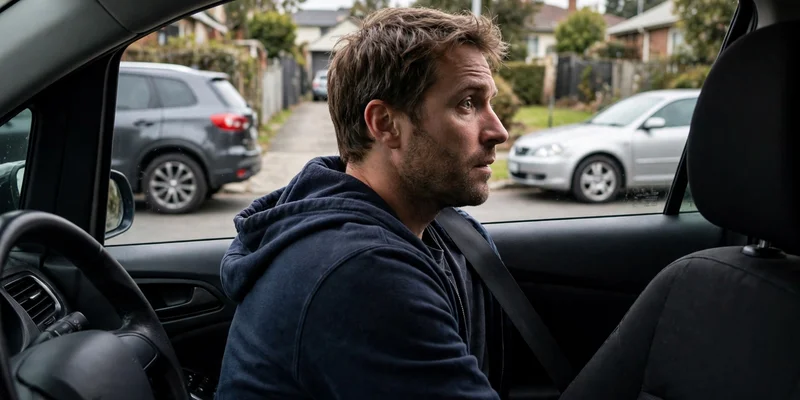
Rear cross traffic alert warns you when your car is in reverse and a vehicle crosses behind you within about 65 feet, moving fast enough to reach your path in 2 to 3 seconds.
The system stays quiet when you reverse slowly in an empty lot, since no traffic crosses your path. How forward collision warning works covers the front version of the same idea, which warns you before a crash ahead.
- Backing out of a parking space: the main trigger. A car that enters the lane 50 feet away sets off the warning in about 2 seconds. A driver in a mall lot in Atlanta gets the warning before the passing car is even in the camera view.
- Reversing from a driveway: a second common trigger. A car on the street at 25 miles per hour crosses the driveway in 3 seconds, and RCTA warns as soon as it enters the scan zone. That early warning matters when a hedge blocks your view.
A real example from a school pickup
Lisa in Denver backed out of a school pickup line in her 2024 Kia Telluride.
How is rear cross traffic alert different from blind spot monitoring?
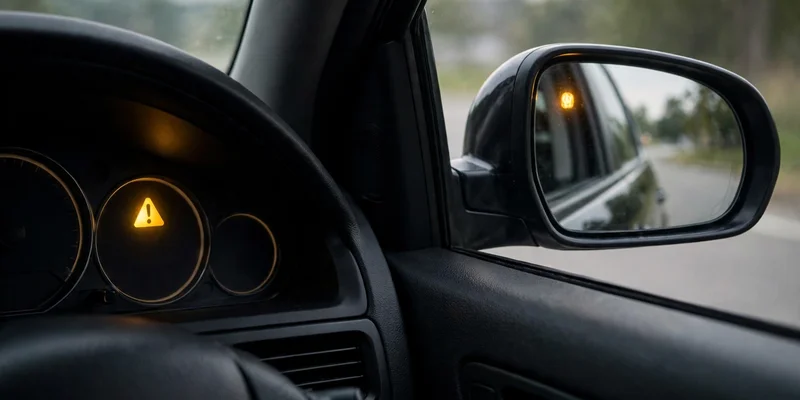
Rear cross traffic alert differs from blind spot monitoring because RCTA works only in reverse and watches traffic crossing behind you, while blind spot monitoring works while you drive forward and watches cars beside you in the next lane.
Both use the same rear radar sensors in many cars, but they run at different times and for different risks. How lane departure warning works is another forward driving aid, and it also differs from RCTA in timing and purpose.
- Blind spot monitoring: forward driving, side lanes. It warns when a car sits in your blind spot at 30 to 70 miles per hour. A 2022 Nissan Altima flashes the mirror light when a car hides beside the rear door.
- Rear cross traffic alert: reverse driving, crossing traffic. It warns when a car crosses behind you at 5 to 20 miles per hour. The same Altima beeps only in reverse, and only for traffic that crosses, not for cars parked beside you.
A real example from a highway merge
Mark in Austin used blind spot monitoring to merge on a highway in his 2023 Hyundai Tucson, and the mirror light warned him of a car in the next lane.
Which cars have rear cross traffic alert in 2026?
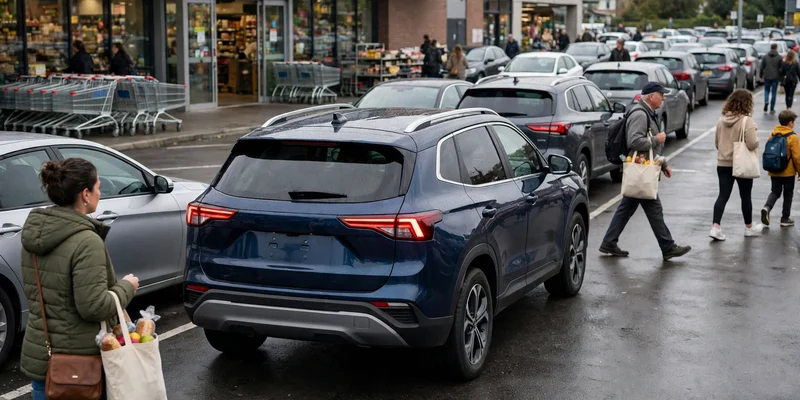
Most new cars sold in the US in 2026 have rear cross traffic alert as standard or as part of a safety package, including most Toyota, Honda, Hyundai, Kia, Ford, Subaru, and Mazda models.
Toyota Safety Sense, Honda Sensing, Hyundai SmartSense, and Subaru EyeSight all include RCTA on most trims in 2026. A scan tool can read sensor faults if the warning stops working, and our guide to what an OBD2 scanner is shows how to check for codes at home.
- Standard on most 2024 to 2026 SUVs and sedans. A 2024 Toyota Camry, a 2025 Honda Accord, and a 2026 Mazda CX-50 all list RCTA as standard. A buyer in Chicago can expect it on most cars above $28,000.
- Optional on some base trims. A base 2024 Nissan Versa lists RCTA only in a $1,200 safety package. Check the window sticker, since the same model can have it on one trim and skip it on the next.
A real example from a used car search
Sara in Miami shopped for a used 2020 Honda CR-V and a used 2017 CR-V.
What are the limits of rear cross traffic alert?
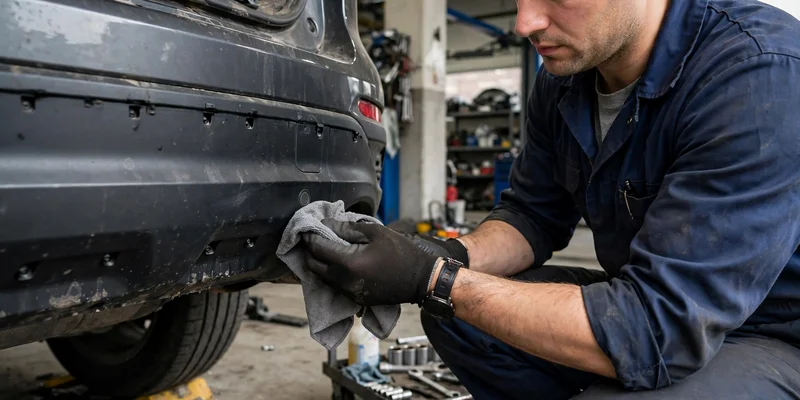
The limits of rear cross traffic alert are a short scan range, blind spots for fast cars, poor detection of small objects, and false alarms in rain and snow.
RCTA is a warning aid, not a brake or a camera replacement. Keep your brakes in good shape too, since a warning helps only if you can stop in time, so read how to tell if your brake pads are worn and how long brake pads last before you rely on any assist system. A stall in reverse can also come from the engine, not the sensor, so check how often you should replace spark plugs if the engine shakes when you shift.
- Fast cars: it may warn too late. A car at 35 miles per hour covers 65 feet in 1.3 seconds, so the warning may come as the car passes. A driver in a busy lot in Los Angeles still needs to look both ways before reversing.
- Small objects: it may miss them. A child, a dog, or a bicycle close to the bumper may not reflect enough radar to trigger a warning. A 2023 Toyota RAV4 owner in Portland found RCTA stayed quiet for a cyclist at 10 feet, while the camera showed him clear.
A real example from a false alarm
James in Chicago reversed out of a snowy driveway in his 2022 Subaru Forester, and RCTA beeped with no car in sight.
Frequently Asked Questions
What is rear cross traffic alert in simple terms?
Rear cross traffic alert is a system that warns you when a car crosses behind you while you reverse. Radar in the rear bumper scans to each side, and the car beeps and flashes an arrow when it sees traffic. It helps most when you back out of a parking space with a blocked view.
Does rear cross traffic alert brake the car for you?
Most base rear cross traffic alert systems do not brake the car, they only warn you with a beep and a light. Some cars add rear automatic braking, which can stop the car if you do not react. Check your manual, since the brake feature varies by trim and year.
Is rear cross traffic alert the same as a backup camera?
No, rear cross traffic alert is not the same as a backup camera. A backup camera shows you the view directly behind the car, while RCTA uses radar to warn you about cars crossing from the sides. Most new cars have both, and they work best together.
Can rear cross traffic alert detect pedestrians?
Some newer rear cross traffic alert systems can detect pedestrians and cyclists, but the range is shorter, near 20 to 30 feet. Older systems detect cars only. Do not rely on RCTA for people close to the bumper, and always check the camera and mirrors before you reverse.
Does rear cross traffic alert work in rain?
Yes, rear cross traffic alert works in rain, since radar sees through rain better than a camera. Heavy rain can still cause false alarms or a shorter range. Wipe the rear bumper clean, and slow down when you reverse in a storm.
How far can rear cross traffic alert see?
Rear cross traffic alert can see up to 65 feet to each side on most cars, based on the maker and model. Some cars scan 50 feet, while others scan 80 feet. The warning comes when a car will cross your path in about 2 to 3 seconds.
Why is my rear cross traffic alert not working?
Your rear cross traffic alert may not work due to dirty radar sensors, a blown fuse, a software fault, or a setting that is turned off. Wipe the rear bumper clean, check the safety settings menu, and scan for codes. A dealer can test the radar units if the warning stays off.
Is rear cross traffic alert worth it?
Yes, rear cross traffic alert is worth it for most drivers, since it cuts the risk of a parking lot crash when your view is blocked. It is standard on most new cars in 2026, so you often pay nothing extra. It works best as a backup to mirrors, a camera, and a slow reverse.
Conclusion
So, in this article, we covered what is rear cross traffic alert in detail. You now know RCTA uses rear radar to warn you when a car crosses behind you in reverse, and you know it scans up to 65 feet to each side and warns about 2 to 3 seconds before a car reaches your path. You also know how it differs from blind spot monitoring, which cars have it in 2026, and what it cannot see, from fast cars to small objects close to the bumper. Use RCTA as a helpful warning, not a replacement for your eyes. Look both ways, check the camera, reverse slowly, and let the beep give you that extra second to stop in time.