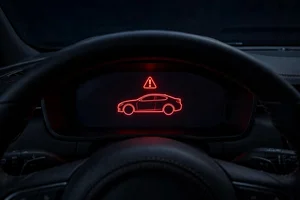
Forward collision warning uses radar and a camera to watch the road ahead and warn you before a front crash. It measures the gap and closing speed, then beeps, flashes a light, or shakes the wheel when a crash is near. It warns only and never brakes the car on its own.
You are driving home at 45 mph when the car ahead stops for a yellow light. Your eyes are on the radio for one second, and a sharp beep pulls you back just in time to brake. That quick warning is forward collision warning at work, and it is now common on most new cars sold in the US in 2026. So how does forward collision warning work? Radar and a camera track the car ahead, work out how fast the gap is closing, and warn you when the time left is too short. In this guide you will learn how the sensors judge danger, what each alert means, and when rain or glare can fool the system on a busy road.
What is forward collision warning and how does it work?
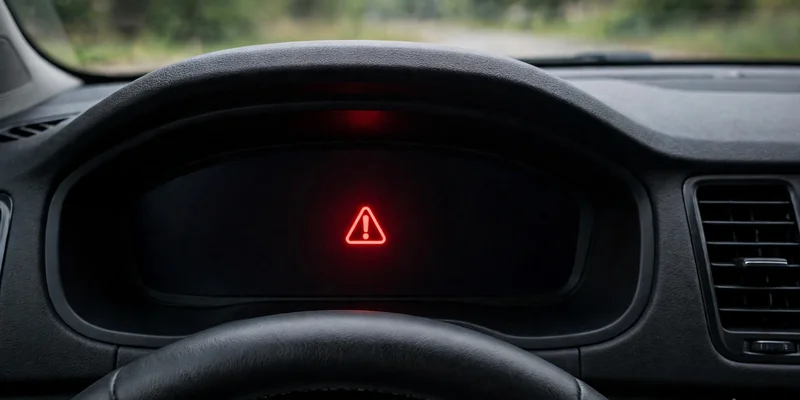
Forward collision warning warns you when your car is closing too fast on the vehicle ahead. It watches the road with radar and a camera and gives you time to brake.
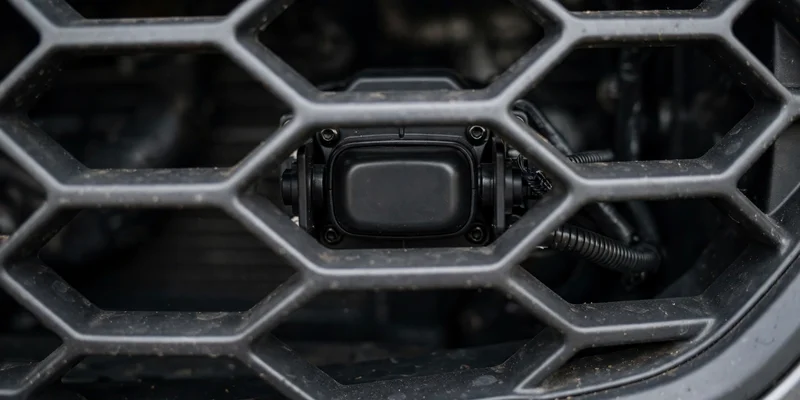
The system is part of the wider ADAS safety set in a modern car. A radar unit in the grille reads how fast its radio waves bounce back, and a camera behind the windshield checks that car’s shape and lane position.
- Radar tracks distance and speed. It measures the gap ahead and how fast it is shrinking.
- The camera confirms what is ahead. It sees cars, trucks, people on foot, and bikes.
A real example from a Dallas commute
Maria Lopez was driving at 40 mph on US-75 in Dallas when traffic stopped ahead. Her car beeped at 150 feet, and she stopped with 10 feet to spare.
How do radar and camera sensors judge a crash is coming?
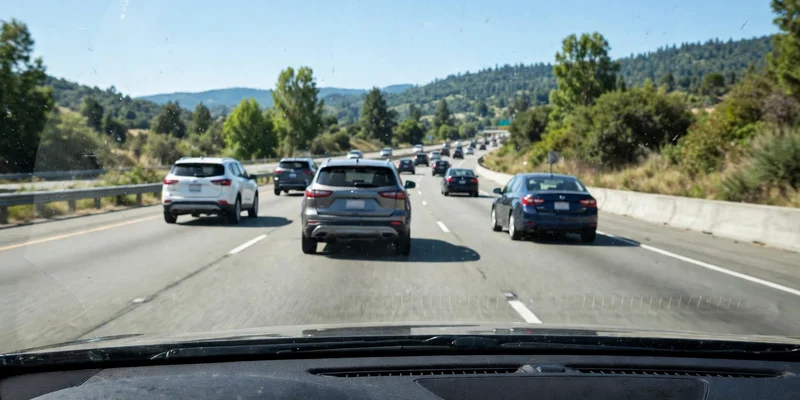
The sensors judge danger by time to collision, the gap ahead split by the closing speed. A short time left means a crash is close, so the system warns you.
If you are 120 feet behind a car and closing at 40 feet per second, you have about 3 seconds left. The system warns at about 1.5 to 2 seconds. Radar works well in the dark, while the camera tells a car in your lane from a parked car.
- Time to collision is the key number. The computer divides the gap by the closing speed to get seconds left.
- Two sensors beat one sensor. Radar gives speed and distance, and the camera checks the object is a car in your lane.
A real example from a highway in Ohio
Tom Baker was driving at 65 mph on I-71 near Columbus when a truck slowed from 60 mph to 30 mph. His system warned him 1.8 seconds before he had to brake.
What does a forward collision warning alert look and sound like?
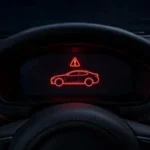
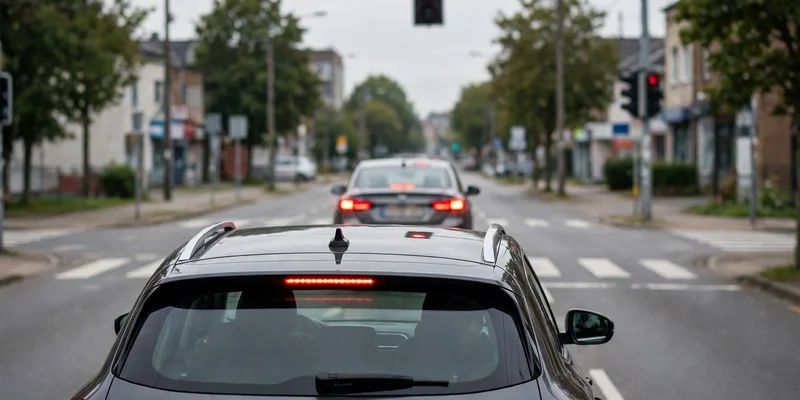
A forward collision warning alert is a loud beep, a flashing red car symbol on the dash, and on some cars a shake of the wheel. All three mean brake now.
The beep runs for 1 to 2 seconds, the red light flashes, and the wheel or seat may buzz. The alert stops once you brake or steer away.
- Audible alert: a sharp beep or chime. Most cars play a loud tone from the front speakers so you hear it over music.
- Visual alert: a flashing red symbol. A red car icon or the words Brake Now flash on the dash.
A real example from a school zone in Florida
James Carter was driving at 25 mph past a school in Tampa when a van stopped ahead. His dash flashed red and he stopped 6 feet behind the van.
What is the difference between forward collision warning and automatic emergency braking?
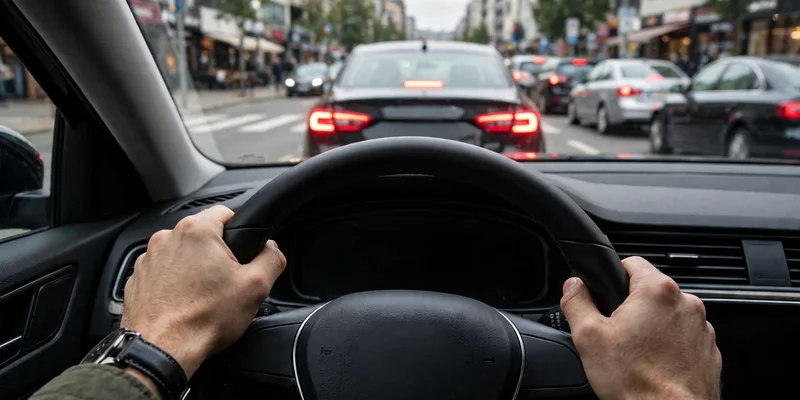
Forward collision warning only warns you, while automatic emergency braking brakes the car for you if you do not act in time. Warning is the alert layer, and braking is the action layer.
Think of the two as a team. The warning speaks first and gives you about 1.5 seconds to brake. If you do nothing, automatic emergency braking takes over, applies the brakes hard, and can stop the car or cut the crash speed by 20 to 30 mph. For brake care, read how long do brake pads last and how to tell if your brake pads are worn.
- Forward collision warning: alert only. It beeps and flashes but never touches the brake pedal.
- Automatic emergency braking: alert plus braking. It brakes hard on its own when a crash is seconds away.
- Adaptive cruise control: speed control only. It holds your speed and gap on the highway but cannot stop a crash.
A real example from a Phoenix freeway
Lisa Nguyen was driving at 55 mph on I-10 in Phoenix when a car cut in front of her. The warning beeped first, she braked late, and braking stopped her car 4 feet short of a crash.
When does forward collision warning fail or give a false alarm?
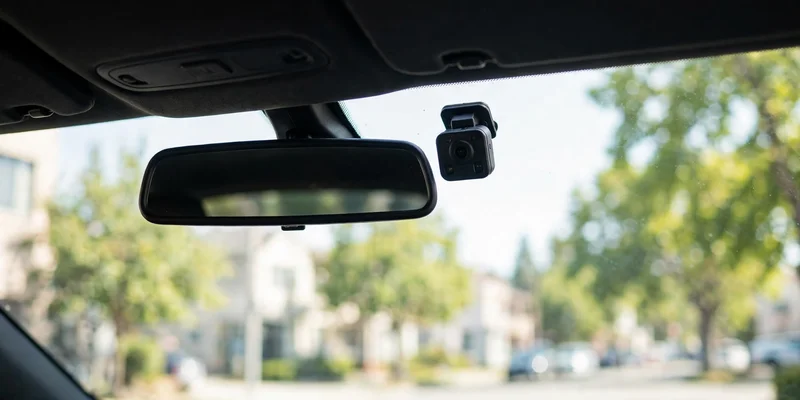
Forward collision warning fails when its radar or camera cannot see the road ahead. Heavy rain, fog, glare, snow, and a dirty sensor can blind it or set off a false alarm.
The radar sits low in the grille, so mud, snow, and ice can block it. The camera sits behind the windshield, so a dirty spot, low sun, or thick fog can blur its view. Like lane departure warning, it needs a clear view.
- Rain, fog, and snow block the view. Heavy rain scatters radar waves, fog hides the car ahead, and snow covers it.
- Glare and a dirty windshield fool the camera. Low sun into the lens can wash out the picture and hide a car.
A real example from a rainy night in Seattle
David Kim was driving at 35 mph in heavy rain on I-5 in Seattle when his system warned about a car in the next lane. He cleaned the grille sensor.
How do you turn forward collision warning on or off and set sensitivity?
You turn forward collision warning on or off from a button on the dash or steering wheel, or from the safety menu on your touch screen. That menu also sets alert timing and sensitivity.
The button often shows a small car with crash lines in front of it. On most cars the setting lives in the driver assist or safety menu, where you can pick Early, Normal, or Late warning. Early warns sooner, while Late warns only when a crash is very close. A weak battery can trigger false warnings, so check how to tell if your car battery is bad if warning lights pop up. After a windshield swap, the camera needs a reset, and an Autel diagnostic tool is part of the job at many shops.
- Use the button for a quick change. Press it once to switch the system off for that drive, and it turns back on next start.
- Use the menu for warning timing. Pick Early for city traffic, Normal for most driving, or Late if false alarms annoy you most.
A real example from a Texas ranch road
Mark Evans turned his system to Late on a ranch road near Austin because it beeped at cattle gates. A week later he set it back to Normal.
Frequently Asked Questions
What is forward collision warning?
Forward collision warning is a driver aid that warns you when your car is closing too fast on the vehicle ahead. It uses radar and a camera to track the gap, then beeps and flashes a red light. It warns only and never brakes the car.
How does forward collision warning work at night?
It works well at night because radar does not need light to track the car ahead. The camera gets less detail in the dark, so the system leans more on radar after sunset. Headlights still help the camera see the car ahead.
Does forward collision warning brake the car?
No, forward collision warning does not brake the car. It only warns you with a beep, a flashing light, or a wheel shake, and you must brake yourself. Automatic emergency braking is the system that brakes if you do not act in time.
Why does my forward collision warning keep beeping?
It beeps when the gap ahead closes fast, which happens a lot in stop and go traffic. A dirty sensor, a high setting, or a car that cuts in front of you can also set it off. Clean the grille and windshield first, then set it to Late.
How does forward collision warning work in the rain?
Rain makes the job harder, since water scatters radar waves and spray coats the camera lens. Light rain is fine, and the system keeps working. In heavy rain or fog it may warn late, warn about the wrong car, or switch itself off.
Can forward collision warning detect people on foot?
Yes, many new cars can detect people on foot and bikes with the front camera and radar. The system warns you when a person steps into your path at city speeds, often below 40 mph. Older cars may only detect other cars.
Does forward collision warning work on all cars?
No, forward collision warning is standard on most new cars sold in the US in 2026, but many older cars lack it. It grows with automatic emergency braking, which becomes mandatory on new US vehicles by 2029 under a NHTSA rule. Check your trim and year.
Is forward collision warning worth keeping on?
Yes, forward collision warning is worth keeping on. It costs you nothing to run, it only speaks up when a crash is near, and safety data shows it cuts front crashes. If the beeps annoy you, switch the alert to Late instead of turning it off.
Conclusion
So, in this article, we covered how does forward collision warning work in detail. You now know radar and a camera track the car ahead, the computer works out time to collision, and the system warns you with a beep, a flashing light, or a wheel shake. You also know it only warns, while automatic emergency braking does the braking, and that rain, fog, glare, and a dirty sensor can blind it. My advice is simple: leave the system on, set it to Normal, and keep the grille and windshield clean. A short beep at the right moment can give you the seconds you need to stop. Electric cars ship with these safety systems as standard, so see do electric cars need oil changes for more on EV care.