
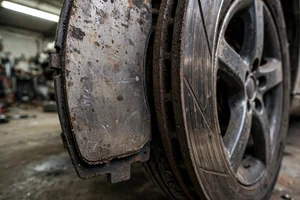
Worn brake pads show up as squealing, grinding, vibration, and longer stopping distances. You can check pad thickness at home through the wheel spokes, and most pads need replacing below 3mm. This guide explains each warning sign, how to inspect your pads, typical lifespan of 30,000 to 70,000 miles, 2026 replacement costs in the US, and when worn pads become unsafe to drive on.
Your brakes make a sound you have never heard before, and now every stop feels wrong. That noise is often your car telling you how to tell if your brake pads are worn, and it pays to listen early. Brake pads are the friction material that presses against the disc every time you slow down, and that material wears thinner with every mile. Most drivers miss the early signs because the change is slow, then one day the squeal turns into a grind.
Here is the thing: a worn pad is cheap to fix, but a pad worn down to bare metal can score your rotors, double your bill, and stretch your stopping distance when you need it most.
In this guide you will learn the six warning signs, a home check you can do in five minutes, how long pads last, what a 2026 brake job costs, and when you should stop driving and get it fixed.
What are the signs your brake pads are worn?
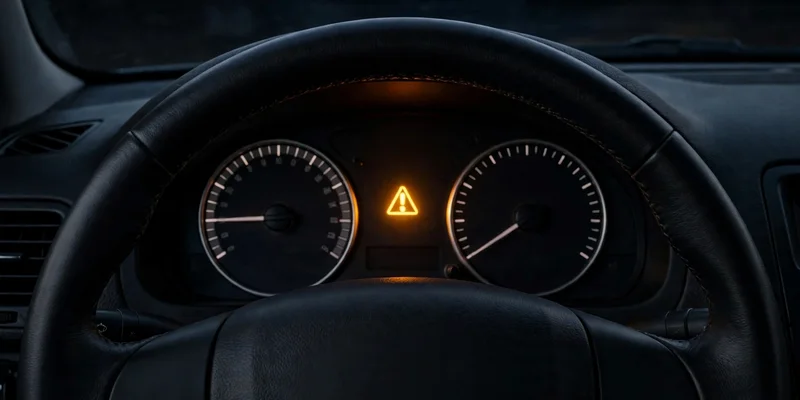
The clearest signs are a high pitched squeal when you brake, a grinding sound, a brake warning light, vibration in the pedal, and a car that takes longer to stop.
- Squealing when you press the brake – Most pads have a small metal wear indicator that touches the rotor when the pad gets thin, and that contact makes a sharp squeal. If you hear it every time you brake, your pads are close to the limit.
- Grinding means the pad material is gone – Bare metal scrapes the rotor, and that sound means damage is already happening. A shop visit is urgent at this point, not next month.
- The pedal or steering wheel shakes when you brake – Uneven pad wear can leave the rotor surface rough, so you feel a pulse through the pedal at highway speed. A car makes clicking noise when turning is a different fault, so check which sound matches yours.
- Stopping takes longer than it used to – Worn pads grip less, so your car needs more road to stop from 60 mph. Tests show a worn set can add 20 feet or more to a stop, and that gap matters in traffic.
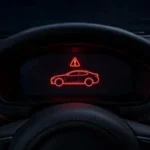
- The brake warning light comes on – Some cars have a sensor in the pad that trips the dash light when the pad gets thin. Do not ignore it, since the light means the pad is near the end of its life.
The 3mm rule
New pads start at 10 to 12mm thick, and most mechanics say replace them at 3mm or less. That number is the line between a cheap pad job and a costly rotor job.
How can you check your brake pads at home?
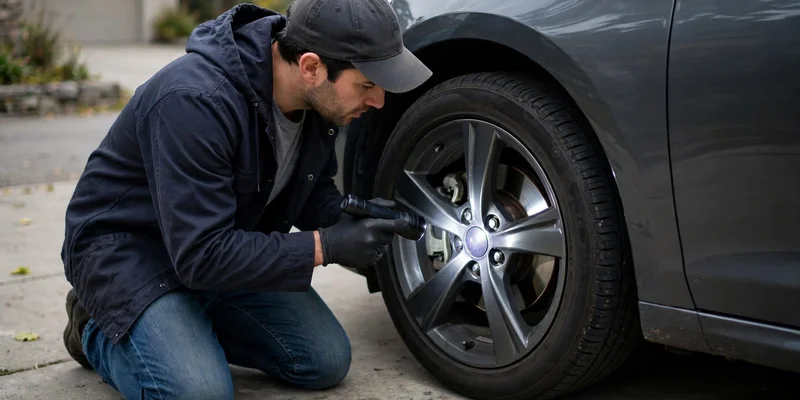
Look through the wheel spokes with a flashlight and check the pad thickness against the rotor. If the friction material is under 3mm thick, book a replacement.
- Park on flat ground and turn the wheel – Turn the steering wheel fully to one side so you can see the front brake through the spokes. A flashlight helps a lot here, since the caliper sits in shadow.
- Find the pad and judge its thickness – You will see the metal disc, the caliper, and a thin strip of pad material pressed against the disc. New pads start at 10 to 12mm thick, and most mechanics say replace them at 3mm or less.
- Check both sides of the car – Pads can wear unevenly, so a good pad on the left does not prove the right side is fine. Look at all four wheels if you can, and note which one looks thinnest.
- Listen and feel on a short test drive – A check transmission fluid at home guide shows the same careful routine, and your brake check works the same way. Drive slowly on a quiet street, brake gently, and note any squeal, pull to one side, or soft pedal.
- Know when to let a shop measure it – If you cannot see the pad clearly through your wheels, a tire shop will measure it free in most US towns during a tire rotation. Ask them to write down the thickness in mm for each wheel.
What does worn brake pad noise mean?
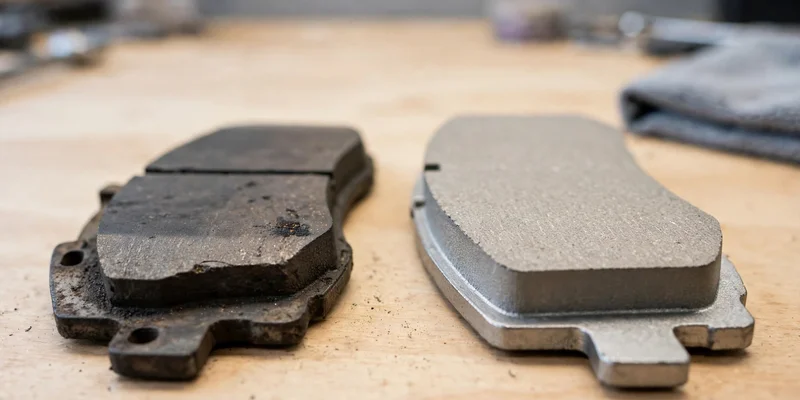
Squealing means the wear indicator is touching the rotor and your pads are nearly done. Grinding means the pad material is gone and metal is scraping the rotor.
- A light squeal at low speed is the early warning – The wear indicator is a thin metal tab built into the pad, and it sings when about 2 to 3mm of pad is left. You still have time, but plan the job within the next 1,000 miles.
- A constant squeal that never stops is more serious – If the noise stays even when you are not braking, the pad may be stuck in the caliper or worn past the indicator. Book a shop visit this week.
- Grinding is the sound of metal on metal – The friction material has worn away, and the steel backing plate is cutting grooves into the rotor. Every mile you drive like this adds cost, since scored rotors often need replacing too.
- A clicking or rattling sound points to loose hardware – Worn pads can move in the caliper, and a loose clip can rattle over bumps. It is not the same as a car makes clicking noise when turning fault, which comes from a worn CV joint, so note when the sound happens.
- Do not mask the noise and keep driving – Some drivers turn the radio up and forget the squeal, then face a $600 bill instead of a $200 one. Noise is your cheapest warning, so act on it while the fix is still small.
How long do brake pads last?
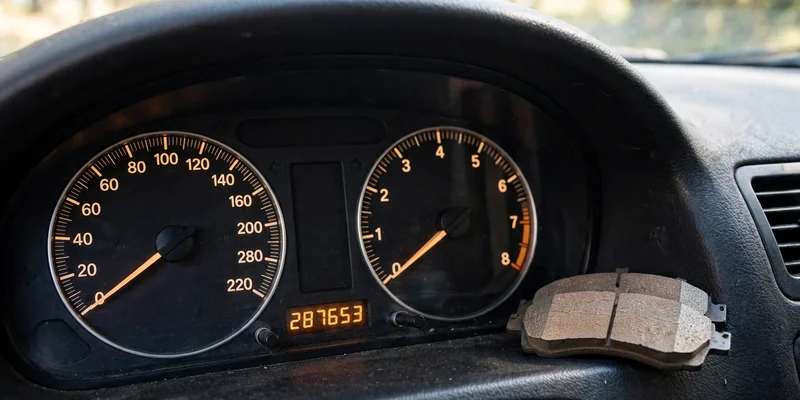
Most brake pads last 30,000 to 70,000 miles, and city drivers wear them out faster than highway drivers.
- City driving wears pads fastest – Stop and go traffic means you brake every few hundred feet, so a city car can need new pads at 30,000 miles. A driver who commutes 15 miles through town each day will see that wear add up fast.
- Highway driving stretches pad life – Long steady runs mean far fewer stops, so highway cars often reach 60,000 to 70,000 miles on one set. Trucks and SUVs wear pads faster, since their weight asks more of the brakes.
- Your driving style matters as much as mileage – Hard late braking wears pads twice as fast as smooth early braking, and riding the pedal downhill heats the pads and shortens their life. Coasting to a red light instead of braking late can add thousands of miles.
- Pad material changes the lifespan – Ceramic pads often last 60,000 to 70,000 miles and stay quiet, while cheaper organic pads may last only 30,000 to 40,000 miles. Semi metallic pads sit in the middle, and they suit heavier cars well.
- Check them at every tire rotation – A quick look every 6,000 to 8,000 miles catches wear before it turns into damage. That habit is cheap, and it keeps a small job from turning into a rotor job. Our guide to bad oxygen sensor symptoms shows the same early check habit for another part that wears out with age.
How much does it cost to replace brake pads in 2026?
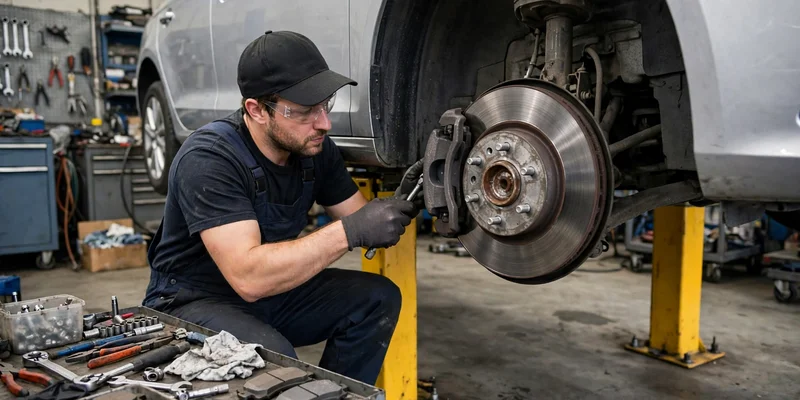
Replacing brake pads costs $150 to $300 per axle for pads only in the US in 2026, and $300 to $600 per axle when the rotors need replacing too.
- Pads only, fitted at an independent shop, runs $150 to $300 per axle – That covers a quality pad set and about one hour of labor, and most shops finish both front wheels in under 90 minutes.
- Add new rotors and the bill rises to $300 to $600 per axle – Rotors cost $50 to $150 each, and a shop will suggest them if yours are scored, warped, or below minimum thickness. The auto repair shop profit margin guide explains how shops price parts and labor on jobs like this.
- Dealers charge more than independent shops – A dealer brake job often runs $350 to $700 per axle, and the parts are the car maker’s own brand. An independent shop can fit the same quality pads for less, so get two quotes before you book.
- DIY replacement costs $50 to $150 for the parts – If you have a jack, a wrench set, and an hour, a pad swap on most cars is a fair home job. The cost to open auto repair shop guide covers what a full shop spends on tools and labor, and that shows why a home job saves so much.
- Always replace pads in axle pairs – Do one axle at a time, both wheels together, so braking stays even. A single new pad next to a worn one can pull your car to one side under hard braking.
Front pads vs rear pads
Front pads do most of the braking, so they wear out first on most cars. Rear pads often last twice as long, which is why shops check the front axle first.
Can you drive with worn brake pads?
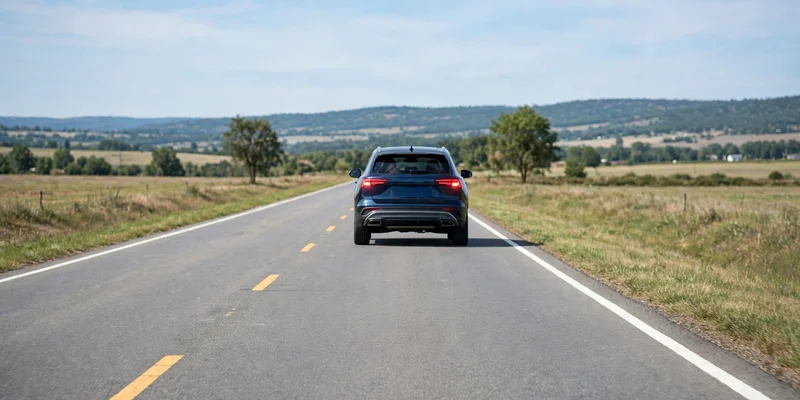
You can drive a short distance with squealing pads, but you should not drive at all once they grind. Grinding means metal is cutting into your rotors and your stopping distance is growing.
- Squealing pads still stop the car, so short trips are fine – Drive to the shop within the next few days, keep your speed down, and leave extra space ahead. A driver who heard the squeal on Monday and booked a Tuesday fix spent $180, and that is the smart way to handle it.
- Grinding pads are a stop driving sign – The backing plate is scoring the rotor, and each stop adds damage and cost. Call for a tow or drive slowly to the nearest shop, and do not take the highway.
- Worn pads stretch your stopping distance – Tests show a car with pads at 2mm can need 15 to 20 feet more to stop from 60 mph than the same car with fresh pads. In wet weather that gap grows, and it can be the gap between a near miss and a crash.
- A soft or sinking pedal means stop right away – That can point to a fluid leak or air in the lines, and it is more serious than worn pads alone. Pull over safely, turn the car off, and call for help.
- Older cars need the same care – If you drive a classic, the classic car vs antique car difference guide can help you plan its upkeep, and the how to tell if your alternator is bad guide covers another warning light you should never ignore. A car smells like burning rubber can also point to a brake fault, so check both before your next long drive.
How do I know if my brake pads are worn without removing the wheel?
Look through the wheel spokes with a flashlight and find the pad pressed against the disc. If the friction material looks thinner than 3mm, about the width of two coins stacked, it is time for new pads. A squeal when you brake and a dash warning light are two more signs you can spot without any tools.
How thin is too thin for brake pads?
Most mechanics say brake pads are too thin at 3mm or less, and many pads start life at 10 to 12mm thick. At 3mm you still have safe braking, but the wear speeds up from there. Below 2mm the risk grows fast, and at 1mm or less the metal backing can touch the rotor.
How long can you drive on squealing brake pads?
You can drive about 1,000 miles after the squeal starts, but you should book the repair within a week. The wear indicator means 2 to 3mm of pad is left, and city driving eats that fast. If the squeal turns into a grind, stop driving and get the car to a shop right away.
What happens if you ignore worn brake pads?
Ignoring worn brake pads scores the rotors, stretches your stopping distance, and can overheat the brakes until they fade. A $150 to $300 pad job can grow into a $600 rotor job, and in the worst case the caliper itself gets damaged. Worn pads also raise the risk of a crash, since the car needs more road to stop.
How much does a brake pad replacement cost in 2026?
A brake pad replacement costs $150 to $300 per axle for pads only at an independent shop in the US in 2026. Adding new rotors brings the bill to $300 to $600 per axle, while dealers often charge $350 to $700. A home job with parts alone costs $50 to $150, plus about an hour of your time.
Do brake pads wear out faster in city driving?
Yes, brake pads wear out much faster in city driving, since stop and go traffic means you brake every few hundred feet. A city car can need new pads at 30,000 miles, while a highway car can reach 70,000 miles on the same pads. Smooth early braking and coasting to red lights can stretch pad life by thousands of miles.
Can worn brake pads cause vibration when braking?
Yes, worn brake pads can cause vibration, since uneven wear leaves the rotor surface rough and the pedal pulses as the pad grips and slips. You will feel it most at highway speed when you brake gently. A warped rotor can cause the same shake, so a shop should measure both the pads and the rotors.
Should I replace brake pads and rotors together?
You should replace rotors with the pads only when the rotors are scored, warped, or below minimum thickness. Healthy rotors can last through two sets of pads, so a shop should measure them first. If the rotors are damaged, new pads on old rotors will wear fast and brake poorly, so replace both together then.
Conclusion
So, in this article, we covered how to tell if your brake pads are worn in detail. You now know the warning signs to watch for, from the squeal of the wear indicator and the grind of bare metal to vibration, a longer stop, and the dash warning light. You also know how to check pad thickness at home, how long pads last, and what a 2026 brake job costs in the US. My advice is simple: act on the squeal, not the grind. A $150 to $300 pad job now beats a $300 to $600 pad and rotor job later, and it keeps your stopping distance short when it counts. If this guide helped you, check your pads this weekend, and share the guide with a friend whose brakes have started to sing.


2 thoughts on “How to Tell If Your Brake Pads Are Worn”
Pingback: How Long Do Brake Pads Last? 2026 Guide
Pingback: How Does Lane Departure Warning Work