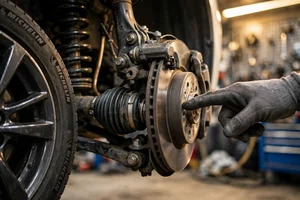
A car makes clicking noise when turning most often because of a worn CV joint, and this guide walks you through the other suspects too. You will learn how to tell a bad CV joint from a wheel bearing or a sway bar link, what a CV axle replacement costs in the US in 2026, and when the noise means you should stop driving right away.
You turn the wheel to pull into a parking spot and hear a sharp click, click, click from the front of your car. You straighten the wheel and the sound fades away. Here is the thing: that sound is your car asking for help, and the longer you wait, the bigger the bill gets. A car makes clicking noise when turning for a few clear reasons, and the most common one is a worn CV joint on the front axle. The sound itself tells you a lot. How fast it clicks, when it gets louder, and which way you turn all point to the part that is failing. In this guide, you will learn how to pin down the cause, what each fix costs in the US in 2026, and how to keep the noise from coming back.
What causes a car to make a clicking noise when turning?
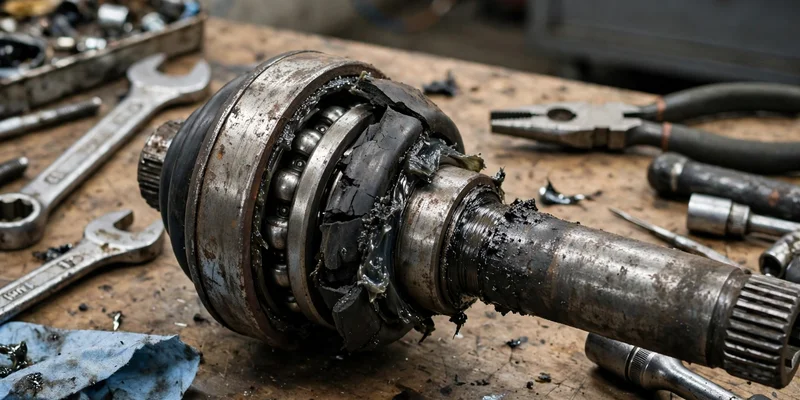
In most cases, a worn outer CV joint is the cause. It bends each time you steer, and once worn, the balls inside click as they roll over the worn spots.
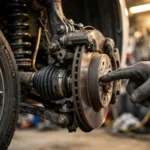
Each front axle has a CV joint at both ends. The outer joint sits near the wheel and bends sharply when you turn. A rubber boot holds grease inside it, and once the boot tears, dirt gets in and the joint wears out fast.
Why the outer joint wears out first
- Torn boots cause most failures. A small crack lets grease spray out, and a joint can start clicking within 5,000 to 10,000 miles.
- High miles wear the joint down. Most last 100,000 to 150,000 miles, and cars that turn tight daily in city traffic wear them faster than highway cars.
- Front wheel drive cars show it first, since the axle steers and drives at once, and gas cars and electric vehicles use the same setup.
How can you tell if it is a bad CV joint?
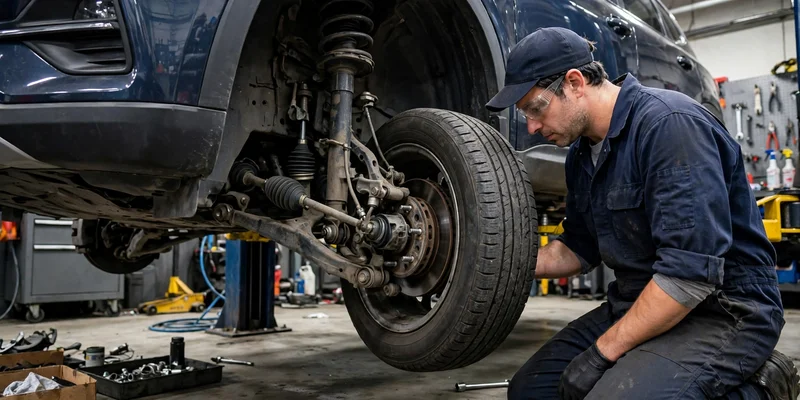
Turn the wheel all the way to one side and drive slowly in a circle. If the clicking gets faster as you speed up and louder on sharp turns, you are hearing a bad outer CV joint.
Find an empty parking lot, turn the wheel to full lock, and drive at 5 to 10 mph in a slow circle. A bad joint clicks in a steady rhythm that matches wheel speed. Try both directions, since the outside joint works hardest.
Two more checks you can do at home
- Look for grease near the front wheels. A torn boot sprays dark grease onto the wheel and nearby parts, and that stain shows the joint has lost protection.
- Feel for a shake when you speed up. A worn joint can shudder under hard acceleration, and an Autel diagnostic tool can read wheel speed data that points to the weak side, while an automotive oscilloscope kit can check the sensor signal.
What other parts can cause a clicking noise when you turn?
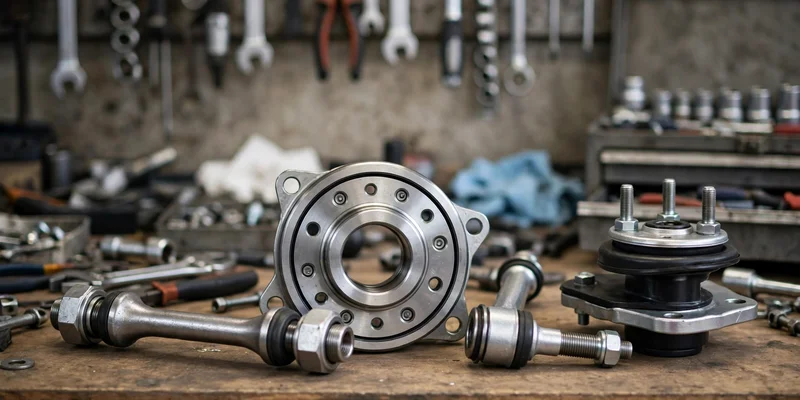
Worn strut mounts, sway bar links, wheel bearings, loose tie rod ends, low power steering fluid, or a damaged wheel can all make noise when you turn.
Not every turning noise is a CV joint. A single clunk points to suspension, a steady grind points to a wheel bearing, and a groan points to power steering.
How to match the sound to the part
- Sway bar links clunk once over bumps and turns. A 2018 Toyota RAV4 with 80,000 miles often needs new ones.
- Wheel bearings grind or hum as speed rises. The noise grows with speed, changes when you steer left or right, and stays when you straighten the wheel.
- Classic cars click too. Old boots crack with age, so learn what a matching numbers classic car means before you swap parts, since the wrong parts can hurt its value.
Is it safe to drive with a clicking noise when turning?
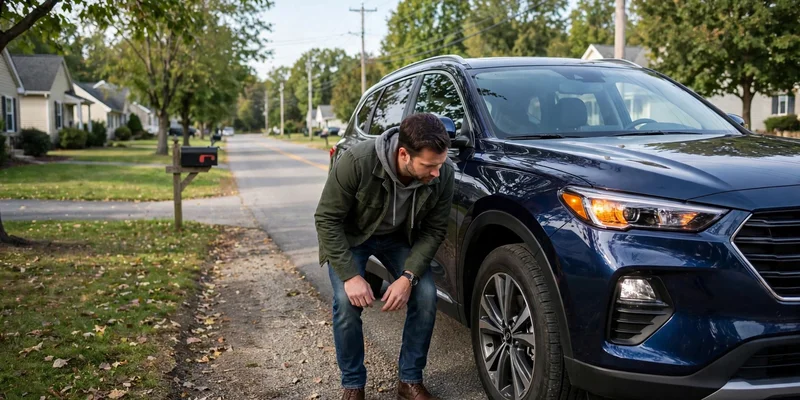
A light click for a few days is not an emergency, but do not ignore it. A worn CV joint can break with little warning, and the car then loses power to the wheels.
A joint that only clicks on sharp turns can last a few hundred miles, yet the wear only moves one way. Heat, dirt, and missing grease grind it down each drive.
When to stop driving right away
- Stop and call a tow truck if the axle clunks hard or the car shakes. The joint is close to breaking, and a break at highway speed can damage the brakes and strut.
- Get it checked within a week if the click is steady. A shop can confirm the bad side in 30 minutes, and a $300 to $800 axle swap beats a tow bill.
- Weigh the car, not just the part. If the repair costs more than your old car is worth, read how car dealerships make money on used cars first.
How much does it cost to fix a clicking noise when turning?
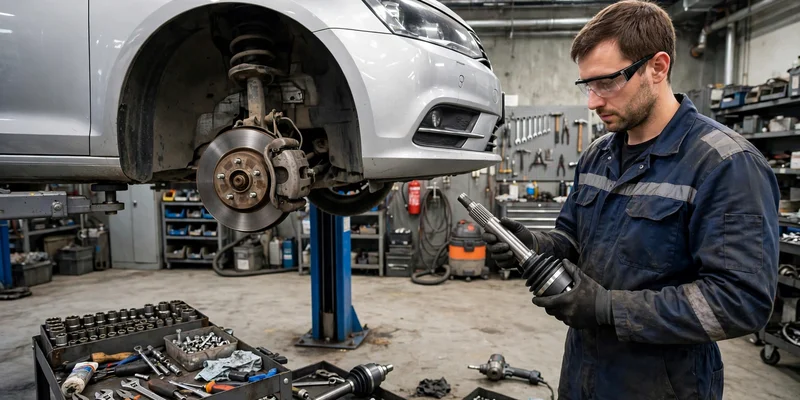
Most drivers pay $300 to $800 per side for a CV axle replacement, parts and labor included. Other fixes run lower, as the table below shows.
| Repair | Typical US cost |
|---|---|
| CV axle replacement (per side) | $300 to $800 |
| CV boot replacement only | $150 to $400 |
| Sway bar links (pair) | $100 to $250 |
| Wheel bearing (per wheel) | $250 to $500 |
| Strut mount (per side) | $200 to $450 |
Labor is the biggest part of the bill. Most shops charge $100 to $180 per hour, and an axle swap takes 1.5 to 3 hours. A dealer often charges $600 to $1,200 per side, while an independent shop charges less.
- Get two quotes before you book. Ask if the price covers a new axle or a rebuilt one, and if you run a small shop, automotive accounting software can track parts and labor on jobs like this.
- Think about the car, not just the part. If you are weighing a new car instead of a repair, the car loan interest deduction 2026 rules may cut the cost of a new loan.
How do you prevent clicking noises when turning?
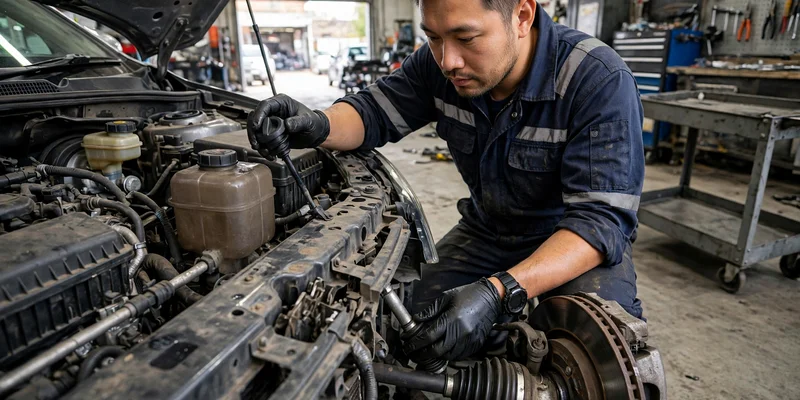
Check the CV boots at every oil change and replace a torn boot fast. That habit stops most CV joint failures before they start.
A boot swap runs $150 to $400 while a full axle runs $300 to $800, so catching a tear early keeps the joint clean and quiet for years.
Habits that keep axles quiet
- Look at the boots every 5,000 miles. Ask the shop to check them at each oil change, since a small crack is easy to miss.
- Do not hold full lock at speed. Cranking the wheel to the stop and hitting the gas stresses the outer joint most, so ease off in tight turns.
- Know your options before you buy a new car. If repair bills keep piling up, check the electric car tax credit 2026 USA rules first.
Frequently Asked Questions
My car makes clicking noise when turning. What is wrong with it?
The most likely cause is a worn outer CV joint on the front axle, and the click gets faster as you speed up and louder on sharp turns. Other suspects are sway bar links, strut mounts, and wheel bearings. A short road test will point to the part.
What does a bad CV joint sound like?
A bad outer CV joint makes a steady click or pop that matches wheel speed, and it gets louder on sharp turns at low speed. You hear it most in parking lots. A bad inner joint shakes the car under acceleration instead.
Is it safe to keep driving if my car makes clicking noise when turning?
Short trips at low speed are usually fine for a few days, but book a shop visit right away. The joint wears a little more on every drive, and a break can leave you with no power to the wheels. If the car shakes, stop and call a tow truck.
How long does a CV axle replacement take?
Most shops finish one axle in 1.5 to 3 hours, so you can often drop the car off in the morning and pick it up the same day. Rust and tight bolts can add an hour on older cars in the Rust Belt.
How much does it cost to replace a CV joint?
Most US shops charge $300 to $800 per side for a full CV axle swap, parts and labor included. A boot-only fix runs $150 to $400 if the joint is still quiet. Dealers cost more, so get two quotes first.
Can a bad wheel bearing make a clicking noise when turning?
A wheel bearing usually hums or grinds rather than clicks, and the noise grows with speed and changes when you steer left or right. A click that only shows up on sharp low speed turns points to a CV joint instead.
Can low power steering fluid cause a clicking noise?
Low power steering fluid usually causes a groan or whine when you steer, not a sharp click. Check the reservoir under the hood and top it up if it sits below the mark. If it keeps dropping, look for a leak.
Should I replace both CV axles at the same time?
You only need to replace the bad side, since the other axle may still have years of life left. Many drivers replace both on cars past 150,000 miles to avoid a second visit. Ask the shop to check both boots first.
Conclusion
So, in this article, we covered car makes clicking noise when turning in detail. You now know the most likely cause is a worn outer CV joint, how to test it in a parking lot, and what the other suspects sound like. You also know the real US costs, from $100 to $250 for sway bar links to $300 to $800 per side for a CV axle. My advice is simple: do the slow circle test this week and look for grease near the front wheels, because catching a torn boot early can save you hundreds of dollars. If the clicking is loud or your car shakes, book a shop visit today and do not wait for the axle to break. Share this guide with a friend whose car clicks on turns.