
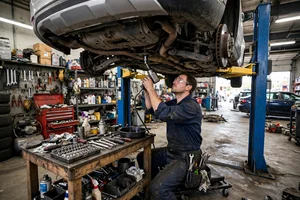
The auto repair shop profit margin for most US shops sits between 20 and 30 percent net in 2026, with well run shops reaching 30 percent or more. This guide shows the real numbers behind parts and labor, the costs that eat into earnings, and what a typical shop owner takes home each year. You will also learn the steps that lift a thin margin into a healthy one.
Every shop owner asks the same question: how much money does a repair shop really keep after the bills are paid? The auto repair shop profit margin is the number that answers it, and it is tighter than most people outside the trade expect. A shop can bill $100,000 in a month and still struggle if parts, labor, rent, and tool costs eat up most of it. In 2026, the average US shop keeps 20 to 30 cents of every dollar as net profit, while the rest pays for parts, wages, rent, insurance, and equipment. Labor rates have passed $150 an hour in many cities, so owners who do not track their numbers can work hard all year and end up with little.
What is the average profit margin for an auto repair shop?
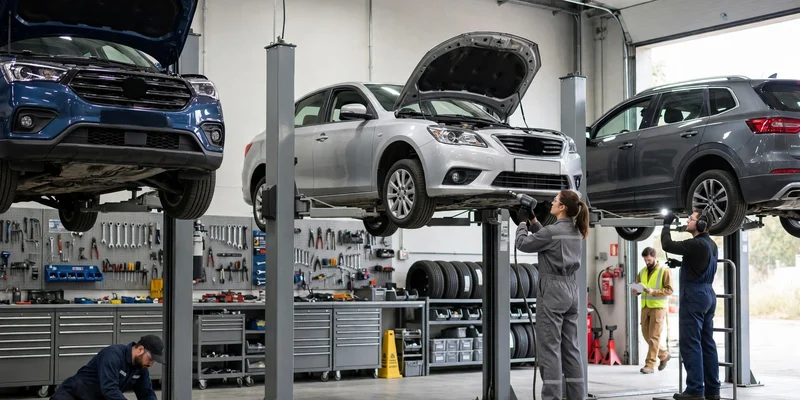
Most US shops earn a net profit margin of 20 to 30 percent in 2026. Gross margin on parts and labor runs near 50 to 60 percent before rent, wages, insurance, and overhead take their share.
The gap between gross and net is the key point. A shop might mark up a $100 part to $150 and bill labor at $160 an hour. Then rent, wages, insurance, and supplies pull the net figure down.
Parts markup vs labor margin
- Parts usually carry a 40 to 60 percent markup over cost. Brake pads sit at the lower end, while dealer only parts and sensors sit at the higher end.
- Labor is the real money maker. A tech who bills 6 hours a day at $160 an hour brings in $960, while the shop pays $30 to $45 an hour in wages.
A real example from a mid-size shop
Take a 6 bay shop in Ohio that bills $120,000 a month. After parts, wages, and overhead of $94,000, it keeps $26,000.
What affects an auto repair shop’s profit margin most?
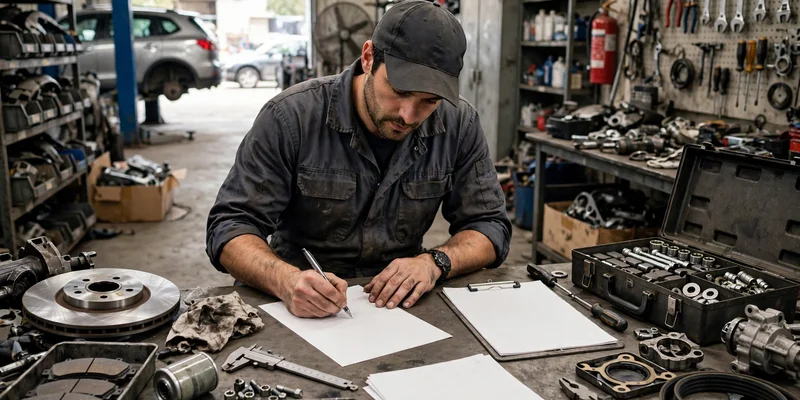
Labor efficiency and parts pricing affect the margin most, since labor and parts make up 60 to 70 percent of costs.
- Technician efficiency sets the ceiling. A tech who bills 7 hours in an 8 hour shift earns far more than one who bills 4, and the gap between the best and worst techs is about 20 percent.
- Parts pricing is the second lever. Shops that use a fixed markup matrix earn more than shops that guess, and automotive accounting software shows which parts lines lose money.
Diagnosis speed matters too
Fast diagnosis protects the margin on every job. A tech who finds the fault in 30 minutes instead of 2 hours bills the same fee with far less cost, and an Autel diagnostic tool pays for itself on electrical faults. Comebacks hurt too: a 2 hour free rework costs about $320. The same holds for a car makes clicking noise when turning complaint, where a quick road test points straight at the CV joint.
How much profit does a typical auto repair shop make per year?

A typical US shop with $1 million in yearly sales earns $200,000 to $300,000 in net profit before owner pay and taxes. Small shops often earn $80,000 to $150,000, while large shops can pass $500,000.
| Shop size | Yearly sales | Net profit |
|---|---|---|
| 1 to 2 bays | $300,000 to $500,000 | $60,000 to $125,000 |
| 3 to 5 bays | $600,000 to $1,000,000 | $120,000 to $300,000 |
| 6 to 10 bays | $1,000,000 to $2,000,000 | $200,000 to $500,000 |
Owner pay is a separate line. Many owners take a salary of $80,000 to $120,000, then take the rest as a distribution, so total cash can reach $250,000 to $350,000 in a strong year. The way car dealerships make money on used cars shows how a used car side line adds more.
- Sales volume drives the yearly figure more than the margin rate. A shop at 20 percent on $1.5 million earns $300,000, while a shop at 30 percent on $600,000 earns only $180,000.
What is a good profit margin for a small repair shop?
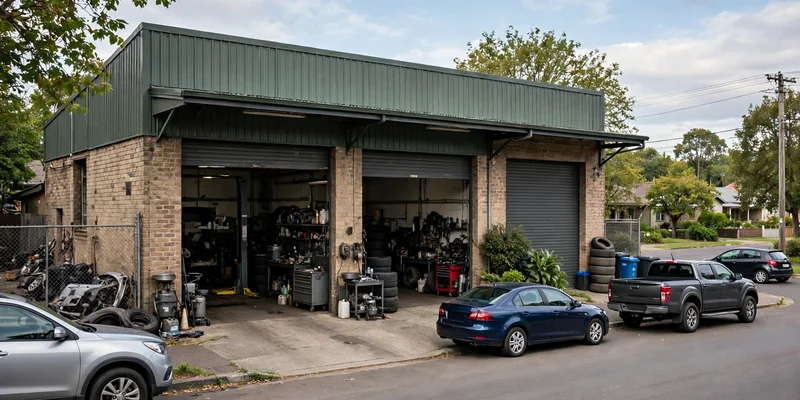
A good net margin for a small shop is 20 to 25 percent, and 25 to 30 percent is excellent. Below 15 percent, one slow month or one big repair can wipe out the year’s profit.
Small shops have an edge on costs. A 2 bay owner operated shop has no service manager salary and low rent, so it can hit 25 percent on $500,000 in sales.
- Compare your margin to the 20 percent line. Above 20 percent after paying yourself a fair wage, your shop is healthy. Below it, check labor billing first.
- Watch the gross margin on every job. A $500 job with $350 in parts and labor cost leaves only $150 gross.
Side services can lift a small shop
Small shops often add a second service to use dead hours. Detailing on slow afternoons can pick up real cash, and you can read how to start a car detailing business from home to see the startup costs. The guide to store a classic car for winter shows a seasonal service for classic car owners.
How can an auto repair shop increase its profit margin?
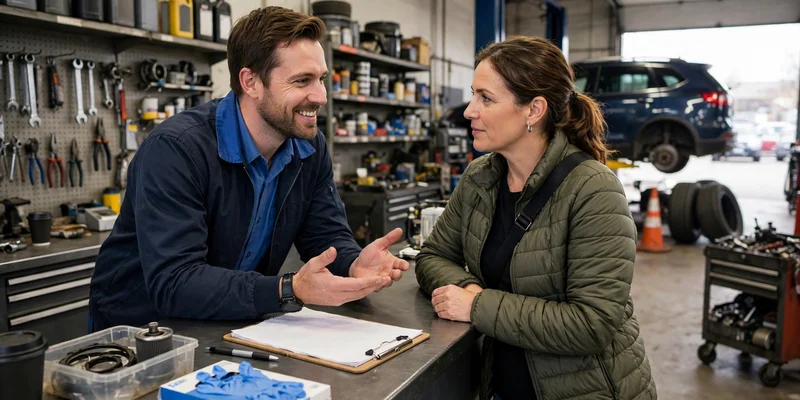
Raise the labor rate, bill every hour, and price parts with a fixed markup. Shops that do all three often lift their net margin by 5 to 10 points.
- Raise the labor rate in small steps. A $10 rise on a $150 rate adds about 7 percent to labor revenue, and most customers accept it when the shop explains it.
- Bill diagnostic time every time. Giving away 30 minutes of free diagnosis per car loses 10 to 15 billed hours a week, or $1,500 to $2,400 at a $160 rate.
- Use a parts markup matrix and stick to it. A fixed matrix stops discounting to win a job, and it keeps the gross margin on parts near 50 percent.
Learn the new EV work
Electric cars need less routine work, yet they still need tires, brakes, suspension, and cooling work. Our guide on why electric cars lose range in winter explains the cause, and the guide to charge an electric car at home answers the next question.
Is owning an auto repair shop profitable in 2026?

Yes, owning an auto repair shop is profitable in 2026 for owners who run it like a business, with a typical net margin of 20 to 30 percent. Shops that track numbers and keep techs busy earn $200,000 or more a year.
Demand is strong. The average car on US roads is now over 12 years old, and older cars need more repairs. The problem is cost: a good tech now costs $35 to $45 an hour plus benefits.
- The startup cost is the real hurdle, since a small shop needs $100,000 to $250,000 for lifts, tools, and working capital. Owners who buy an existing shop skip the slow first year, and a shop with steady car count can pay back the investment in 3 to 5 years.
Frequently Asked Questions
What is the average auto repair shop profit margin?
The average auto repair shop profit margin is 20 to 30 percent net in 2026, after parts, labor, rent, insurance, and other costs are paid. Gross margin on parts and labor runs 50 to 60 percent before overhead. Top shops reach 30 percent net.
How much does an auto repair shop owner make a year?
A shop owner with $1 million in yearly sales typically keeps $200,000 to $300,000 in net profit before taxes, plus a salary of $80,000 to $120,000. Small shop owners often take home $80,000 to $150,000 a year, based on sales, rent, and staff size.
What is the auto repair shop profit margin on parts?
Parts usually carry a 40 to 60 percent markup over cost, a gross margin of about 30 to 40 percent on the retail price. Common parts sit at the lower end, while dealer only parts sit higher. A fixed markup matrix keeps this margin steady.
What is the auto repair shop profit margin on labor?
Labor margin is the highest in the shop, since a tech who earns $35 an hour can bill $150 to $180 an hour. That spread covers rent, insurance, and other fixed costs. The margin only holds when techs bill most of their shift.
Why do some repair shops lose money?
Shops lose money when they give away diagnostic time, discount parts to win jobs, and suffer comebacks that eat free labor hours. High rent and a slow car count make it worse. A shop that bills $80,000 a month with $70,000 in costs keeps only $10,000.
How can a small shop raise its margin fast?
Raise the labor rate by $10, bill every diagnostic hour, and use a fixed parts markup matrix. Those three moves can add 5 points to the net margin within a few months. A final road test cuts comebacks, and each one stopped saves about $300.
Is a 10 percent profit margin good for a repair shop?
No, a 10 percent net margin is weak, since one slow month or one big repair can wipe it out. Healthy shops earn 20 to 30 percent net. A shop at 10 percent should check labor billing first, since unbilled diagnostic time is the usual cause.
Do repair shops make more money on older cars?
Yes, older cars usually bring more repair work, since cars over 10 years old need brakes, suspension, leaks, and electrical fixes far more often. The average US car is now over 12 years old, so demand is strong. Rust and surprise problems can still eat into hours.
Conclusion
So, in this article, we covered auto repair shop profit margin in detail. You now know most US shops earn 20 to 30 percent net in 2026, what a typical shop makes in a year, and which costs eat the margin fastest. The shops that do best are not the busiest ones, they are the ones that bill every hour, price parts with a fixed markup, and cut comebacks to near zero. If you own a shop, check your numbers this week: billed hours per tech, parts margin, and comeback rate. Fix the weakest one first, and you will see the margin move within a month or two. Owning a shop can pay well in 2026, but only when the owner treats the numbers as seriously as the repairs.




1 thought on “Auto Repair Shop Profit Margin”
Pingback: How to Store a Classic Car for Winter: 2026 Guide