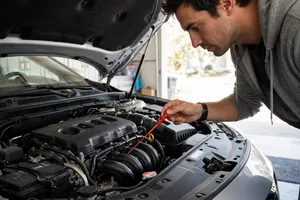
Learning how to check transmission fluid at home takes about 15 minutes and a clean rag. This 2026 guide shows the dipstick steps, how to read fluid color and level, what sealed transmissions need, and the US cost of a fluid change. You will also learn the warning signs that mean your car needs a shop visit soon.
Your transmission is the most expensive part of your car to replace, yet most drivers never look at its fluid until something goes wrong. Learning how to check transmission fluid at home takes about 15 minutes, and it can save you a repair bill of $3,500 or more. A look at the color and level tells you if the fluid is healthy, low, or burnt, and that one check can catch a leak before it turns into a dead transmission. Most cars built before 2015 have a dipstick under the hood, while many newer models use a sealed unit with no dipstick at all. This guide walks you through both types step by step, shows you how to read what the fluid is telling you, and explains what to do next when the level is low or the color looks wrong. Grab a clean rag and your owner’s manual, and you can do this check in your driveway.
What tools do you need to check transmission fluid at home?
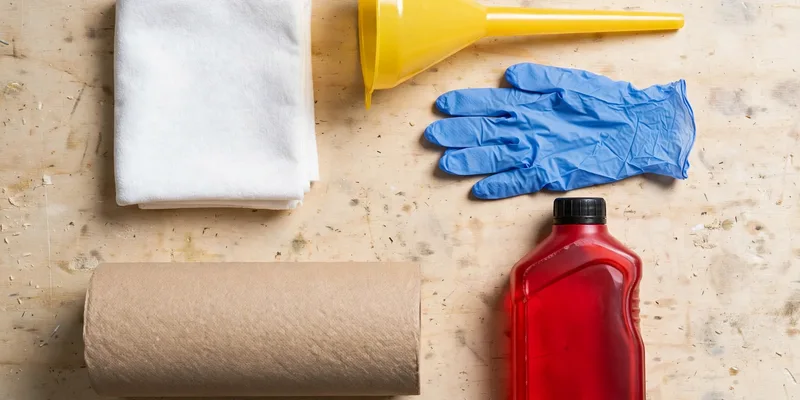
You need a clean lint-free rag, your owner’s manual, and the right fluid type for your car. A funnel and gloves help, and the check is free.
- A clean white rag is the most important tool. White shows the true fluid color, while a dark shop rag hides it.
- Your owner’s manual names the fluid type and check method. Some cars need the engine running, and some need it off.
- A long neck funnel and gloves keep the job clean. The funnel fits the dipstick tube, and gloves keep red fluid off your hands.
A real example: a 2018 Honda Accord owner bought ATF for $9, then found the manual called for Honda HCF-2 CVT fluid. The manual saved a $4,000 repair. The guide to start a car detailing business from home (https://automotivescope.com/start-car-detailing-business-from-home/) shows how far basic car care gear can go.
How do you check transmission fluid with a dipstick?
Warm the car up, park on level ground, pull the dipstick, wipe it clean, push it back in, and pull it out again to read the level. The fluid should sit between the HOT marks.
- Drive the car for 10 to 15 minutes first. The fluid must reach normal working temperature near 150 to 170 degrees F.
- Park on flat ground with the engine running in Park. Set the parking brake, shift through each gear, then back to Park.
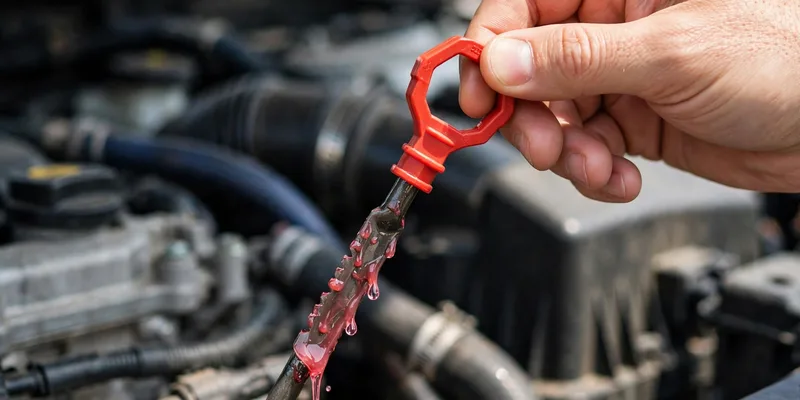
- Pull the dipstick out, wipe it clean, and push it back in. The first pull shows a splash reading, so read the level on the second pull.
- Smear a drop on the white rag and check the color. Healthy fluid is pink or red, while dark brown fluid is worn out.
A real example: a 2016 Ford F-150 owner found the fluid a half inch below the HOT mark after a 15 minute drive. He added half a quart, and the level sat right in the middle.
How do you check transmission fluid in a sealed transmission?
You cannot check a sealed transmission with a dipstick, since most models built after 2015 have none. Lift the car level and check from underneath, so most owners leave this job to a shop.
- Many BMW, Audi, Mercedes, and newer Toyota and Honda models use sealed units. No red or yellow handled dipstick means your car is very likely sealed.
- The check needs the car level on a lift or four jack stands. A floor jack on one side tilts the fluid.
- The fluid temperature must sit between 95 and 113 degrees F. Shops read this with a scan tool plugged into the OBD port.
- Fluid should trickle from the fill plug at the right level. If nothing comes out, the level is low, and if it pours out, it was overfilled.
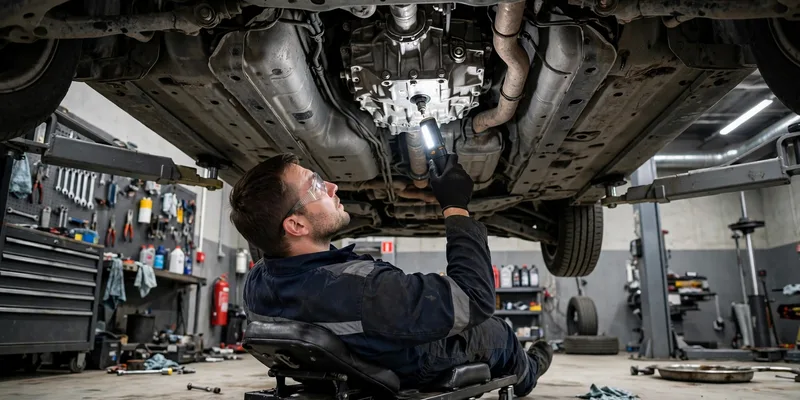
A real example: a 2020 Toyota Corolla with a CVT has no dipstick, so its owner paid a shop $85 for a level check. The fluid was dark, so he booked a $220 change. See the classic car vs antique car difference (https://automotivescope.com/classic-car-vs-antique-car-difference/) guide for how older cars are classed.
What color should transmission fluid be?
Healthy automatic transmission fluid is translucent pink or red, and it should look clean on a white rag. Brown fluid is worn, and black fluid with a burnt smell is overdue for a change.
Table — Fluid color:
| Bright pink or red | Healthy, fresh fluid | No action, recheck in 6 months |
| Light brown | Aging, still working | Plan a fluid change within 5,000 miles |
| Dark brown | Worn out, losing protection | Book a fluid change within days |
| Black with grit | Burnt, clutch material inside | See a shop at once, do not flush it |
- Pink or red fluid with a sweet smell is good news. New ATF is dyed red so leaks are easy to spot.
- Brown fluid has lost its additives and runs hotter. It still shifts the car, but it protects the clutches less.
- Black fluid with metal flakes means internal wear. A few tiny specks are normal, but visible grit points to clutch damage.
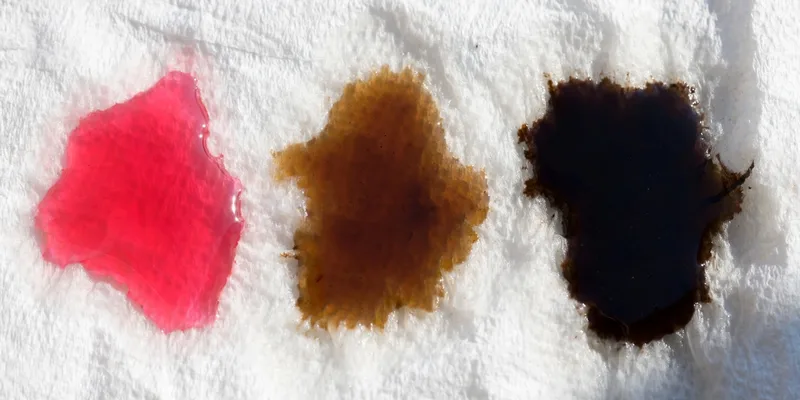
A real example: a 2019 Nissan Rogue owner found dark brown fluid at 58,000 miles. The shop changed it for $240, and the rough shifts went away. If it also smells burnt, read our guide on why a car smells like burning rubber (https://automotivescope.com/car-smells-like-burning-rubber/).
What should you do if the fluid level is low or dirty?
Add only the exact fluid type from your owner’s manual, a little at a time, and recheck the level after each pour. Low fluid almost always means a leak, so book a shop visit within days.
- Add fluid a quarter quart at a time. Pour through the funnel, wait a minute, then recheck the dipstick, since overfilling causes foaming.
- Look for red puddles under the car and wet spots. The pan gasket, cooler lines, and axle seals are the three most common leak points.
- Watch for slipping, delayed shifts, and shuddering. These signs mean the clutches lack fluid pressure, and driving far can burn them out.
- Do not drive far if the fluid is black. Call for a tow instead, since a $150 tow beats a $3,500 rebuild.
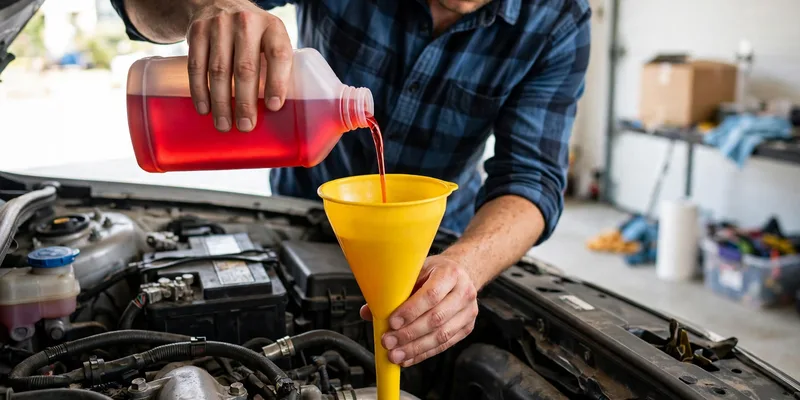
A real example: a 2017 Jeep Cherokee owner topped up a quart a month, then a shop found a cracked cooler line that cost $180.
Rough shifting can also mean engine trouble, so check the bad oxygen sensor symptoms (https://automotivescope.com/bad-oxygen-sensor-symptoms/). For a clicking sound, see our guide on a car makes clicking noise when turning (https://automotivescope.com/car-makes-clicking-noise-when-turning/). If a warning light is on, an Autel diagnostic tool (https://automotivescope.com/autel-diagnostic-tool/) can read the code.
How much does a transmission fluid change cost in 2026?
A transmission fluid change costs $150 to $300 at most US shops in 2026, and a full flush runs $250 to $450. Dealer prices run $300 to $500.
Table — Service costs:
| DIY drain and fill | $60 to $120 |
| Shop drain and fill | $150 to $300 |
| Full fluid flush | $250 to $450 |
| Dealer service | $300 to $500 |
| Filter and gasket add on | $40 to $90 |
- A drain and fill replaces about half the old fluid. The torque converter holds the rest, so shops often do two drain cycles.
- A flush pushes all the old fluid out with a machine. It works well on healthy transmissions, but not on a high mileage unit with black fluid.
- Change the fluid every 30,000 to 60,000 miles. Towing, city driving, and hot weather shorten the interval, so check your manual.
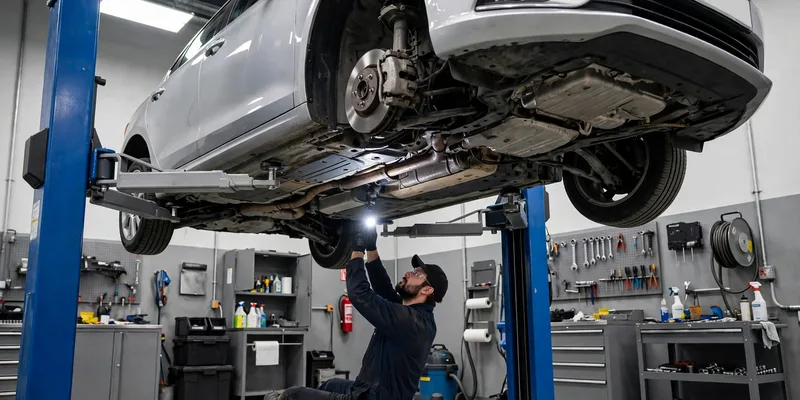
A real example: a 2021 Subaru Outback owner paid $285 at an independent shop for a CVT drain and fill. The dealer quoted $460. The auto repair shop profit margin (https://automotivescope.com/auto-repair-shop-profit-margin/) guide shows how shops set rates, and the cost to open auto repair shop (https://automotivescope.com/cost-to-open-auto-repair-shop/) guide covers startup numbers.
Frequently Asked Questions
How often should you check transmission fluid at home?
Check your transmission fluid every 6 months or every 10,000 miles, whichever comes first. Check it sooner if you tow, drive in hot weather, or notice hard shifts. A 15 minute check twice a year catches leaks early, and it costs nothing but a clean rag.
Can you check transmission fluid when the engine is cold?
You can check the level when cold, but the reading will sit lower than the HOT mark. Most makers want the fluid warm, near 150 to 170 degrees F, with the engine running in Park. A cold check only tells you if the fluid is very low.
What happens if transmission fluid is too low?
Low fluid causes slipping gears, delayed shifts, shuddering, and overheating, since the clutches lose the pressure they need to grip. Driving far like this burns the clutches and can turn a $200 leak repair into a $3,500 rebuild within weeks.
What does black transmission fluid mean?
Black transmission fluid means the fluid is burnt and full of clutch material, and it has lost its ability to protect the transmission. It usually shows up after 60,000 miles without a change. Book a shop visit at once, and do not flush a high mileage unit without advice.
Can I drive with low transmission fluid?
You can drive a short distance to a nearby shop if the car still shifts, but keep the trip under 10 miles and drive gently. If the car slips badly or barely moves, stop and call a tow truck. A $150 tow is far cheaper than a full transmission rebuild.
How do I know if my car has a sealed transmission?
Look for a dipstick under the hood with a red or yellow handle. If you find none, and your owner’s manual shows no dipstick check steps, your car has a sealed transmission. Most BMW, Audi, and newer Toyota and Honda models are sealed.
Can I check transmission fluid at home without a dipstick?
Yes, but it is a shop level job, since you must lift the car level, warm the fluid to 95 to 113 degrees F, and remove the fill plug underneath. Most owners pay a shop $85 to $150 for this check, and it is safer than working under a car on jack stands.
How much transmission fluid does my car need?
Most cars need 4 to 6 quarts for a drain and fill, and 10 to 12 quarts for a full flush. The exact amount is in your owner’s manual, and it varies by model and transmission type. Always buy the exact fluid spec the manual names.
Conclusion
So, in this article, we covered how to check transmission fluid at home in detail. You now know the dipstick steps, how to read fluid color and level, what sealed transmissions need, and what a fluid change costs in 2026. A 15 minute check twice a year can catch a leak before it becomes a $3,500 rebuild, and that is the cheapest insurance your transmission will ever get. My advice is simple: check your fluid this weekend, write down the color and level, and compare it again in 6 months. If the fluid is brown or low, book a shop visit this week and do not put it off. Share this guide with a friend who drives an older car, since most owners never check their fluid at all. Your transmission will thank you with years of smooth shifts.