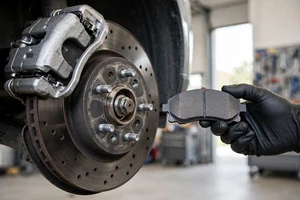
How long do brake pads last? Most brake pads last 30,000 to 70,000 miles, and the exact number depends on your driving style, pad material, and where you drive. City drivers who brake often wear pads out near 30,000 miles, while highway drivers can pass 70,000 miles. This guide covers wear signs, pad types, 2026 replacement costs, and simple habits that help your pads last longer.
You press the brake pedal every day, but you rarely think about the pads behind it. So how long do brake pads last before they need replacing? Most drivers get 30,000 to 70,000 miles from a set, and that wide range is the reason so many people ask the question. Your pads wear down a little each time you stop, and the speed of that wear depends on how you drive, where you drive, and what kind of pads your car uses. A driver who crawls through city traffic will replace pads sooner than a driver who cruises on the highway. Your car gives you warnings long before the pads fail. You will learn the average lifespan for each pad type, the sounds and signs that mean it is time for new pads, what a brake job costs in the US in 2026, and five habits that stretch pad life by thousands of miles.
How long do brake pads last on average?
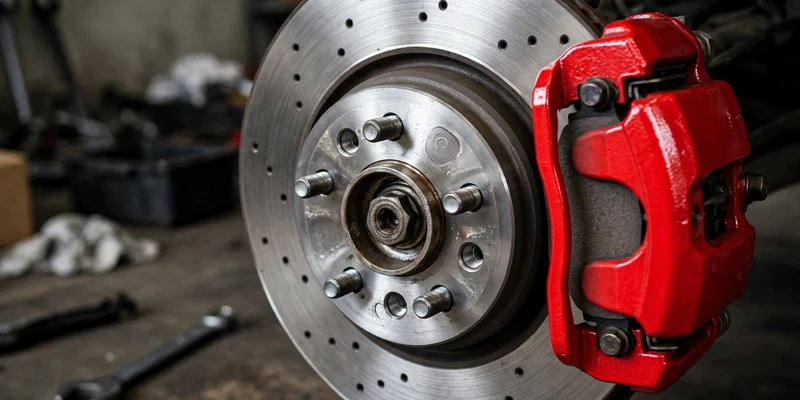
Most brake pads last 30,000 to 70,000 miles. Front pads wear out faster than rear pads, and the average US driver replaces a set near 50,000 miles.
Your front brakes do most of the work, since weight shifts forward when you stop.
Front pads vs rear pads
Front pads on a sedan often last 30,000 to 60,000 miles, while rear pads can last 40,000 to 80,000 miles. A Camry owner in Ohio got 62,000 miles from his front pads.
Highway drivers can pass 70,000 miles on one set, while heavy city traffic can wear pads out at 30,000 miles. See our guide on how to tell if your brake pads are worn to check yours at home.
What makes brake pads wear out faster?
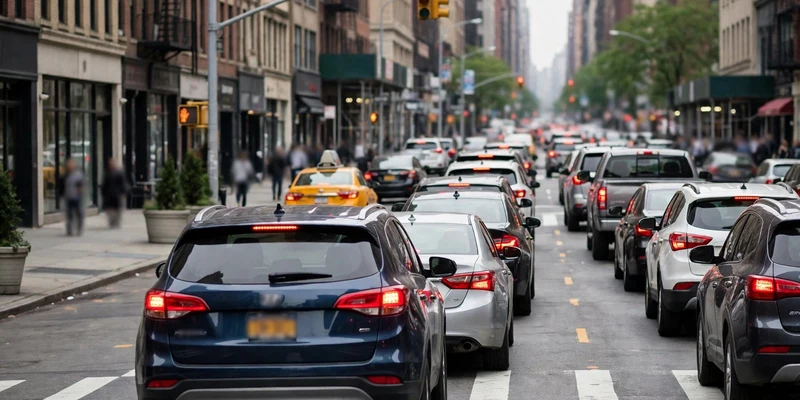
City driving, heavy loads, hard braking, and steep hills wear brake pads out fastest. A car that stops at a light every block can need new pads near 25,000 miles.
- Stop-and-go traffic is the biggest pad killer. Each stop shaves a little material off the pad. A rideshare driver in Chicago replaced his front pads at 28,000 miles.
- Heavy loads make every stop harder. A full trunk, a roof box, or a trailer adds weight your brakes must stop. Towing can cut pad life by a third.
- Hard, late braking wears pads twice as fast. Late, hard stops create far more heat than smooth, early stops. Safety tech adds to this, since automatic emergency braking can fire a full-force stop without warning.
- Steep hills and mountain roads add extra wear. Long downhill runs heat the pads up fast, and hot pads wear quicker.
How do you know when your brake pads need replacing?
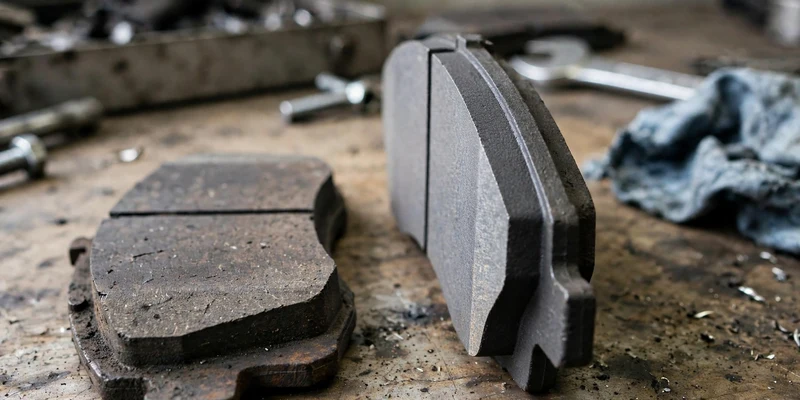
A high-pitched squeal, a grinding sound, a longer stopping distance, and a pulsing brake pedal are the clearest signs your pads are worn out.
- A squeal when you brake means the wear indicator is touching the rotor. A small metal tab on the pad squeals once it drops to about 3 mm thick. Book a brake check within a week of hearing it.
- Grinding means metal is hitting metal, and you should stop driving. Once the pad material is gone, the steel backing plate scrapes the rotor. A driver in Texas ignored a squeal for three weeks and added a $400 rotor bill to a $250 pad job.
- A longer stopping distance is a sign you should not ignore. If your car needs more road to stop than it did last month, the pads may be thin or glazed.
- A pulsing pedal can point to worn pads or warped rotors. You feel it as a shake through the pedal at highway speed. A car makes clicking noise when turning is a different problem, so do not mix the two up.
Warning lights on your dash
Some cars have a pad wear sensor that lights the dash when pads get thin. If a battery light shows too, check our guides on how to tell if your alternator is bad and how to tell if your car battery is bad.
How long do different types of brake pads last?
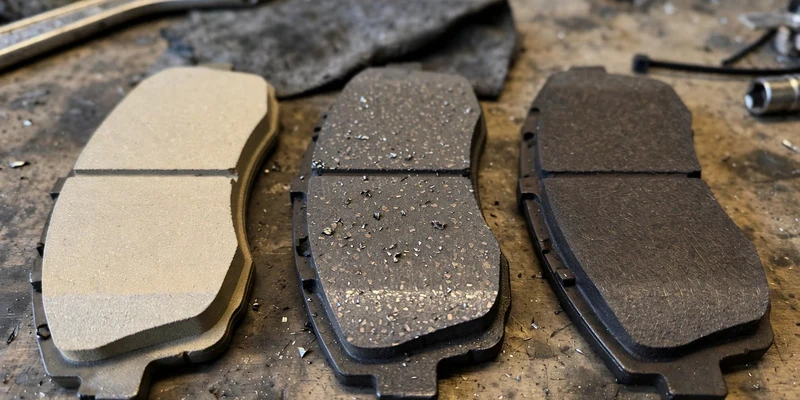
Ceramic pads last 50,000 to 70,000 miles, semi-metallic pads last 30,000 to 50,000 miles, and organic pads last 20,000 to 40,000 miles.
Ceramic brake pads
Ceramic pads last the longest and run quiet. They cost $60 to $150 per axle for parts. A Honda Accord owner in California got 68,000 miles from a set.
Semi-metallic brake pads
Semi-metallic pads last 30,000 to 50,000 miles and handle heat well, so trucks and SUVs often use them. They cost $40 to $100 per axle.
Organic brake pads
Organic pads are the cheapest at $30 to $80 per axle, yet they wear out fastest at 20,000 to 40,000 miles. They suit light cars and gentle drivers. Electric cars are a special case, since regenerative braking does much of the stopping, and our guide on how long electric car batteries last covers how EV parts age.
How much does it cost to replace brake pads in 2026?
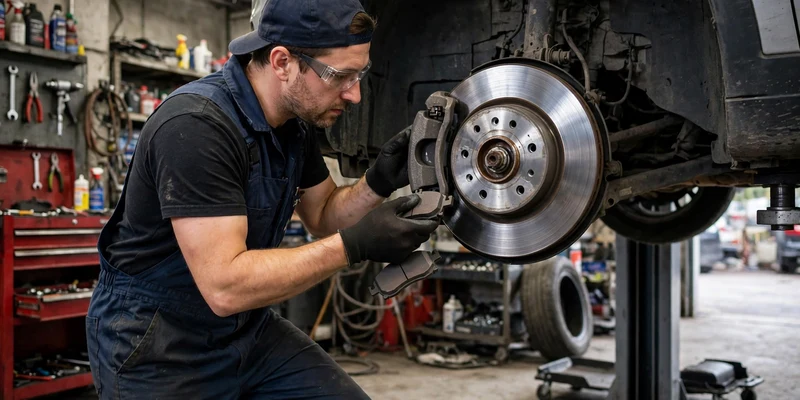
A brake pad replacement costs $150 to $300 per axle at a shop in the US in 2026, with parts at $50 to $150 and labor at $100 to $150.
- A front axle job costs $150 to $300 at an independent shop. That covers new pads, labor, and a brake fluid check. A Honda CR-V owner in Florida paid $240 for front pads at a local shop.
- A dealer charges $250 to $450 per axle for the same job. Dealer labor runs $150 to $200 per hour in most US cities.
- New rotors add $200 to $400 per axle. If your rotors are scored or warped, the shop will suggest replacing them with the pads. Skipping scored rotors can cut the life of your new pads in half.
- A DIY pad swap costs $50 to $150 for parts alone. You need a jack, jack stands, and a socket set, plus about 60 to 90 minutes per axle. Our guide to auto repair shop profit margins shows how shops set those rates.
How can you make your brake pads last longer?
Coast to slow down, brake gently, and take heavy gear out of your car. These habits can add 10,000 to 20,000 miles to a set of pads.
- Coast early and let the car slow itself. Lift off the gas when you see a red light ahead instead of braking late. One Arizona driver went from 35,000 to 52,000 miles per set with this one change.
- Look far ahead and keep a safe gap. A three-second gap gives you time to slow down bit by bit instead of braking hard.
- Keep your speed steady on the highway. Speeding up and slowing down over and over means more braking than a steady cruise.
- Take heavy gear out of the trunk. Every 100 pounds of extra weight adds stopping work for your pads. Take a roof box off when you do not need it.
- Get your brakes checked at every oil change. A quick look catches a stuck caliper early, and one can wear a pad out in 5,000 miles.
Frequently Asked Questions
How long do brake pads last on a new car?
How long do brake pads last on a new car? Most new cars get 40,000 to 70,000 miles from the first set of pads. New rotors and fresh pads wear evenly. Check the pads at 30,000 miles, then at each service after that.
Can brake pads last 100,000 miles?
Yes, brake pads can last 100,000 miles, but only in rare cases. A highway-only driver with ceramic pads and a light car can get close to that number. Most drivers will not see it, since city stops wear pads much faster.
How long do brake pads last on the rear wheels?
How long do brake pads last on the rear wheels? Rear pads often last 40,000 to 80,000 miles, since the front brakes do most of the work. On many cars, the rear pads outlast the front set. Replace them once they reach 3 mm thick.
Do brake pads wear out faster in city driving?
Yes, brake pads wear out much faster in city driving. Constant stops at lights, stop signs, and traffic jams mean the pads work far harder than on the highway. A city driver may need new pads at 25,000 to 35,000 miles.
How thick should brake pads be before replacement?
Replace brake pads once they reach 3 mm thick, and never let them drop below 2 mm. New pads start at 10 to 12 mm thick. Most shops measure pad thickness free at each tire rotation or oil change visit.
Is it safe to drive with squeaking brakes?
It is safe to drive for a short time with squeaking brakes, but book a check within a week. The squeal means the wear indicator has started to touch the rotor. If the sound turns into a grinding noise, stop driving right away.
How often should brake pads be checked?
Have your brake pads checked at least once a year, or every 12,000 miles, whichever comes first. A quick check at each oil change or tire rotation works well for most drivers. Cars that tow or drive in hills should be checked more often.
Will a warning light always mean my brake pads are bad?
No, a warning light does not always mean your brake pads are bad. A brake warning can also mean low brake fluid, a parking brake left on, or a worn sensor. A check engine light is a different fault, and it can point to a bad oxygen sensor instead.
Conclusion
So, in this article, we covered how long do brake pads last in detail. Most pads last 30,000 to 70,000 miles, with ceramic pads at the top of that range and organic pads at the bottom. You now know the sounds that warn you, the costs to expect in 2026, and the habits that add miles to every set. My advice is simple: listen for the first squeal, get your pads checked at every oil change, and do not wait for grinding, since a $250 pad job can turn into a $650 pad and rotor job fast. Check your pads this week if you cannot recall the last time anyone looked at them. Share it with a friend, and read our next Auto Parts guide before your next service visit.