
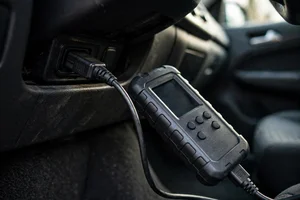
What is an OBD2 scanner? It is a small tool that plugs into your car and reads the fault codes, live data, and check engine light stored by the car’s computer. Every gas car sold in the US since 1996 has an OBD2 port, so one scanner works on most cars on the road today. A basic scanner costs $25 to $50.
Your check engine light comes on, and you ask what is an OBD2 scanner and why the shop wants $120 just to read the code. That fee feels steep for a five minute job, and it leaves you guessing about the repair. An OBD2 scanner puts that same reading in your hand, in plain words, in under five minutes. In this guide you will learn what the tool is, how it talks to your car, what it can and cannot tell you, which type to buy, and how to use one at home without any car repair skill. You will also see what the tool cannot tell you, so you do not waste money on a repair you do not need, and you can talk to a mechanic with facts in hand.
What is an OBD2 scanner?
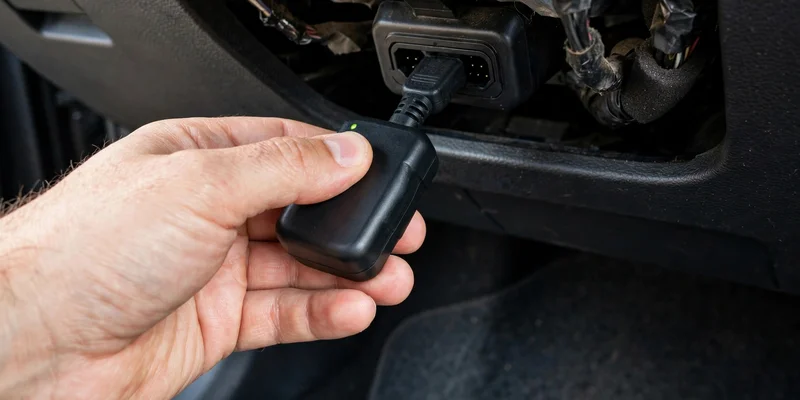
An OBD2 scanner is a small device that plugs into the OBD2 port under your dash and reads data from your car’s computer. It shows fault codes, clears the check engine light, and reads live data such as engine speed, coolant temperature, and fuel trim.
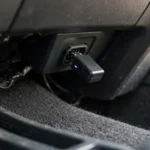
OBD stands for On Board Diagnostics, and OBD2 is the second version, required on all US gas cars since 1996. The port sits under the dash, near the steering column, on the driver side. You plug the scanner in, turn the key on, and the tool talks to the car’s computer in seconds.
- It reads fault codes in plain words. A code such as P0301 means a misfire in cylinder 1. A basic scanner shows the code and a short text note, so you know where to start.
- It clears the check engine light. You can clear a code after a repair to see if it comes back. A code that returns right away means the fault is still there.
A real example from a check engine light
Anna in Denver saw her check engine light come on in her 2019 Honda CR-V. She bought a $35 scanner, plugged it in, and saw code P0456, a small leak in the fuel vapor system. A loose gas cap was the cause, and she fixed it in 10 seconds.
How does an OBD2 scanner work?
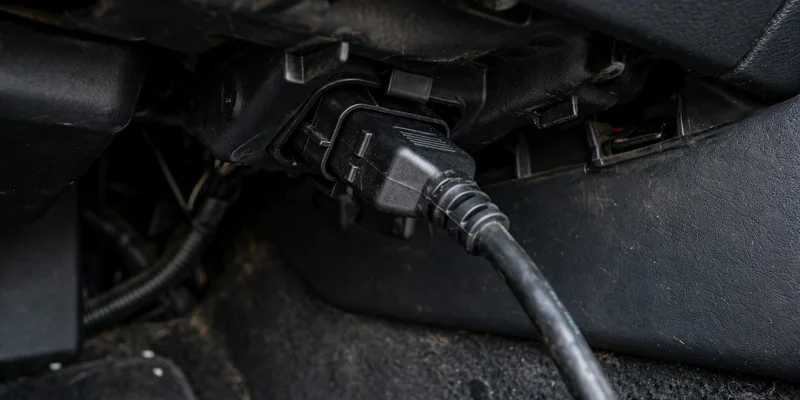
An OBD2 scanner works by asking the car’s computer for data through the OBD2 port, using a shared set of codes and signals. The computer sends back fault codes and live readings, and the scanner shows them on a screen or on your phone.
Your car has a computer called the ECU, or engine control unit, which watches dozens of sensors all the time. When a sensor reading falls outside the normal range, the ECU stores a fault code and turns on the check engine light. The scanner reads that code, plus live data from the sensors, so you can see what the engine is doing right now.
- Plug it into the OBD2 port. The port is a 16 pin plug under the dash, near the steering column. You push the scanner in until it clicks, then turn the key to the on position.
- The scanner asks the computer for codes. It sends a request, and the computer replies with stored codes, pending codes, and a readiness report. The whole read takes 30 seconds or less.
A real example from a live data check
Chris in Austin watched live data on his 2017 Ford F-150 and saw the coolant temperature stuck at 160 degrees Fahrenheit. The thermostat was stuck open, so he replaced it for $45 and the code cleared.
What can an OBD2 scanner tell you?
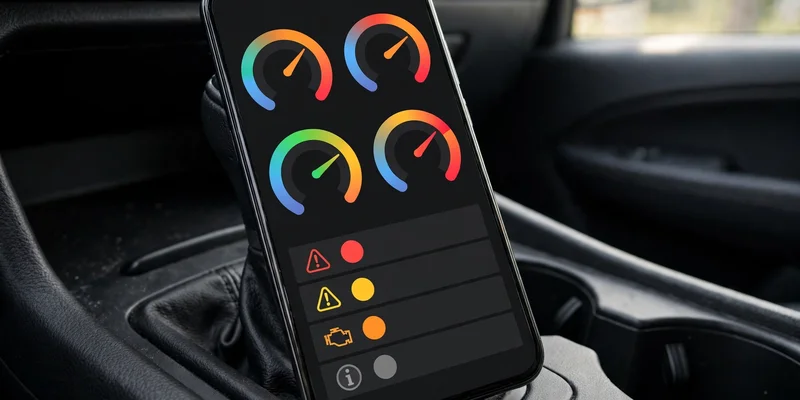
An OBD2 scanner can tell you why the check engine light is on, how the engine runs, whether the car is ready for an emissions test, and how the battery and charging system act. It cannot tell you every fault, since some faults live in other computers.
The scanner reads engine and emissions codes best, and that covers most check engine lights. It can also read live data, freeze frame data, and readiness monitors. Freeze frame data shows the engine speed, temperature, and load at the moment the code set, which helps you find the cause. A basic scanner cannot read airbag, ABS, or transmission codes on many cars, while a pro scanner can.
- Engine fault codes and their meaning. Codes start with P for powertrain, such as P0300 for a random misfire. A code such as P0420 points to the converter, while P0171 points to a lean fuel mix.
- Battery and charging clues. A scanner can show system voltage, which should read 13.5 to 14.5 volts with the engine running. A low reading points to the charging system, so read how to tell if your alternator is bad if voltage stays near 12 volts.
A real example from an emissions test
Maria in Phoenix failed an emissions test because her car showed “not ready” after a battery change. Her scanner showed two monitors still incomplete, so she drove 80 miles over two days and passed the test on the next visit.
What types of OBD2 scanners can you buy?
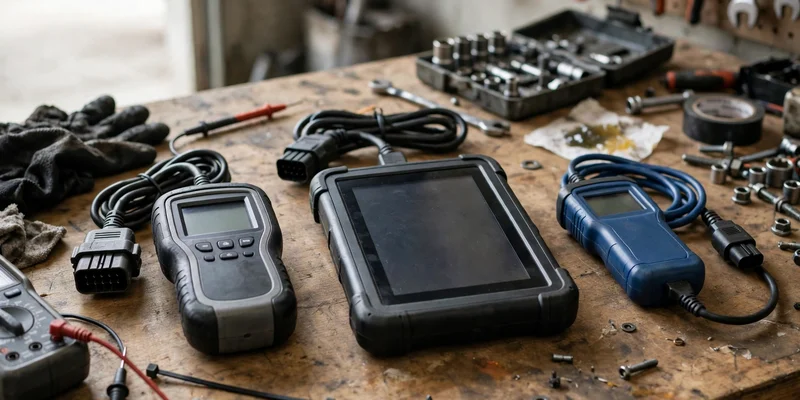
You can buy four main types of OBD2 scanners: basic handheld code readers, Bluetooth adapters, mid range handheld scanners, and pro level scan tools. Basic readers cost $25 to $50, Bluetooth adapters cost $20 to $40, mid range scanners cost $100 to $300, and pro tools cost $500 or more.
The right type depends on how often you work on cars and how deep you want to go. A basic reader suits a driver who only wants to read a check engine light. A mid range scanner suits a home mechanic who wants live data, ABS codes, and service resets. A pro tool suits a shop, since it can read every computer in the car.
- Basic handheld code reader: $25 to $50. It reads and clears engine codes and shows a short code note. A 2020 Toyota Corolla owner who only wants the code can stop here.
- Mid range handheld scanner: $100 to $300. It reads engine, ABS, airbag, and transmission codes on many cars, and it can reset oil lights and run live graphs. An Autel diagnostic tool is a popular pick in this range.
A real example from a home garage
Tom in Seattle bought a $150 mid range scanner for his two cars. It read an ABS code on his 2018 Subaru Outback that a $30 reader missed, and it saved him a $120 shop scan fee on the first use.
How do you use an OBD2 scanner at home?
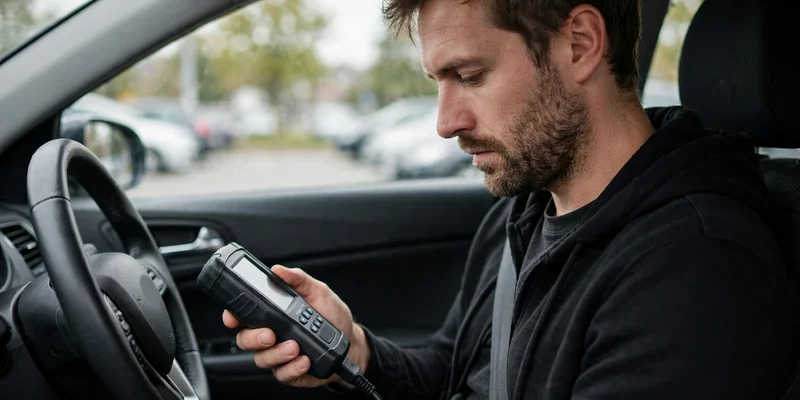
You use an OBD2 scanner at home by finding the port under the dash, plugging the scanner in, turning the key on, reading the codes, and writing them down before you clear them. The whole job takes about five minutes, and you need no tools.
Park the car, turn the engine off, and find the port. It sits under the dash on the driver side, near the steering column, and it looks like a small trapezoid plug. Push the scanner in until it clicks, then turn the key to the on position without starting the engine. Pick “read codes” on the screen, write down each code, and look up the meaning in the scanner or in our guides.
- Find the port under the dash. The port sits within 2 feet of the steering column on most cars. A 2019 Honda Civic has it just left of the column, while a 2020 Ford F-150 has it just below the dash trim.
- Read the codes and write them down. Write down each code before you clear it, since a cleared code is gone. A code such as P0301 can point to a bad plug, so read how often should you replace spark plugs if you see a misfire code.
A real example from a first time user
Karen in Miami used a $30 scanner on her 2016 Nissan Rogue for the first time. She found code P0455, a large leak in the vapor system, and a cracked gas cap was the cause. A $15 cap fixed it, and the light stayed off.
Is an OBD2 scanner worth buying in 2026?
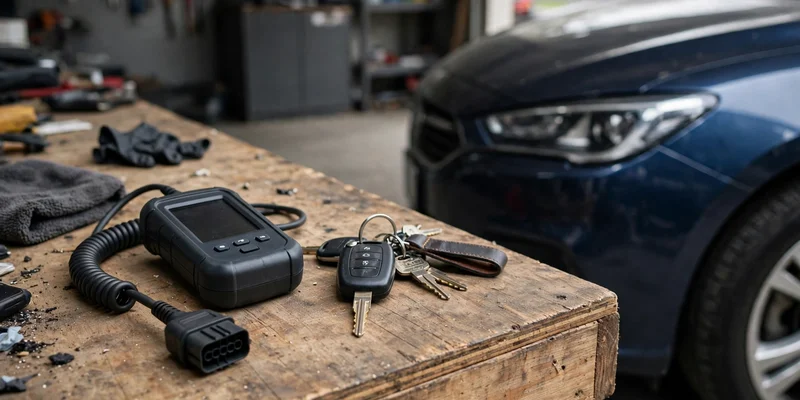
Yes, an OBD2 scanner is worth buying in 2026 if you own a car and want to save on shop scan fees. A $25 to $50 scanner pays for itself on the first use, and it helps you avoid a needless repair.
A shop charges $100 to $150 to read codes, so one scan can pay for the tool. The scanner also helps you talk to a mechanic with facts, not guesses. You can walk in and say the code is P0171, not just that the light is on. That short talk can stop a shop from selling you a repair you do not need. It also helps you catch small faults early, such as a bad sensor that can hurt fuel economy.
- It helps you avoid a needless repair. A code for a loose gas cap can look scary on the dash, but a scanner shows it is a $15 fix. A code for a bad sensor can point you to our list of bad oxygen sensor symptoms before you buy parts.
- It helps you catch a weak battery early. A scanner can show low system voltage, and you can then read how to tell if your car battery is bad to confirm it. A $150 battery beats a $300 tow.
- Pick the right model for your needs. A basic reader suits most drivers, while a mid range tool suits a home mechanic. See our pick for the best OBD2 scanner for home use before you buy. Modern cars also use driver assist tech, so read what is ADAS in cars and how forward collision warning works to know what a scanner cannot fix.
A real example from a family with two cars
The Lee family in Portland owns a 2018 Toyota Camry and a 2021 Hyundai Tucson. They bought one $40 Bluetooth scanner and used it six times in a year, saving about $600 in shop scan fees and catching a bad sensor before it hurt fuel economy.
Frequently Asked Questions
What is an OBD2 scanner used for?
An OBD2 scanner is used to read fault codes from a car’s computer, clear the check engine light, and read live sensor data. It helps you find why the light is on, check emissions readiness, and watch engine data such as temperature, fuel trim, and oxygen sensor voltage.
Where is the OBD2 port located in a car?
The OBD2 port is located under the dash on the driver side, near the steering column, on most cars. It is a 16 pin trapezoid plug within 2 feet of the column. Some cars hide it behind a small trim panel, so check your owner’s manual if you cannot see it.
How much does an OBD2 scanner cost?
A basic OBD2 scanner costs $25 to $50, a Bluetooth adapter costs $20 to $40, and a mid range handheld scanner costs $100 to $300. Pro level scan tools cost $500 to $3,000. Most home users only need a basic or mid range scanner.
Can an OBD2 scanner clear a check engine light?
Yes, an OBD2 scanner can clear a check engine light by erasing the stored fault code. The light stays off if the fault is fixed, but it comes back if the fault is still there. Write the code down before you clear it, since a cleared code is gone.
Does an OBD2 scanner work on all cars?
An OBD2 scanner works on all gas cars sold in the US since 1996, since they all use the same port and code format. It also works on many diesels, hybrids, and electric cars, but some cars show fewer codes. Older cars before 1996 use a different system.
Can an OBD2 scanner tell you what is wrong with your car?
An OBD2 scanner can tell you the fault code and live data, which point to the faulty system, but it cannot always name the exact part. A code for a misfire can mean a bad plug, coil, or injector. Live data and a visual check narrow it down.
Do you need Wi-Fi to use an OBD2 scanner?
No, you do not need Wi-Fi to use a handheld OBD2 scanner, since it plugs in and reads codes on its own screen. A Bluetooth scanner needs a phone and an app, but it uses Bluetooth, not Wi-Fi. Some apps need internet to look up code notes.
Is a Bluetooth OBD2 scanner as good as a handheld one?
A Bluetooth OBD2 scanner is as good as a basic handheld one for reading codes and live data, and it costs less. A mid range handheld scanner reads more systems, such as ABS and airbags, on many cars. Pick the type that fits the jobs you plan to do.
Conclusion
So, in this article, we covered what is an OBD2 scanner in detail. You now know it is a small tool that plugs into the port under your dash and reads fault codes, live data, and emissions readiness from your car’s computer. You also know the four main types, from a $25 basic reader to a pro tool, and how to use one at home in about five minutes. My advice is simple: buy a basic scanner if you own a car, and keep it in your glove box. It pays for itself on the first check engine light, and it helps you talk to a mechanic with facts. Pick one up this week, and try a scan on your own car to see how it works.


1 thought on “What Is an OBD2 Scanner”
Pingback: Best OBD2 Scanner for Home Use