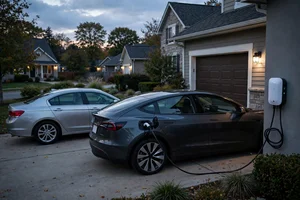
Electric car vs gas car cost per month comes down to fuel, loan payment, insurance, and maintenance. In 2026 a typical electric car costs about $700 to $950 per month all in, while a similar gas car costs about $750 to $1,000 per month. The electric car wins on fuel and maintenance, but it often costs more to buy and to insure.
You want to know the real monthly bill, not just the sticker price. A gas car burns $150 or more in fuel each month, while an electric car may charge for $50 to $70 at home. That gap sounds large, yet the loan and insurance can close it fast. Electric car vs gas car cost per month depends on how far you drive, where you charge, and what car you buy. This guide breaks down each cost with 2026 US numbers, so you can see which car fits your budget. We will look at loan payments, fuel and charging, insurance, and maintenance, with real examples from drivers in Ohio, Texas, and California, so you can run the same math for your own drive.
How much does an electric car cost per month?
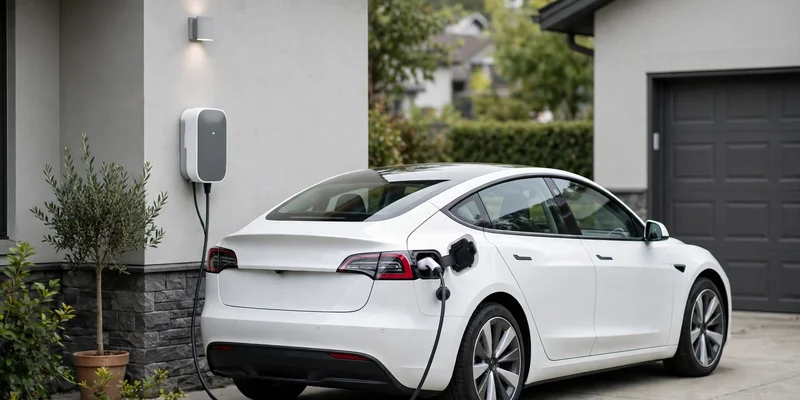
A typical electric car costs about $700 to $950 per month in 2026, based on a $35,000 car, home charging, and 1,000 miles of driving. The loan takes the largest share, at about $550 to $650 per month, while charging adds only $50 to $70.
The monthly total has four parts: loan, charging, insurance, and maintenance. A $35,000 electric car with a $5,000 down payment and a 6.5 percent loan over 60 months costs about $585 per month. Insurance adds about $170 to $210 per month, since electric cars cost more to repair. Maintenance is low, near $25 to $40 per month for tires, cabin filters, and wipers.
- Loan payment: about $550 to $650 per month. A $35,000 car with $5,000 down and a 6.5 percent rate costs about $585 per month over 60 months. A cheaper car, such as one from our list of best electric cars under $30,000, can cut this to near $450 per month.
- Home charging: about $50 to $70 per month. At the US average of 17 cents per kilowatt hour, 1,000 miles at 3.5 miles per kilowatt hour costs about $49. See our full breakdown of how much it costs to charge an electric car at home per month.
- Maintenance: about $25 to $40 per month. Electric cars need no oil changes, as our guide to do electric cars need oil changes notes. Tires wear faster, so budget $600 to $800 for a set every 40,000 miles.
A real example from a commuter in Ohio
Sara in Columbus drives a 2024 Chevy Bolt 1,100 miles per month. Her loan is $480, home charging is $55, insurance is $155, and maintenance is $30, for a total of $720 per month.
How much does a gas car cost per month?
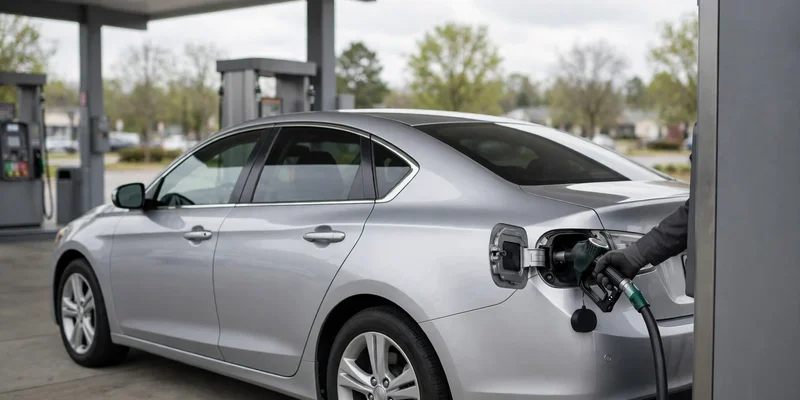
A typical gas car costs about $750 to $1,000 per month in 2026, based on a $30,000 car and 1,000 miles of driving. The loan is about $490 to $580 per month, while fuel adds $140 to $180 per month at current US gas prices.
A gas car costs less to buy, so the loan is lower, but fuel and maintenance eat that saving. A $30,000 gas car with a $5,000 down payment and a 6.5 percent loan over 60 months costs about $489 per month. Gas at $3.40 per gallon in a car that gives 30 miles per gallon costs about $113 for 1,000 miles, and many drivers pay $140 or more with city driving.
- Loan payment: about $490 to $580 per month. A $30,000 Honda Civic with $5,000 down costs about $489 per month over 60 months at 6.5 percent. A $35,000 SUV can push this to $580 per month.
- Fuel: about $140 to $180 per month. At $3.40 per gallon and 30 miles per gallon, 1,000 miles costs $113, but city driving at 25 miles per gallon lifts it to $136. A larger SUV at 22 miles per gallon costs $155 per month.
A real example from a commuter in Texas
Mike in Dallas drives a 2023 Honda Civic 1,100 miles per month. His loan is $510, fuel is $150, insurance is $145, and maintenance is $70, for a total of $875 per month.
How do fuel and charging costs compare each month?
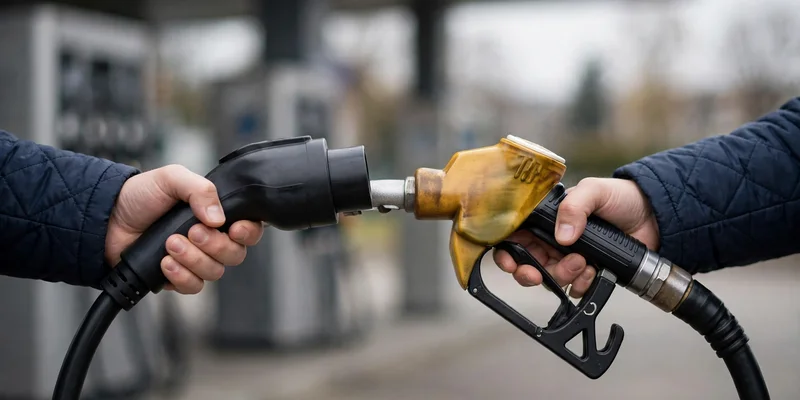
Fuel and charging costs differ by about $90 to $120 per month for a driver who covers 1,000 miles. Home charging costs $50 to $70, while gas costs $140 to $180, so the electric car saves about $100 per month on energy alone.
The gap grows with miles. At 1,500 miles per month, home charging costs about $75 to $105, while gas costs $210 to $270, a saving of $135 to $165. Public fast charging shrinks the gap, since DC fast charging costs 40 to 55 cents per kilowatt hour in 2026, or about $130 to $160 per month for 1,000 miles. Home charging is where the electric car wins.
- Home charging at 17 cents per kilowatt hour: $50 to $70 per month. A car that gives 3.5 miles per kilowatt hour uses 286 kilowatt hours for 1,000 miles. Learn how to charge an electric car at home to keep this cost low.
- Winter cuts the electric saving. Cold weather can cut range by 20 to 40 percent, as our guide to do electric cars lose range in winter notes. A driver in Minnesota may pay $80 per month for home charging in January, against $60 in July.
A real example from a high mileage driver
Emma in Atlanta drives 1,800 miles per month for work. Her Tesla Model 3 costs $95 per month for home charging, while her old gas car cost $245 per month in fuel. She saves $150 per month on energy alone.
What about insurance and maintenance costs?

Insurance and maintenance together cost about $195 to $250 per month for an electric car, and about $200 to $265 per month for a gas car. The electric car pays more for insurance but less for maintenance, so the two totals end up close.
Insurance is the electric car’s weak spot. Insurers charge more because battery packs and body parts cost more to fix, and fewer shops can repair them. Maintenance is the electric car’s strong spot, since it has no oil, no spark plugs, no exhaust, and brake pads that last 100,000 miles or more thanks to regenerative braking.
- Insurance: electric $170 to $210, gas $140 to $175 per month. The gap is $25 to $40 per month. A clean driving record and a higher deductible can cut $20 to $30 from either bill.
- Battery life is a long term cost, not a monthly one. Most electric car batteries last 12 to 15 years, as our guide to how long electric car batteries last notes. A new pack costs $10,000 to $20,000, but most cars never need one.
A real example from a repair bill
John in Chicago paid $1,100 for a bumper repair on his 2023 Hyundai Ioniq 5, while the same repair on his old gas car cost $650. His insurer raised his rate by $18 per month after the claim.
Which car costs less over five years?
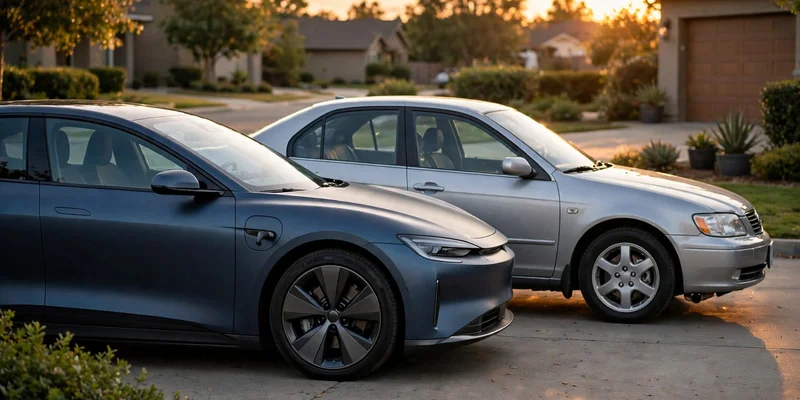
Over five years, an electric car often costs $3,000 to $6,000 less than a similar gas car for a driver who charges at home and drives 12,000 miles per year. The saving comes from fuel and maintenance, and it grows with miles driven.
Take a $35,000 electric car and a $30,000 gas car, each driven 60,000 miles over five years. The electric car costs about $5,000 more to buy, but it saves about $6,000 on fuel and about $2,000 on maintenance. Insurance costs about $1,500 more over five years, so the net saving lands near $1,500 to $3,000. At 15,000 miles per year, the saving grows to $4,000 to $6,000.
- Five year fuel saving: about $5,000 to $7,000. Home charging saves about $100 per month, or $6,000 over five years. Public charging only cuts that saving in half.
- Higher purchase price: about $4,000 to $6,000 more. The federal $7,500 new car tax credit ended for vehicles acquired after 30 September 2025, so do not count it in 2026. See our update on the electric car tax credit 2026 USA for what is left, such as state rebates.
A real example from a five year plan
The Patel family in Phoenix compared a $36,000 Tesla Model 3 with a $31,000 Toyota Camry. Over five years at 14,000 miles per year, the Tesla saved $5,400 on fuel and maintenance, and cost $1,800 more for insurance, for a net saving of $3,600.
Who should choose an electric car and who should choose gas?

Choose an electric car if you can charge at home, drive 12,000 miles or more per year, and keep the car for five years or more. Choose a gas car if you rent, drive long road trips often, or live where public charging is scarce.
Home charging is the key test. A driver with a garage and a Level 2 charger saves the most, while a driver who must use public charging saves little. A renter with no home charger can still make it work, so read our guide to charge an electric car at home without a garage if you park on the street. Long road trips also favor gas, since a 300 mile trip in an electric car adds 30 to 45 minutes of charging stops.
- Choose electric if you charge at home and drive a lot. A commuter who drives 1,200 miles per month saves $120 or more per month on fuel. That saving pays for the higher loan in about three years.
- Choose electric if you keep cars for a long time. The saving grows each year, since maintenance stays low. A 10 year owner can save $8,000 to $12,000 over a gas car.
A real example from a renter
Alex in Los Angeles rents an apartment with no charger. He pays $140 per month for public charging, so his electric car costs almost the same as a gas car. He plans to buy a gas car next time unless his building adds chargers.
Frequently Asked Questions
How much does an electric car cost per month in 2026?
A typical electric car costs about $700 to $950 per month in 2026, based on a $35,000 car, home charging, and 1,000 miles of driving. The loan is $550 to $650, charging is $50 to $70, insurance is $170 to $210, and maintenance is $25 to $40 per month.
How much does a gas car cost per month in 2026?
A typical gas car costs about $750 to $1,000 per month in 2026, based on a $30,000 car and 1,000 miles of driving. The loan is $490 to $580, fuel is $140 to $180, insurance is $140 to $175, and maintenance is $60 to $90 per month.
Is an electric car cheaper per month than a gas car?
Yes, an electric car is often $50 to $100 cheaper per month than a similar gas car when you charge at home. The saving comes from fuel and maintenance. Public charging shrinks the gap, and a higher loan payment can cancel it in the first year.
How much does it cost to charge an electric car at home per month?
Home charging costs about $50 to $70 per month for 1,000 miles at the US average of 17 cents per kilowatt hour. A car that gives 3.5 miles per kilowatt hour uses 286 kilowatt hours per month. Off peak rates can cut the bill to $35 to $45.
Does the federal EV tax credit still cut monthly cost in 2026?
No, the federal EV tax credit of $7,500 for new cars and $4,000 for used cars ended for vehicles acquired after 30 September 2025. It does not cut the monthly cost of a car bought in 2026. Some states still offer rebates, so check your state program.
Is insurance more expensive for an electric car?
Yes, insurance for an electric car costs about $25 to $40 more per month than for a similar gas car. Battery and body repairs cost more, and fewer shops can fix them. A clean record and a higher deductible can cut $20 to $30 per month.
How much do you save on maintenance with an electric car?
You save about $35 to $50 per month on maintenance with an electric car, or about $1,500 to $2,500 over five years. Electric cars need no oil changes, spark plugs, or exhaust work, and brake pads last longer thanks to regenerative braking. Tires wear faster, though.
Which is cheaper over five years, electric or gas?
An electric car is often $3,000 to $6,000 cheaper over five years for a driver who charges at home and drives 12,000 miles or more per year. The saving comes from fuel and maintenance. At low miles or with public charging only, a gas car can cost the same or less.
Conclusion
So, in this article, we covered electric car vs gas car cost per month in detail. You now know a typical electric car costs about $700 to $950 per month, while a similar gas car costs about $750 to $1,000 per month. Home charging saves about $100 per month on fuel, and low maintenance saves $35 to $50 more, but a higher loan and insurance can close that gap. My advice is simple: if you can charge at home and drive 12,000 miles or more per year, the electric car wins over five years. If you rent or drive long trips often, the gas car may fit you better. Run your own numbers with your miles and your local rates, then pick the car that fits your budget.