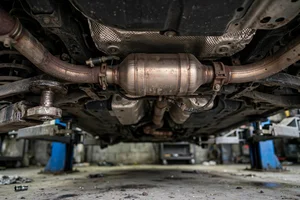
The signs of a bad catalytic converter include a check engine light, a rotten egg smell, weak power when you press the gas, poor fuel economy, and a rattling noise under the car. A clogged converter can also make the engine overheat or stall. Most converters last 100,000 to 150,000 miles, so these symptoms in an older car point to the exhaust system first.
Your car feels slower than it did last month, and a strange smell follows you at every red light. You may also hear a rattle from under the floor and see the check engine light glow on the dash. The signs of a bad catalytic converter often show up together, and they get worse fast if you keep driving. In this guide you will learn the main symptoms, why converters fail, how to test one at home, what a new one costs in 2026, and when it is safe to keep driving. You will also learn simple habits that help your converter last longer. A shop visit can cost $1,000 or more, so knowing the signs early can save you real money and keep your car safe on the road in 2026.
What are the signs of a bad catalytic converter?
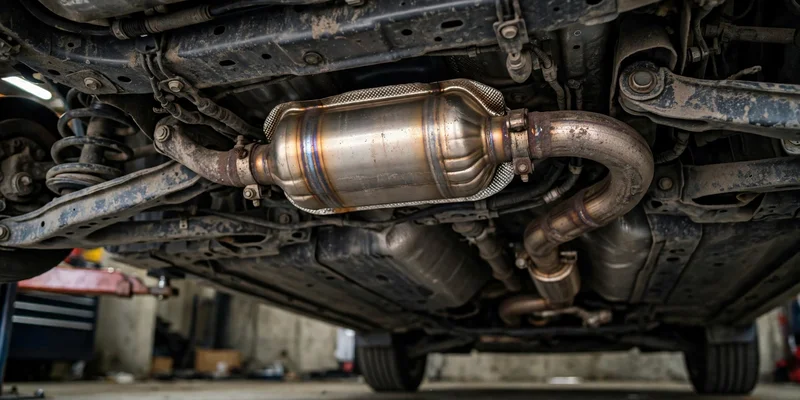
The main signs of a bad catalytic converter are a check engine light, a rotten egg smell, lost power, poor fuel economy, a rattling noise, and an engine that stalls or overheats. One sign alone may have another cause, but two or three together point to the converter.
A clogged converter blocks exhaust gas from leaving the engine. That back pressure cuts power, raises heat, and makes the engine work harder on every trip. A scan tool often shows code P0420, which means the converter works below the level the computer expects.
- Check engine light with code P0420 or P0430. The light means the computer sees weak converter performance. A 2017 Honda Civic in Phoenix showed P0420 at 132,000 miles, and a new converter cleared it.
- Rotten egg smell from the exhaust. The smell comes from sulfur that a weak converter no longer breaks down. It gets stronger when you speed up or climb a hill.
A real example from a highway merge
Lisa in Atlanta drove her 2016 Toyota RAV4 to 128,000 miles when it lost power on a highway ramp. The check engine light showed P0420, and the shop found the converter clogged. A new converter restored full power the same day.
Why does a catalytic converter fail?

A catalytic converter fails most often from engine misfires, oil or coolant leaks, old age, and road damage. Misfires send raw fuel into the converter, and that fuel burns inside it and melts the core.
The converter works at 500 to 800 degrees Fahrenheit, so extra heat from a misfire can melt its honeycomb core in minutes. Oil from worn rings and coolant from a bad head gasket coat the core and block the chemical reaction. Age also wears the precious metals inside, which is why most converters fade after 100,000 miles.
- Engine misfires melt the core. A misfire sends unburned fuel into the exhaust, where it burns inside the converter. Worn plugs cause many misfires, so read how often should you replace spark plugs if your car shakes at idle.
- Oil burning coats the core. A car that burns a quart of oil every 1,000 miles sends oil ash into the converter. That ash blocks the surface and cuts the cleaning power.
A real example from a misfire left too long
Dan in Houston ignored a misfire on his 2015 Ford F-150 for three weeks. The raw fuel melted the converter core, and his repair bill rose from a $180 plug and coil job to a $1,900 converter job.
How can you test a catalytic converter at home?
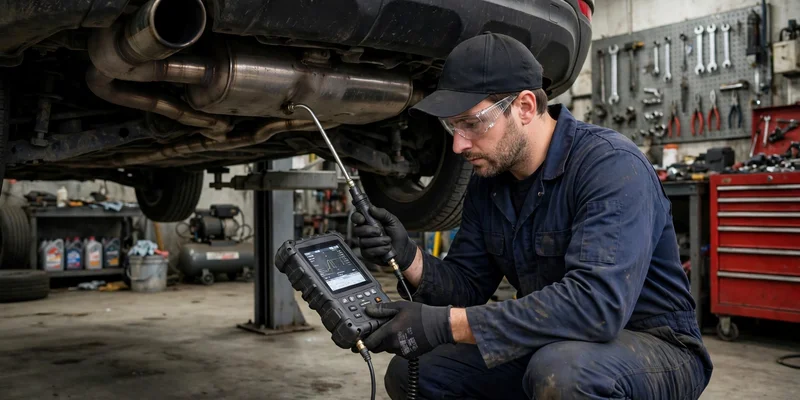
You can test a catalytic converter at home with a scan tool, a temperature check, and a vacuum gauge. The scan tool gives the fastest answer, since code P0420 points straight at converter performance.
Start with the code scan, then check the temperature at the front and rear of the converter with an infrared thermometer. A healthy converter runs hotter at the rear, by 100 to 200 degrees Fahrenheit, because the chemical reaction adds heat. A clogged converter shows little change or runs hotter at the front.
- Scan for codes P0420 and P0430. A basic scan tool costs $25 to $50 and plugs under the dash. Code P0420 means bank 1, and P0430 means bank 2 on a V6 or V8.
- Rule out the oxygen sensors first. A bad sensor can set the same code as a bad converter. Compare your symptoms with our list of bad oxygen sensor symptoms before you buy parts.
A real example from a home driveway test
Tom in Columbus, Ohio, scanned his 2018 Nissan Altima and saw P0420. His thermometer showed the rear of the converter only 20 degrees hotter than the front, so he knew the converter was weak and booked a shop visit that week.
How much does it cost to replace a catalytic converter in 2026?
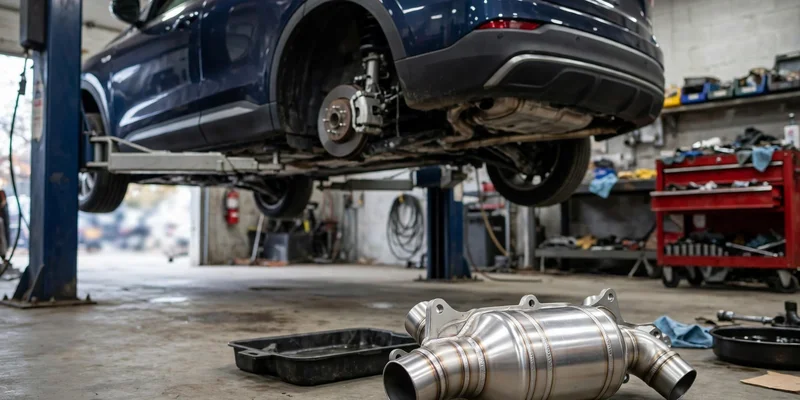
A catalytic converter replacement costs $1,000 to $2,500 for most cars in 2026, and $2,500 to $4,000 for trucks, SUVs, and luxury cars. The part is the big cost, since labor is often only $150 to $400.
The price depends on the car, the part type, and your state rules. California and New York need converters that meet strict state rules, and those parts cost $500 to $1,000 more than a federal part. A direct fit part costs more than a universal part, but it bolts on faster and fits right the first time.
- Parts: $800 to $2,200 for most cars. A converter for a 2019 Honda Civic costs about $1,100 for the part. A converter for a 2020 Toyota Tacoma can cost $2,400 for the part alone.
- Labor: $150 to $400 at most shops. Shops charge $120 to $180 per hour in most US cities in 2026. A bolt on job takes one to two hours, while a welded job takes longer.
A real example from a shop quote
Maria in Denver got two quotes for her 2017 Hyundai Elantra. One shop quoted $1,450 with a direct fit part, and a second shop quoted $950 with a universal part and welding. She picked the direct fit part, since it carried a 5 year warranty.
Can you drive with a bad catalytic converter?
You can drive a short distance with a bad catalytic converter, but you should not keep driving for weeks. A clogged converter can stall the engine, overheat parts, and cause a fire risk from trapped heat.
A weak converter that only sets a code is less urgent than a clogged one. If the car still has normal power and no smell or rattle, you can drive to a shop within a few days. If the car loses power, stalls, or smells strongly of sulfur, stop driving and get a tow. A tow costs $75 to $150, far less than an engine repair.
- Drive to the shop if power feels normal. A car with a code but normal power can make a short trip. Keep the speed low and avoid long highway drives until the shop checks it.
- Stop driving if the engine stalls or overheats. A stall at speed is a safety risk. Pull over, turn the engine off, and call for a tow if the temperature gauge climbs into the red.
A real example from a roadside stop
James in Phoenix kept driving his 2014 Chevrolet Equinox with a clogged converter for two weeks. The car stalled on a highway, and the tow plus the converter job cost $2,100, while an early shop visit would have cost about $1,400.
How do you prevent catalytic converter problems?

You prevent catalytic converter problems by fixing misfires fast, changing spark plugs on time, fixing oil and coolant leaks, and driving the car long enough to warm up. Short trips hurt the converter, since it never reaches full working heat.
A converter lasts longest when the engine runs clean. That means fresh plugs, clean oil, and no leaks. A weekly drive of 20 minutes or more at highway speed helps burn off deposits and keeps the core hot enough to work well. You can also keep the rest of the car in shape, since a weak battery or a bad alternator can cause hard starts and misfires. Read how to tell if your car battery is bad and how to tell if your alternator is bad if your car cranks slowly.
- Fix a misfire the same week it starts. A misfire is the fastest way to kill a converter. A $150 plug job now can save a $2,000 converter job later.
- Keep up with basic checks. A strange smell can come from other parts too, so compare it with our guide to why your car smells like burning rubber. A fuel pump fault can also cause poor power, so check the signs of a bad fuel pump if the car hesitates. A slipping belt can add noise, so read when to replace a serpentine belt. You can also check transmission fluid at home as part of a monthly check.
A real example from a daily driver
Karen in Seattle drives her 2019 Mazda CX-5 for 25 minutes on the highway each Sunday. At 145,000 miles her converter still passes emissions, while her neighbor’s same model car failed at 110,000 miles after years of short trips only.
Frequently Asked Questions
What are the first signs of a bad catalytic converter?
The first signs are a check engine light, a rotten egg smell, and a small loss of power when you speed up. The car may also use more gas than usual. A scan tool often shows code P0420 at this stage, so scan the car early and book a shop check.
How long can you drive with a bad catalytic converter?
You can drive a short distance with a weak converter, but not for weeks. A clogged converter can stall the engine, overheat parts, and fail an emissions test. If power drops or the car stalls, stop driving and get a tow to a shop.
How much does it cost to replace a catalytic converter?
A catalytic converter replacement costs $1,000 to $2,500 for most cars in 2026, and $2,500 to $4,000 for trucks and luxury cars. The part costs $800 to $2,200, and labor adds $150 to $400. California parts cost more. Ask your shop for a written quote before you book the job.
Can a bad catalytic converter cause a car not to start?
Yes, a badly clogged catalytic converter can stop a car from starting, since exhaust gas cannot leave the engine. The engine may crank but not fire, or it may start and stall right away. A shop can test the back pressure to confirm the blockage before you buy parts.
Does a bad catalytic converter affect fuel economy?
Yes, a bad catalytic converter hurts fuel economy, since the engine works harder to push exhaust gas through a blocked core. A car that gave 30 miles per gallon may drop to 24 or 25. Fixing the converter often restores the lost miles per gallon.
What code does a bad catalytic converter set?
A bad catalytic converter most often sets code P0420 for bank 1, or P0430 for bank 2 on a V6 or V8. The code means converter efficiency is below the limit. A bad oxygen sensor can set the same code, so test the sensor first.
Can you clean a catalytic converter instead of replacing it?
You can try a fuel additive cleaner, but it rarely fixes a melted or broken converter. A cleaner may help a mildly dirty converter for a short time. Most shops replace a failed converter, since cleaning cannot repair a melted core.
Is a rattling noise a sign of a bad catalytic converter?
Yes, a rattling noise under the car is a common sign of a bad catalytic converter. Loose pieces of the broken core rattle at idle and on bumps. The sound comes from under the floor near the middle of the car, and it means the part needs a new one.
Conclusion
So, in this article, we covered signs of a bad catalytic converter in detail. You now know the main symptoms, from a check engine light and rotten egg smell to lost power, poor fuel economy, and a rattling noise under the car. You also know why converters fail, how to test one with a scan tool and a thermometer, and what a new one costs in 2026. My advice is simple: scan the car as soon as the light comes on, and fix a misfire the same week it starts. That fast action can save you $1,000 or more. If your car shows two or more of these signs, book a shop check this week and share your code in the comments below.