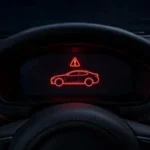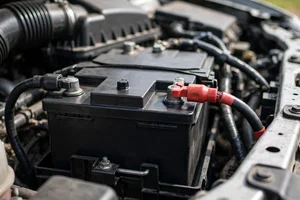
A bad car battery shows clear signs before it leaves you stuck. Slow cranking, dim headlights, a battery warning light, clicking sounds, and a swollen case all point to a weak battery. Most car batteries last 3 to 5 years. A simple multimeter test shows the truth. A resting reading near 12.6 volts is healthy. A reading below 12.4 volts means you should test it soon or plan a replacement.
You turn the key on a cold morning and the engine drags instead of firing up fast. That slow, tired sound is one of the clearest clues about how to tell if your car battery is bad, and it is worth listening to before the car stops starting at all. A battery does not usually die in one day. It fades over weeks, and it gives you signs while it fades. The lights dim, the radio cuts out at idle, or the car needs a jump after sitting for a weekend. This guide walks you through each warning sign, a simple home test with a multimeter, and the real cost of a replacement in the US in 2026. You will also learn how to tell a bad battery apart from a bad alternator, so you do not pay for the wrong part.
What are the most common signs your car battery is bad?

The most common signs are a slow crank, dim headlights, a battery warning light, clicking sounds, a swollen case, and frequent jump starts. If you see two or more together, your battery is likely near the end of its life.
- Slow crank on cold mornings. The starter turns the engine over in a slow, labored way instead of a quick burst. A driver in Ohio said his truck cranked for 4 seconds on a 30 degree morning, then started fine by noon.
- Dim lights, clicking, and a warning light. Dim headlights, clicking sounds, and a battery warning light all point to the same weak battery. Your headlights look yellow at idle and brighten when you press the gas. A fast clicking sound when you turn the key is not the same as a car makes clicking noise when turning the steering wheel, and an Autel diagnostic tool can confirm the fault.
Why does a bad battery make your car crank slowly?
A bad battery makes your car crank slowly because it can no longer give the starter the high burst of current it needs. A healthy battery gives 400 to 800 cold cranking amps. A weak one may give half that.
- Cold weather cuts battery power fast. A battery loses about 35 percent of its power at 32 degrees Fahrenheit, and about 60 percent at 0 degrees. That is why a weak battery often fails on the first cold morning. Cold hits EVs too, as our guide on why electric cars lose range in winter shows.
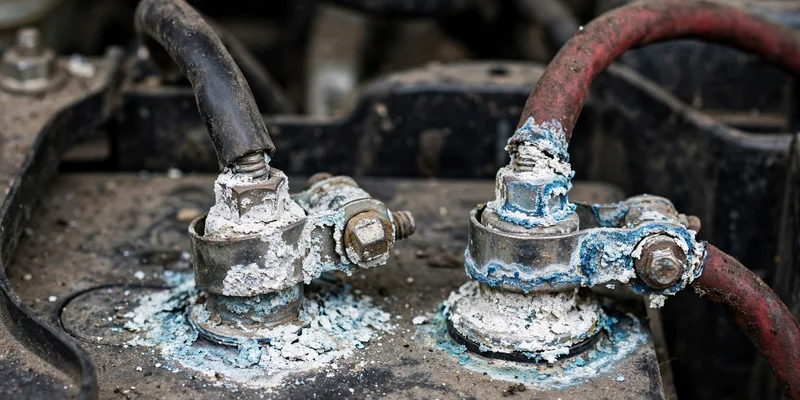
- Corrosion on the terminals blocks power flow. White, blue, or green crust on the battery posts adds resistance between the battery and the cables. One owner in Texas cleaned the crust off his terminals and the car started like new the same day. Clean them with a wire brush, baking soda, and water.
How can you test your car battery at home with a multimeter?
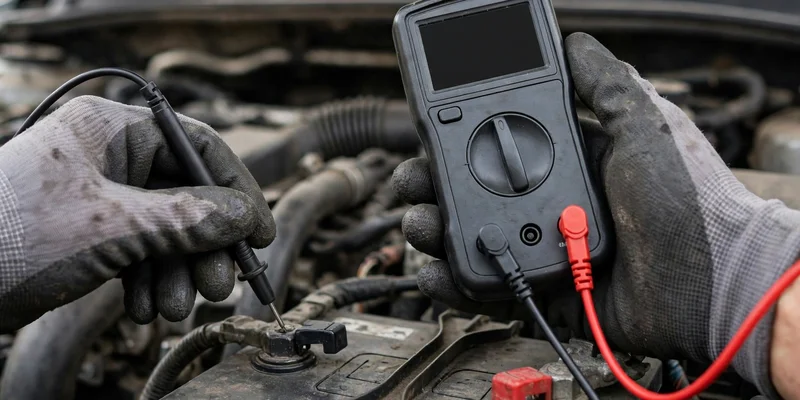
You can test your car battery at home with a multimeter. A healthy battery reads 12.6 volts or more at rest. A reading below 12.0 volts means the battery is weak or dead.
Test the resting voltage first
Park the car, turn everything off, and wait 30 minutes after driving. Set the multimeter to DC volts, then touch the probes to the terminals.
- 12.6 volts or more means a full charge. A 2021 Honda Accord owner in Florida tested his at 12.7 volts after 3 years.
- 12.4 volts means charge it and test again. Charge it fully and test again. If it still reads 12.4 volts, the battery is losing its ability to hold a charge.
Test the voltage while the car runs
Start the car and test again with the engine running. A healthy charging system reads 13.7 to 14.7 volts at the battery terminals.
Add a battery check to the same routine as when you check transmission fluid at home. If the battery tests fine yet the car still starts rough, check bad oxygen sensor symptoms.
How do you tell if the battery is bad or the alternator is bad?

You can tell a bad battery from a bad alternator by the timing of the fault. A bad battery fails to start the car. A bad alternator lets the car start, then the car dies while you drive.
- Jump start test tells you a lot. If the car starts with a jump and keeps running for a 30 minute drive, the battery was the weak link. If the car dies again 10 to 20 minutes after you remove the jump cables, the alternator is not charging the battery.
- Battery light and belt point to the charging system. The red battery light warns that the charging system is not working right. It can mean a bad alternator, a loose belt, or a bad battery. Our guide on how to tell if your alternator is bad walks through the alternator tests. A loose belt can also stop the alternator from charging. A shop in Michigan fixed that fault with a $45 belt.
How long does a car battery last and when should you replace it?
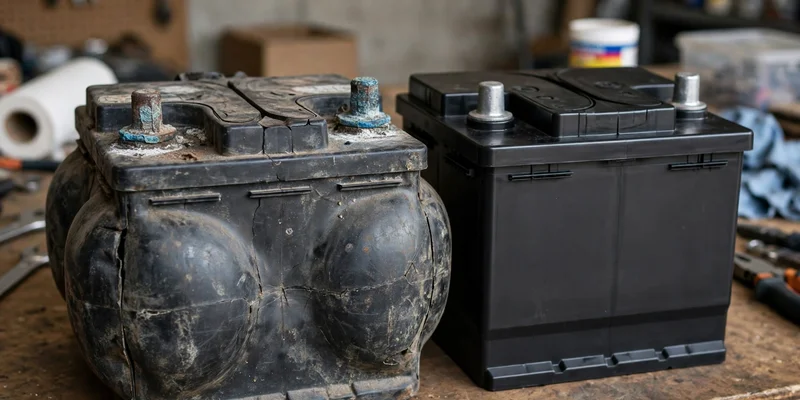
A car battery lasts 3 to 5 years in the US. Heat shortens battery life more than cold does, so cars in Arizona and Texas often need a new battery at 3 years.
- Age and a swollen case are clear warnings. Check the date sticker. If the battery is 4 years old and you see even one warning sign, replace it before winter. Heat can also make the case bulge, and a swollen battery can leak acid. One driver in Arizona found his battery bulging after a hot summer.
- Short trips and long parking drain a battery. Cars that sit for weeks lose charge from the alarm and the keyless entry system. A car parked for 3 weeks can drop below 12 volts, so read our guide to store classic car for winter first. EV drivers should read our guide on how long do electric car batteries last, since the big traction battery lasts 10 to 15 years.
How much does it cost to replace a car battery in the US in 2026?

Replacing a car battery costs $200 to $400 in total in the US in 2026 for most cars. The battery itself costs $150 to $300, and labor costs $40 to $100 at a shop. Luxury cars and cars with start stop systems cost more.
- Standard and AGM batteries cost different amounts. Most sedans use a standard flooded battery, and a 2020 Toyota Camry battery costs about $180 in 2026. Cars with start stop systems need an AGM battery instead, and a 2022 BMW X3 AGM battery costs about $320 for the part alone. Do not fit a standard battery in a car that needs AGM, since it will fail in months.
- Shop labor adds $40 to $100. A shop charges 30 to 60 minutes of labor for the swap. A dealer charges more, often $350 to $500 in total. Ask if the price includes a warranty of 2 to 3 years.
Frequently Asked Questions
How do I know if my car battery is bad or just dead?
A battery that is just dead takes a charge and holds 12.6 volts after charging. A bad battery drops below 12.4 volts again within a day or two. A free load test at an auto parts store gives a clear pass or fail answer.
What voltage is a bad car battery?
A bad car battery reads below 12.4 volts at rest, and below 9.6 volts during a load test. A healthy battery reads 12.6 volts or more at rest. If your reading is 12.0 volts or less, the battery is weak and should be replaced soon.
Can a bad car battery drain overnight?
Yes, a bad car battery can drain overnight if it has a shorted cell or cannot hold a charge. A healthy battery loses only a small amount of charge overnight. If your car needs a jump every morning, test the battery first.
How long can you drive with a bad car battery?
You can drive with a bad car battery for a few days if the car still starts, but you should not rely on it for weeks. The car may fail to start on a cold morning. Get it tested within a week.
How to tell if your car battery is bad without a multimeter?
You can tell if your car battery is bad without a multimeter by watching the signs. A slow crank, dim headlights, clicking sounds, and jump starts all point to a weak battery. A free test at an auto parts store confirms it fast.
Does a bad battery affect the alternator?
Yes, a bad battery can strain the alternator because the alternator works harder to charge a battery that will not hold power. That extra work can wear the alternator out early. Replace a bad battery promptly, since a new alternator costs $400 to $900 fitted.
How often should I test my car battery?
Test your car battery every 6 months after it turns 3, and once a year before that. Test it again before winter, since cold weather hits a weak battery hardest. A quick test takes 5 minutes, and many auto parts stores test it free.
Will a bad car battery cause the check engine light?
A bad car battery can cause the check engine light to come on, since low voltage can trigger fault codes. The light often clears after you fit a new battery and drive 50 miles. If the light stays on, get the codes read.
Conclusion
So, in this article, we covered how to tell if your car battery is bad in detail. You now know the warning signs, from a slow crank and dim lights to a swollen case and a battery light on the dash. You also know the test numbers that matter, 12.6 volts at rest and 13.7 to 14.7 volts while the engine runs, and the replacement cost of $200 to $400 in the US in 2026. My advice is simple: test the battery the moment you notice a slow start, and do not wait for a cold morning to prove it. If this guide helped you, share it with a friend whose car cranks slowly, and check our next Auto Parts guide for your next fix.