Cost to charge an electric car at home per month is about $40 to $60 for most US drivers in 2026. You pay for the electricity your car uses, and the total depends on your local rate, how many miles you drive, and how efficient your car is. This guide shows the simple formula, the rates in cheap and pricey states, and smart ways to cut your bill.
Your electric car is parked in the driveway, and the next bill is the question on your mind. The cost to charge an electric car at home per month is about $40 to $60 for a typical US driver in 2026, and many drivers pay less than they spent on gas. That range comes from the US average home electricity rate of about 16 to 17 cents per kWh and a typical drive of about 1,000 miles a month.
Here is the thing. Your exact bill depends on three things only: your local rate, your miles, and your car’s efficiency. A car that goes 4 miles per kWh costs less per mile than one that goes 3 miles per kWh. Your state matters too, since rates in Hawaii can be triple the rates in Washington.
In this guide you will learn the simple formula, what moves your cost up or down, and how to charge at the cheapest hours.
How much does it cost to charge an electric car at home per month?
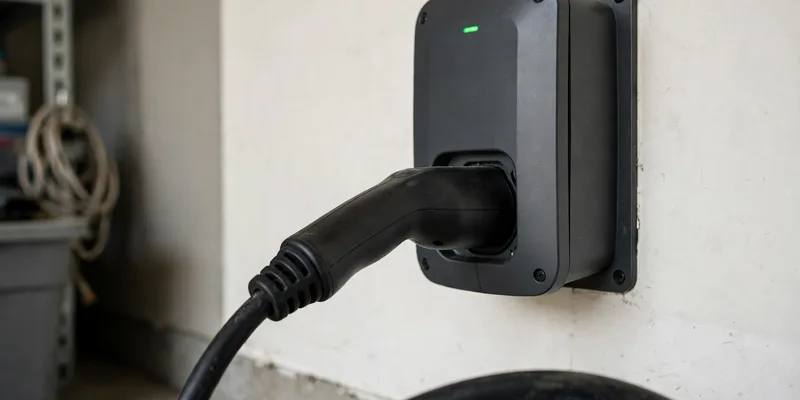
Most US drivers pay about $40 to $60 a month to charge an electric car at home in 2026. A driver who covers about 1,000 miles a month uses roughly 250 to 330 kWh, and at the average rate of 16 to 17 cents per kWh that works out to the range above.
- Low mileage drivers pay $25 to $40 a month – If you drive about 600 miles a month, you use about 150 to 200 kWh. At the average rate that is $25 to $35, and it is often less than one tank of gas.
- High mileage drivers pay $60 to $90 a month – If you drive 1,500 miles a month, you use about 375 to 500 kWh. That still beats gas for most cars, since the same miles in a gas car can cost $150 or more.
- Your car’s efficiency sets the floor – A car that gets 4 miles per kWh uses 250 kWh for 1,000 miles, while a car that gets 3 miles per kWh uses 333 kWh for the same miles. Check your car’s miles per kWh on the dash before you do the math.
- If you are new to EVs – start with what is an electric vehicle for the basics, then come back to the math here. If you want the full picture on home charging times, read our guide to charge electric car at home. It pairs well with this cost guide, and it explains Level 1 and Level 2 charging in plain terms.
How do you calculate your home charging cost?

Multiply the kWh you use in a month by your electricity rate. That one formula gives your monthly cost, and you can work it out in under a minute with your last bill and your car’s efficiency.
- Step 1: Find your miles per kWh – Most EVs show this on the dash or in the app, and most cars land between 3 and 4 miles per kWh. A 2023 Tesla Model 3 driver in Ohio, for one real case, sees about 3.8 miles per kWh in mild weather.
- Step 2: Divide your monthly miles by that number – Drive 1,000 miles at 3.5 miles per kWh and you use about 286 kWh. That is the number your bill is built on.
- Step 3: Multiply by your rate per kWh – At 16 cents, 286 kWh costs about $46. At 30 cents, the same driving costs about $86, so your rate is the biggest lever you have.
Here is a quick check you can run tonight. Take your miles from last month, divide by your miles per kWh, and multiply by the rate on your utility bill. If the result looks high, the next sections show you where the money goes and how to pull it down.
What affects the cost of charging at home?
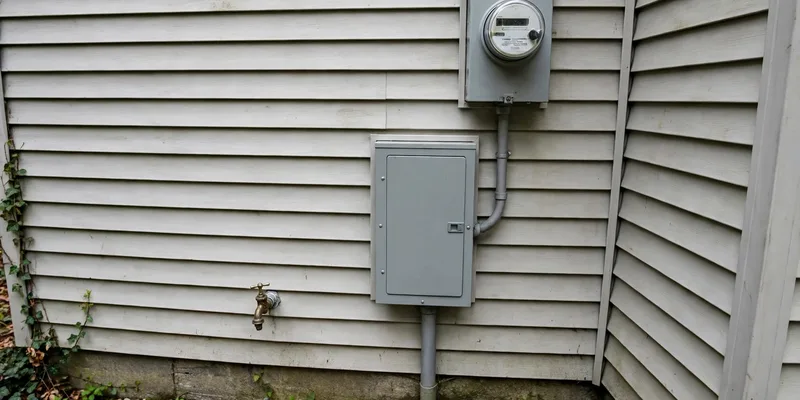
Your electricity rate, your miles, your car’s efficiency, and your charging hours drive your cost. Cold weather and a Level 1 charger can push it higher, while off-peak rates can pull it down.
- Your local electricity rate matters most – Rates run from about 10 to 12 cents per kWh in cheap states to 25 to 40 cents in Hawaii and California. The same car and the same miles can cost twice as much in a pricey state.
- Cold weather cuts efficiency – An EV can lose 20 to 30 percent of its range in freezing weather, so you use more kWh per mile. Our guide to why electric cars lose range in winter explains what happens to the battery and the cabin heater.
- Level 1 charging wastes a little more energy – A standard 120 volt outlet charges slowly and loses more energy to heat than a Level 2 charger. A Level 2 home charger is faster and a bit more efficient for daily use.
- Charging hours change the price – Many utilities charge less at night, often 8 to 12 cents per kWh off peak. If you set your car to charge after 9 p.m., you can cut the bill by a third.
Think about it this way. Two drivers with the same car can pay very different bills, and the rate on their bill is the main reason why. Your miles come second, and your charging hours come third.
Is charging at home cheaper than public charging?
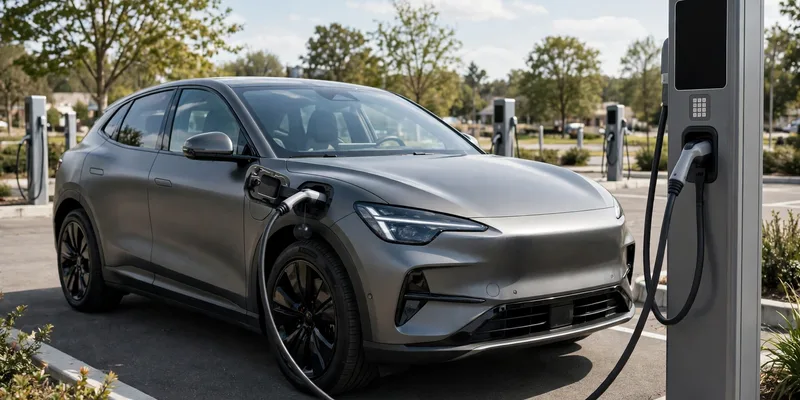
Yes, home charging is usually far cheaper than public charging. Home power costs about 16 to 17 cents per kWh on average, while DC fast charging often costs 30 to 50 cents per kWh.
- DC fast charging costs two to three times more – A 60 kWh charge costs about $10 at home and $18 to $30 at a fast charger. Fast charging is built for road trips, not for daily use.
- Public Level 2 charging sits in the middle – Many public Level 2 stations charge 25 to 35 cents per kWh, plus parking fees in some cities. Home charging still wins for a daily driver.
- Home charging beats gas by a wide margin – At 16 cents per kWh and 3.5 miles per kWh, a mile costs under 5 cents. A gas car at 30 mpg and $3.50 a gallon costs nearly 12 cents a mile, so the EV saves you money on most trips.
- The federal $7,500 EV tax credit ended on 30 Sept 2025 – so it no longer cuts your purchase cost, yet home charging savings still stand on their own. Our guide to the electric car tax credit 2026 USA covers what state rebates are left.
- If you bought your EV with a loan – the car loan interest deduction 2026 may still help your tax bill, since it covers interest on new US assembled vehicles.
- Gas cars have their own running costs too – A bad oxygen sensor symptoms fault can add $40 to $90 a month in wasted fuel, which is a bill an EV never gets.
How can you lower your home charging cost?
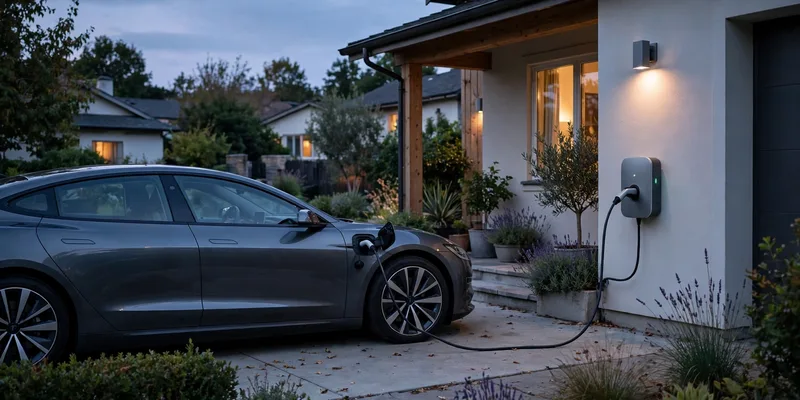
Charge at off-peak hours, use a Level 2 charger, and check your utility for an EV rate plan. Those three moves can cut a $60 bill to about $40 without changing how much you drive.
- Switch to a time-of-use plan – Many utilities offer an EV plan with cheap night rates, and some drop the rate below 10 cents per kWh after midnight. Call your utility and ask for the EV rate before you change anything.
- Set a charging schedule in the car – Most EVs let you set a start time, so the car charges at 11 p.m. and stops before the morning peak. One owner in Texas cut his bill by $18 a month with this one setting.
- Keep your tires full and drive smooth – Low tire pressure and hard acceleration waste energy, and the fix costs nothing. Check the pressure once a month and keep it at the number on the door sticker.
- Add solar only if the math works – Home solar can push your charging cost close to zero, yet the panels cost thousands up front. Run the payback math first, since it can take 7 to 10 years to break even.
Driver aids help too. What is ADAS in cars explains the systems that keep your speed steady on the highway, and steady speed uses less energy than stop-and-go driving.
How much does charging cost in different US states?
Monthly charging costs run from about $30 in the cheapest states to about $100 or more in the priciest states for the same 1,000 miles. Your state rate is the main reason for that gap.
- Cheapest states: about $25 to $40 a month – Washington, Idaho, and Louisiana sit near 10 to 12 cents per kWh, so 286 kWh costs about $29 to $34. Hydropower keeps rates low in the Pacific Northwest.
- Average states: about $40 to $60 a month – Texas, Ohio, and Florida sit near the national average of 16 to 17 cents per kWh. Most US drivers land in this band.
- Pricey states: about $70 to $115 a month – California sits near 25 to 30 cents per kWh, and Hawaii can reach 35 to 40 cents. The same 286 kWh costs about $72 to $86 in California and $100 to $114 in Hawaii.
State costs also shape the car business. If you are thinking about work in the trade, our guide to the cost to open auto repair shop shows what a shop costs to start, and EV work is a growing part of that trade.
How much does it cost to charge an electric car at home per month on average?
About $40 to $60 a month for most US drivers in 2026. That covers about 1,000 miles at the average home rate of 16 to 17 cents per kWh. Low mileage drivers pay $25 to $40, while high mileage drivers pay $60 to $90. Your local rate and your car’s efficiency move the number up or down.
How do I calculate my home EV charging cost?
Divide your monthly miles by your miles per kWh, then multiply by your electricity rate. Drive 1,000 miles at 3.5 miles per kWh and you use about 286 kWh. At 16 cents per kWh that costs about $46 a month. Your rate is on your utility bill, and your efficiency is on your car’s dash.
Is it cheaper to charge an electric car at home or at a public station?
Home charging is cheaper in almost every case. Home power averages 16 to 17 cents per kWh, while DC fast charging often costs 30 to 50 cents per kWh. A 60 kWh charge costs about $10 at home and $18 to $30 at a fast charger. Public charging is best saved for road trips.
How much does it cost to charge an electric car at home per month in California?
About $70 to $90 a month in California for about 1,000 miles of driving. California rates sit near 25 to 30 cents per kWh, well above the US average of 16 to 17 cents. Off-peak charging can pull the bill down, so check your utility’s time-of-use plan before you set a schedule.
Does Level 1 or Level 2 charging cost more at home?
Level 2 charging costs a little less per mile in practice, since it wastes less energy as heat. Level 1 uses a standard 120 volt outlet and charges slowly, while Level 2 uses a 240 volt circuit and charges much faster. Level 2 needs a home install, yet it pays off for daily drivers.
How can I lower my home EV charging cost?
Charge at off-peak hours and join your utility’s EV or time-of-use rate plan. Night rates can fall below 10 cents per kWh in some areas, which can cut a $60 bill to about $40. Set a charging schedule in your car, keep your tires full, and drive smooth to waste less energy.
How many kWh does an electric car use per month?
A typical EV uses about 250 to 330 kWh a month for about 1,000 miles of driving. That range comes from most cars getting 3 to 4 miles per kWh. Drive 600 miles and you use about 150 to 200 kWh, while 1,500 miles needs about 375 to 500 kWh. Check your dash for your exact figure.
Is charging an electric car at home cheaper than gas?
Yes, home charging is cheaper than gas for the same miles in most US states. At 16 cents per kWh and 3.5 miles per kWh, a mile costs under 5 cents. A gas car at 30 mpg and $3.50 a gallon costs nearly 12 cents a mile. The gap grows wider when gas prices rise.
Conclusion
So, in this article, we covered cost to charge an electric car at home per month in detail. Most drivers pay about $40 to $60 a month, and the simple formula of monthly kWh times your rate tells you your own number in under a minute. Home charging beats public fast charging and gas on cost, and off-peak hours can cut the bill further. My advice is simple: check your rate, set a night charging schedule, and recheck your bill after a month. That one habit can save you $15 to $25 a month without changing how far you drive. If this guide helped you, share it with a friend who just bought an EV, and read our guide to charging an electric car at home next for the full setup steps.