A bad fuel pump often shows up as sputtering at speed, hard starts, power loss on hills, a loud whine from the rear, and a car that stalls and then restarts. Most pumps last 100,000 to 200,000 miles, but low fuel levels, dirty fuel, and heat can shorten that life. A fuel pressure test gives a clear answer in minutes.
Your car ran fine yesterday, then today it jerks on the highway and dies at a stop sign. That sudden change can point to a fuel pump that can no longer push enough gas to the engine. The signs of a bad fuel pump often start small, so many drivers blame bad gas or a dirty filter first. In this guide you will learn the main warning signs, how to test the pump at home, what a 2026 repair costs in the US, and when you should stop driving and call a tow truck instead of risking a stall in traffic. You will also learn when to stop driving and call a tow, so a weak pump does not leave you stranded in traffic.
What are the signs of a bad fuel pump?

The main signs of a bad fuel pump are sputtering at highway speed, loss of power under load, hard starts, a loud whine from the fuel tank, and stalling that gets worse as the car warms up.
A healthy pump holds steady pressure near 40 to 60 psi on most gas cars, and the engine needs that pressure every second it runs. A bad oxygen sensor can cause some of the same rough running, so check the pump before you replace other parts.
- Sputtering or surging at highway speed. The car jerks near 55 to 65 miles per hour, then smooths out for a minute. A 2017 Honda Accord in Phoenix sputtered at 62 miles per hour, and a pressure test showed only 28 psi.
- Loss of power on hills or when passing. The engine feels weak when you ask for more fuel, and speed falls even with your foot down. This points to low flow, not a dead pump, since a dead pump gives no start at all.
A real example from a highway trip
Lisa in Columbus, Ohio, drove her 2016 Ford Escape 40 miles on the highway when it started to surge and lose power.
Why does a car crank but not start when the fuel pump fails?
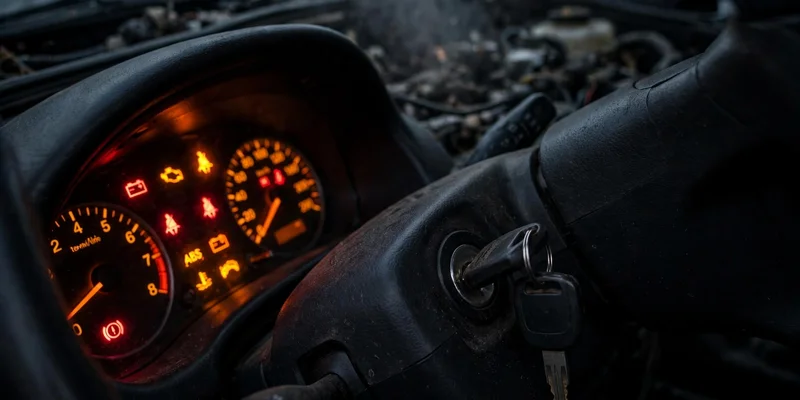
A car cranks but does not start when a failed fuel pump sends no gas to the engine.
Listen for the pump first. A weak battery can sound the same way, so read how to tell if your car battery is bad before you buy parts.
- Cranks strong but never fires. The starter sounds normal and fast, yet the engine never catches. A 2018 Chevrolet Silverado in Dallas cranked for 10 seconds with no start, and the pump had failed at 112,000 miles.
- Starts, then dies in a few seconds. The car fires on the fuel left in the lines, then stalls when that fuel runs out. This pattern points to a pump that runs for a second and then stops.
A real example from a cold morning
Tom in Denver tried to start his 2015 Toyota Camry at 25 degrees Fahrenheit.
How can you test a fuel pump at home?
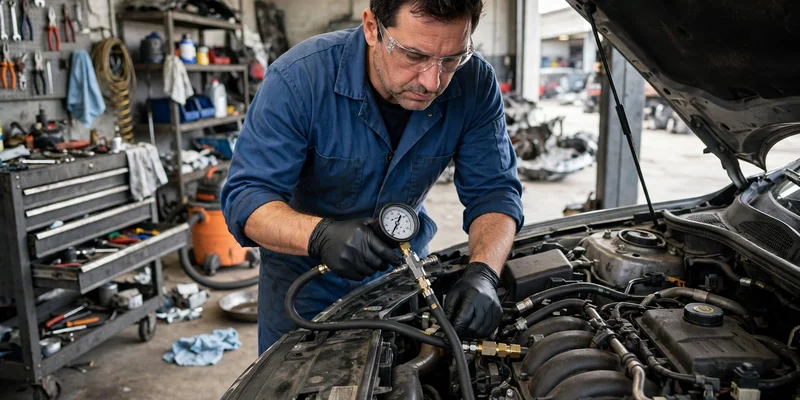
You can test a fuel pump at home with a fuel pressure gauge, a scan tool, and a listen test.
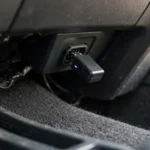
Rent a fuel pressure gauge kit at most US auto parts stores for about $40 to $60, often free with a deposit. An Autel diagnostic tool can also read fuel trim and misfire codes that point to a lean mix from low pressure. If the car smells like burning rubber after a stall, read our guide on car smells like burning rubber, and you can check transmission fluid at home before you blame the pump alone.
- Listen test: 2 to 3 seconds of hum. Turn the key to on and listen near the rear seat. A clear hum means the pump runs, while silence points to power, relay, or pump failure. Check the fuel pump fuse first, since a $5 fuse can look like a $700 pump.
- Pressure test: hold the reading. A good pump holds pressure for 5 to 10 minutes after key-off. A fast drop points to a bad check valve in the pump, and the car will crank longer on the next start.
A real example from a home garage
Mark in Austin, Texas, rented a gauge for his 2019 Nissan Altima and saw 32 psi at idle, well below the 50 psi his manual lists.
Can you drive with a bad fuel pump?
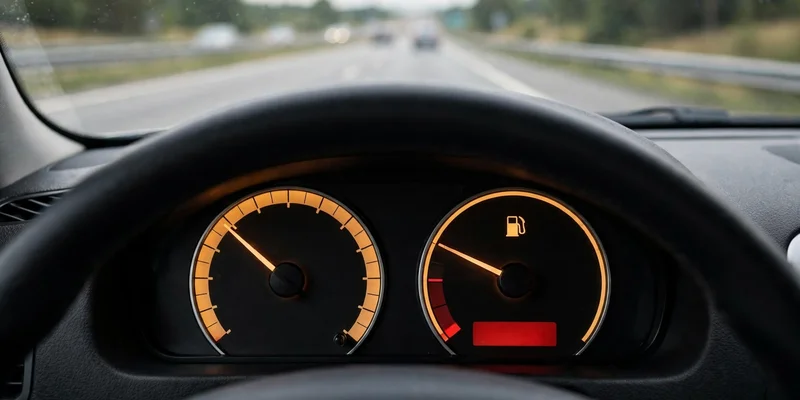
You can drive a short distance with a weak fuel pump, but you should not keep driving it for days.
Short trips to a nearby shop are often fine if the car starts well and holds speed.
- Drive only to the shop if the car runs steady. A 2016 Hyundai Sonata in Atlanta drove 8 miles to a shop with mild surging, and the driver kept speed under 45 miles per hour. That short, slow trip kept the risk low.
- Stop driving if it stalls more than once. A second stall means the pump is close to dead, and the next stall may come at 65 miles per hour. Call a tow truck, which costs $75 to $150, far less than a crash.
A real example from a commute
Sara in Chicago drove her 2018 Jeep Cherokee to work after one stall, and it died again on a busy road at 5 p.m.
How much does it cost to replace a fuel pump in 2026?
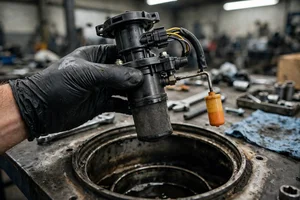
A fuel pump replacement costs $500 to $1,100 for most cars in 2026, and $900 to $1,800 for luxury cars and trucks with a pump inside a hard to reach tank.
Access sets the price. Worn plugs can also cause misfires, so compare your signs with how often you should replace spark plugs before you approve extra work.
- Parts: $200 to $600 for most cars. A pump module for a 2019 Honda Civic costs about $280, while a module for a 2020 BMW 330i costs about $520. Cheap pumps near $120 often fail in under a year.
- Labor: $250 to $500 for most cars. Shops charge $120 to $180 per hour in most US cities in 2026. A Civic job takes about 2.5 hours, while a truck with a dropped tank can take 5 hours.
A real example from a shop quote
James in Atlanta got three quotes for his 2016 Ford F-150.
What causes a fuel pump to fail early?
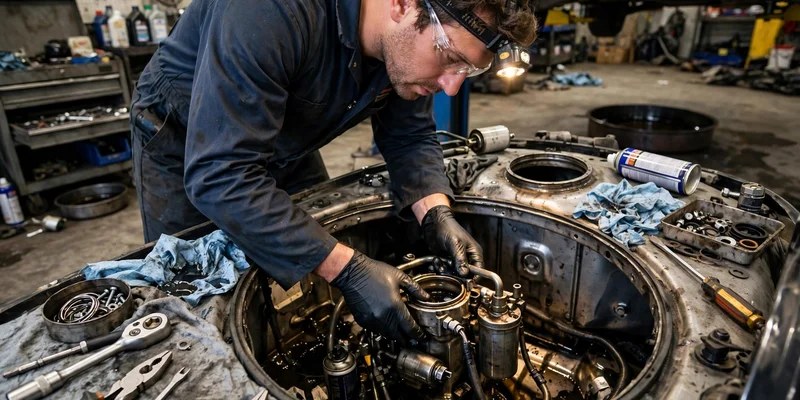
A fuel pump fails early from low fuel levels, dirty fuel, a clogged filter, heat, and age.
Fuel cools and lubes the pump, so a tank below a quarter full leaves the pump hot and dry. A bad catalytic converter can also follow long misfires, so fix a weak pump before it strains the rest of the engine. A bad alternator can cut power to the pump too, so check how to tell if your alternator is bad if the pump loses power at random.
- Low fuel: keep the tank above a quarter full. A driver who runs to empty every week can cut pump life by 30,000 miles or more. Fill up at a quarter tank, and the pump stays cool.
- Dirty fuel: use busy, well kept stations. A station with old tanks can pass dirt and water into your tank. A 2014 Chevrolet Malibu in Cleveland needed a pump at 78,000 miles after years of fuel from a rundown station.
A real example from a low fuel habit
Karen in Miami ran her 2017 Nissan Rogue to empty twice a month for 3 years.
Frequently Asked Questions
What are the first signs of a bad fuel pump?
The first signs are a loud whine from the rear, hard starts, and sputtering at highway speed. The car may lose power on hills or when you pass, and it may stall after it warms up. These signs often grow worse over 1 to 2 weeks before the pump fails for good.
How long do fuel pumps last in miles?
Most fuel pumps last 100,000 to 200,000 miles, based on the car, fuel quality, and driving habits. Pumps that run with a full tank often last longer, while pumps that run near empty often fail near 90,000 miles. Age and heat matter as much as miles.
Can a bad fuel pump cause a check engine light?
Yes, a bad fuel pump can cause a check engine light, since low fuel pressure makes the engine run lean and misfire. Codes P0087 for low fuel rail pressure and P0171 for a lean mix are common. A scan tool can read the codes in minutes.
How do I know if it is the fuel pump or the fuel filter?
A clogged filter causes the same low pressure as a weak pump, so test the pressure first. If pressure is low at the rail and stays low after a new filter, the pump is the fault. Many modern cars hide the filter in the pump module, so both parts get replaced together.
What does a bad fuel pump sound like?
A bad fuel pump sounds like a loud, high pitched whine or buzz from the rear of the car, near the fuel tank. A soft hum for 2 to 3 seconds at key-on is normal. A whine that grows louder with speed or load points to a worn pump motor that needs a check soon.
Can a bad fuel pump drain the battery?
A bad fuel pump does not drain the battery on its own, but long cranking with no start can wear the battery down fast. Each failed start pulls power for 10 to 15 seconds. Fix the pump soon, and charge the battery if starts grow slow.
How much does a fuel pump replacement cost in 2026?
A fuel pump replacement costs $500 to $1,100 for most cars in 2026, with parts at $200 to $600 and labor at $250 to $500. Trucks and luxury cars can reach $900 to $1,800 when the tank must drop. Get three quotes, since dealer prices often run $300 higher.
Is it safe to drive with a bad fuel pump?
It is safe to drive a short distance to a shop if the car runs steady, but it is not safe to keep driving for days. A failing pump can stall at highway speed without warning. If the car stalls twice, call a tow truck instead of risking another trip.
Conclusion
So, in this article, we covered signs of a bad fuel pump in detail. You now know the main signs, from sputtering and power loss to a loud whine and hard starts, and you know how a simple pressure test can confirm the fault in minutes. You also know the 2026 cost range, why low fuel shortens pump life, and when to stop driving and call a tow. Keep your tank above a quarter full, listen for a change in the pump hum, and act fast when the car stalls once. That quick response can save you a tow bill, a dead car in traffic, and a much larger repair down the road. Book the repair this week, and do not wait for a second stall to force the choice.