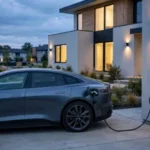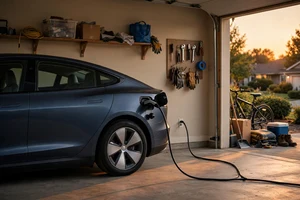
Yes, you can charge an electric car with a regular outlet. Level 1 charging uses a standard 120 volt household outlet and adds 2 to 5 miles of range per hour, so a full charge can take 24 to 50 hours. It works well for short daily drives. We cover speed, safety, cost, and the Level 2 upgrade.
You just brought home your first electric car, and the dealer hands you a charging cable with a normal plug. Can you charge an electric car with a regular outlet instead of paying an electrician to install a wall charger? The short answer is yes, and millions of EV owners do exactly that. Every new EV in the US comes with a portable cable that plugs into a standard 120 volt outlet. The catch is speed. A regular outlet adds only 2 to 5 miles of range per hour, so it takes a full day to fill a big battery. That sounds slow, but most drivers only drive 30 to 40 miles a day. Below, you will learn how it works, what it costs, and when a Level 2 charger pays for itself.
Can you charge an electric car with a regular outlet?
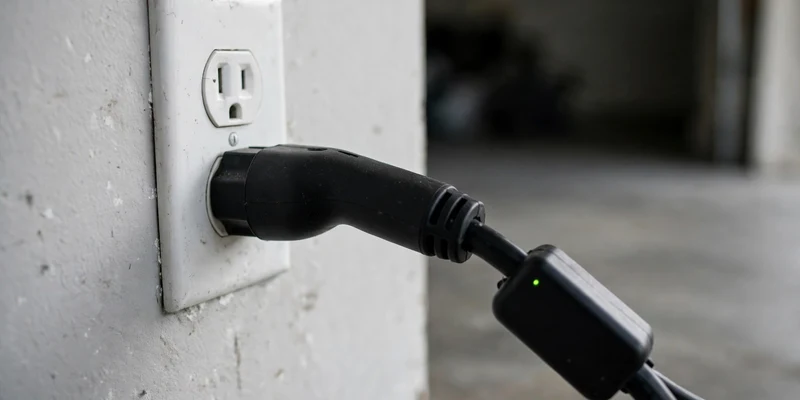
Yes. Every electric car sold in the US can charge from a standard 120 volt household outlet with the portable Level 1 cable that comes with the car. Plug one end into the wall and the other into the car, and charging starts right away.
This is called Level 1 charging, the slowest way to charge an EV. Our guide on what an electric vehicle is explains the basics.
- Your car already knows how to use it. Every EV on sale in the US accepts 120 volt charging, and a Tesla uses a small adapter.
- No electrician visit is needed to start. Drive home and plug in the same night, as one new Equinox EV owner in Ohio did for three months.
- It works anywhere with a grounded outlet. A garage outlet is best, but a driveway outlet works too, and the cable runs 18 to 25 feet.
How fast does a regular outlet charge an electric car?

A regular outlet adds 2 to 5 miles of range per hour, so a full charge takes 24 to 50 hours or more, based on battery size.
| EV | Battery size | Full charge on a regular outlet |
|---|---|---|
| Tesla Model 3 | 60 kWh | About 45 to 50 hours |
| Ford F-150 Lightning | 98 kWh | About 70 to 80 hours |
You rarely charge from empty. Most days you top up the 30 to 40 miles you drove, which takes 8 to 12 hours overnight. For a full breakdown, see our guide on how long it takes to charge an electric car at home.
- Small batteries fill faster. A 40 kWh Nissan Leaf fills in about 30 to 35 hours, while a big truck battery needs three days or more.
- Cold weather slows it further. In freezing weather, part of the power warms the battery, so you may gain only 2 miles per hour. See why electric cars lose range in winter for tips.
What outlet and circuit do you need to charge an electric car safely?
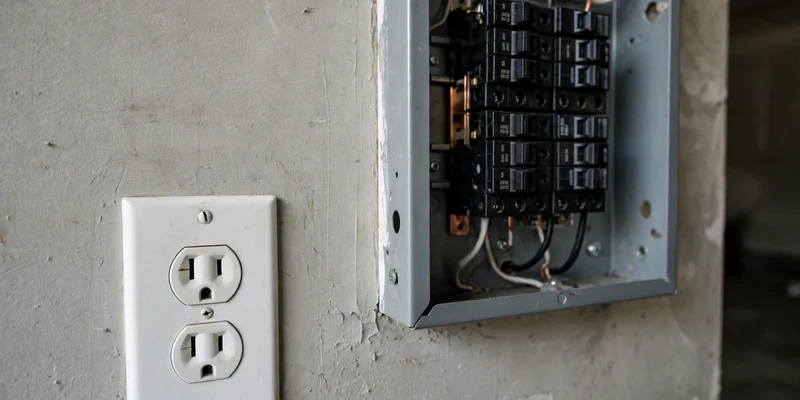
You need a grounded three prong 120 volt outlet on a dedicated 15 amp or 20 amp circuit, with GFCI protection, and no extension cord. That setup is safe for hours of steady charging, night after night.
Your outlet and circuit checklist
- Use a dedicated circuit. The charger should be the only load on its circuit, so ask an electrician to split it if the breaker trips.
- Check that the outlet is grounded and in good shape. If the outlet is loose, cracked, or warm, stop using it and call an electrician.
- Never use a regular extension cord. A thin cord can overheat under 12 amps for hours. A homeowner in Texas learned this when a worn outlet melted his charging plug, a $180 repair.
How much does it cost to charge an electric car with a regular outlet?

Charging on a regular outlet costs the same per kilowatt hour as any other home charging, about 17 cents per kWh on average in the US in 2026, so a full 60 kWh charge costs about $10.
For a full monthly breakdown, see our guide on how much it costs to charge an electric car at home per month.
- A full charge costs $7 to $13 for most cars. A 40 kWh Leaf costs about $7, while a 75 kWh Tesla Model Y costs about $13.
- A month of driving costs $40 to $60. Driving 1,000 miles a month uses about 280 to 300 kWh, which costs about $50 at 17 cents per kWh.
- Your rate depends on where you live. Hawaii pays over 40 cents per kWh, while Washington and Idaho pay under 11 cents, so check your electric bill.
When does a regular outlet work, and when should you upgrade to Level 2?
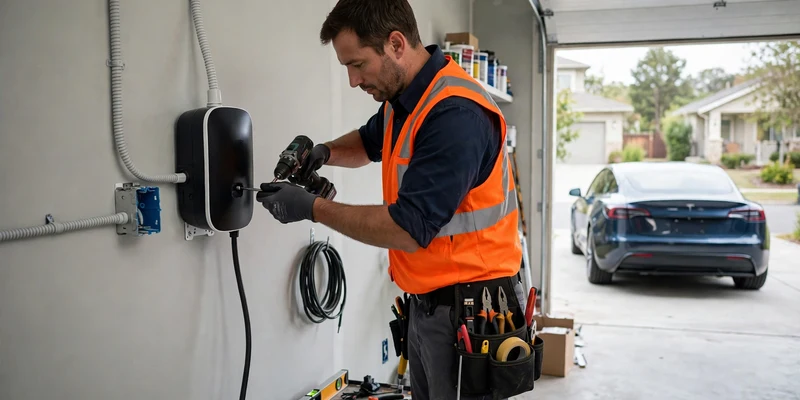
A regular outlet works when you drive under 40 miles a day and can plug in overnight. Upgrade to Level 2 if you drive more or need a fast turnaround.
- You drive more than 50 miles a day. At 3 miles per hour, you need 17 hours to replace 50 miles, which leaves no slack for a second trip.
- Two EVs share one outlet. Two cars cannot both fill up overnight on one 120 volt circuit, but a Level 2 charger clears the queue by morning.
- A Level 2 charger costs $1,200 to $2,200 installed. The 30C home charger credit ended June 30, 2026, and the federal EV tax credit ended for vehicles acquired after September 30, 2025.
- Check what is left before you buy. Our guide on the electric car tax credit in 2026 covers the state rebates that remain, and the car loan interest deduction for 2026 may still help if you bought with a loan.
Is it safe to charge your electric car with a regular outlet every day?
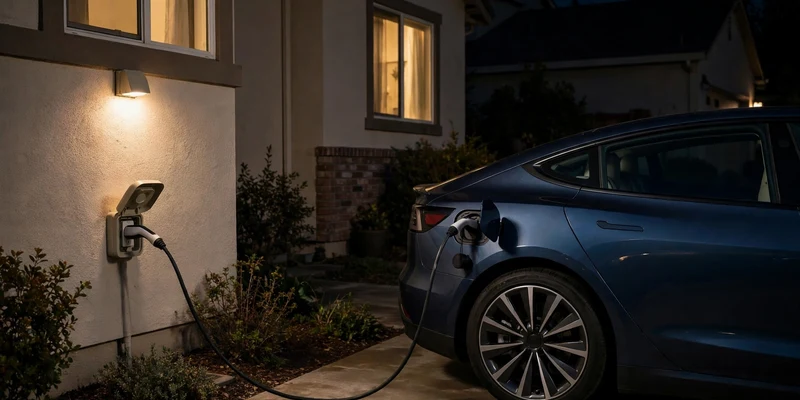
Yes, daily Level 1 charging is safe when your outlet and wiring are in good shape. The low power puts less stress on the battery and the circuit than faster charging.
Slow charging is also kind to your battery. Level 1 adds power gently, so the battery stays cool and ages slower than with frequent fast charging. Our guide on how long electric car batteries last covers what wears a battery down.
- Check the plug once a week. Warm is normal, hot is not. A hot plug means a loose outlet that needs replacing.
- Keep the cable dry and off the ground. Rain is fine, since the cable and connector are sealed, but do not let the cable sit in a puddle.
- Your 12 volt battery matters too. The big battery charges the small 12 volt battery that runs your lights and locks. If the car struggles to wake up, check the signs your car battery is bad first.
Frequently Asked Questions
Can you charge an electric car with a regular outlet at home?
Yes, you can charge an electric car with a regular outlet at home. Plug the portable Level 1 cable into a grounded 120 volt outlet. It adds 2 to 5 miles of range per hour, so it suits drivers who drive under 40 miles a day.
How many miles of range does a regular outlet add per hour?
A regular outlet adds 2 to 5 miles of range per hour, based on your car and the weather. Most EVs gain about 3 to 4 miles per hour. Small cars gain more, while big trucks and cold weather cut the rate to about 2 miles per hour.
How long does it take to fully charge an EV on a regular outlet?
A full charge on a regular outlet takes 24 to 50 hours or more, based on battery size. A small 40 kWh battery needs about 30 hours, while a large 98 kWh truck battery needs about 70 hours. Most owners top up 30 to 40 miles overnight in 8 to 12 hours.
Can you charge an electric car with a regular outlet overnight?
Yes, it is safe to charge an electric car with a regular outlet overnight when the outlet is in good shape. Use a grounded outlet on a dedicated circuit, skip the extension cord, and check that the plug stays cool.
Do you need a special outlet to charge an electric car at home?
No, you do not need a special outlet to charge an electric car at home with Level 1 charging. A standard grounded 120 volt outlet works fine. Level 2 charging needs a 240 volt outlet like a NEMA 14-50 and a dedicated 40 to 50 amp circuit.
Can you use an extension cord to charge an electric car?
No, you should not use a regular extension cord to charge an electric car. A thin cord can overheat, melt, and start a fire when it carries 12 amps for hours. If the cable cannot reach, park closer or have an electrician add an outlet near your parking spot.
How much does it cost to charge an electric car with a regular outlet?
Charging an electric car with a regular outlet costs about 17 cents per kWh in the US in 2026. A full 60 kWh charge costs about $10, and a month of driving 1,000 miles costs about $48 to $51. Your exact cost depends on your local electric rate.
Should I upgrade to a Level 2 charger?
Upgrade to a Level 2 charger if you drive more than 50 miles a day, share one outlet between two EVs, or often come home with a nearly empty battery. A Level 2 charger adds 25 to 40 miles per hour and costs $1,200 to $2,200 installed.
Conclusion
So, in this article, we covered can you charge an electric car with a regular outlet in detail. You now know that a standard 120 volt outlet adds 2 to 5 miles of range per hour, that a full charge can take 24 to 50 hours, and that it costs about $10 to fill a 60 kWh battery. You also know what makes it safe and when it stops being enough. My take is this: if you drive under 40 miles a day, a regular outlet is all you need, and you can skip the $1,200 to $2,200 Level 2 install for now. If you drive more or share the outlet, upgrade. Share this guide with a friend who just bought an EV.