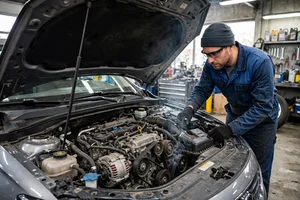
A burning rubber smell in your car most often points to a slipping belt, a stuck brake caliper, leaking oil on a hot exhaust, or a worn clutch. This guide explains each cause, the US repair costs for 2026, and the warning signs that mean you should pull over. It also covers checks you can do at home.
You notice it the second you step out of the car. That sharp smell of burning rubber hangs in the air, and your first thought is simple. Why does my car smell like burning rubber, and is something about to break? Do not ignore it. The smell is your car telling you that rubber, oil, or a brake part is getting too hot, and the cause can range from a $25 belt fix to a brake fire risk. Most drivers first notice it after a hard drive or a long stop in traffic. The heat builds up, rubber starts to scorch, and the smell drifts into the cabin through the vents. This guide covers the five main causes, how to tell them apart, what each repair costs in the US in 2026, and when you must pull over.
What causes a burning rubber smell in a car?
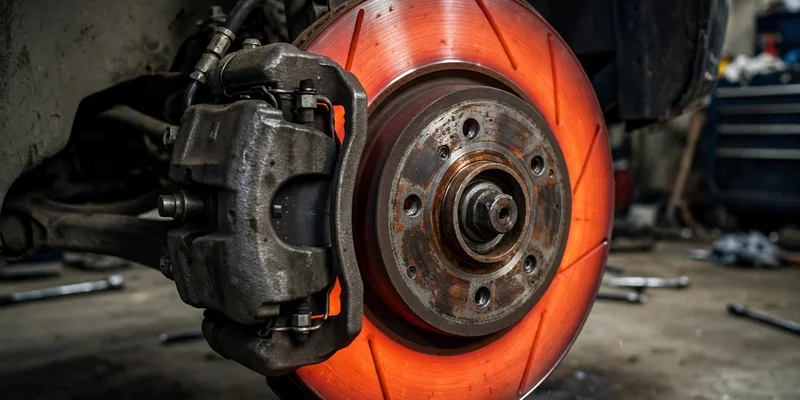
Five things cause most burning rubber smells: a slipping belt, a stuck brake caliper, oil leaking onto a hot exhaust, a worn clutch, and a hose touching a hot part. A belt or brake fault is the most common cause on cars under 10 years old.
Each cause leaves its own clue. A belt squeals, a stuck brake pulls the car to one side, and an oil leak leaves dark spots under the car.
The top causes
- A slipping serpentine belt rubs against the pulleys and heats up fast. The belt drives the alternator and the air conditioning, so a slip can dim your lights.
- A stuck brake caliper keeps the brake pad pressed on the rotor. The pad cooks at over 500 degrees Fahrenheit. A driver in Texas found this when his car pulled left and one front wheel was too hot to touch.
Why does my car smell like burning rubber after driving?
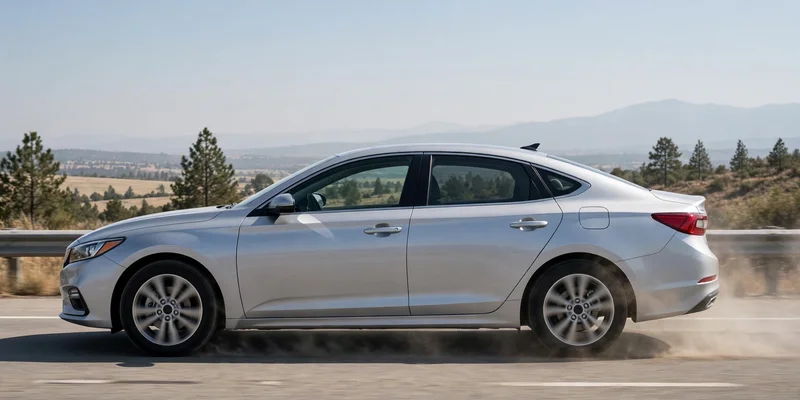
Heat is why the smell shows up after a drive. Belts, brakes, and exhaust parts get hotter as you drive, and rubber starts to scorch past about 400 degrees Fahrenheit.
A 30 minute highway run, a mountain climb, or stop and go summer traffic pushes parts past that point. Short trips rarely cause the smell.
Why the smell is stronger when you stop
- Airflow hides the smell while you drive at speed. Fresh air rushes past the engine, so you only notice the smell when you park.
- Brakes stay hot for 20 to 30 minutes after you park. A dragging caliper keeps heating the pad, and the smell peaks just after you stop.
If the smell shows up with a check engine light, the fault may sit in the engine. A bad sensor can make it run rich, so read our guide on bad oxygen sensor symptoms before you book a repair.
Can a slipping serpentine belt cause a burning rubber smell?
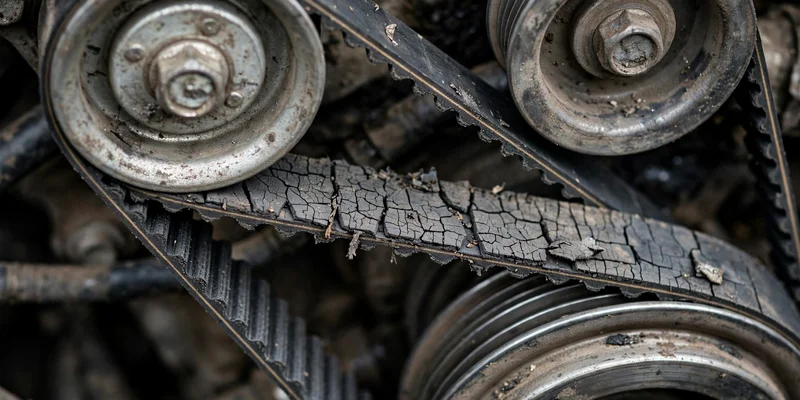
Yes, a slipping serpentine belt is one of the top causes. It rubs on the pulleys instead of gripping them, and the friction cooks the rubber in minutes.
You will hear it before you smell it. A worn belt squeals on a cold start or with the air conditioning on, and cracks or a belt past 60,000 to 100,000 miles point to the same fault.
How a belt fails
- A weak tensioner lets the belt slip under load. The spring weakens with age, so the belt slips most with the air conditioning on.
- Oil or coolant on the belt makes it slip and wear fast. A small leak can soak the belt. A driver in Ohio traced his smell to a $12 hose clamp dripping coolant on the belt.
Electric cars have no serpentine belt, so the smell has a different cause there. If you drive an EV, read our guide on what is an electric vehicle to see how EV parts differ.
Is it safe to drive when your car smells like burning rubber?
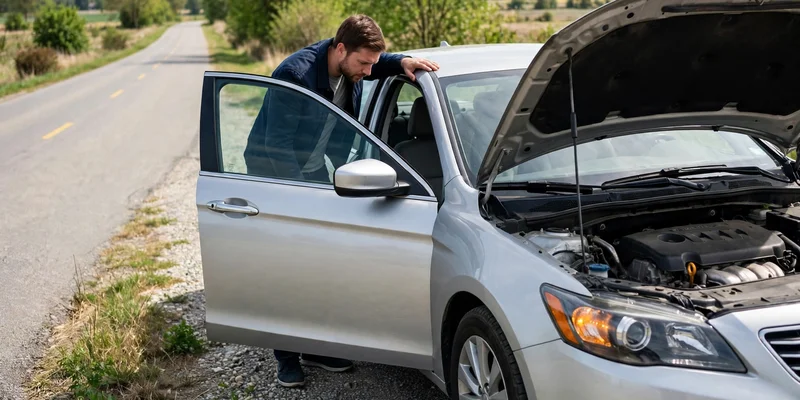
No, it is not safe to keep driving if the smell is strong, if you see smoke, or if a warning light is on. Pull over somewhere safe and switch the engine off.
A mild smell with no smoke, no warning light, and normal gauges can mean a short, slow drive to a shop. A stuck brake can catch fire, and a broken belt can kill the power steering.
Stop right away if you see these signs
- Smoke from under the hood or from a wheel means stop now. Smoke shows something is already hot enough to burn. Call a tow truck instead.
- A soft brake pedal or a car that pulls hard to one side means stop now. Your stopping distance can double with a brake fault. A driver in Florida warped a $180 rotor into scrap by driving on with a pulling brake.
Our guide on a car makes clicking noise when turning shows how a road test points to the faulty part.
How much does it cost to fix a burning rubber smell?
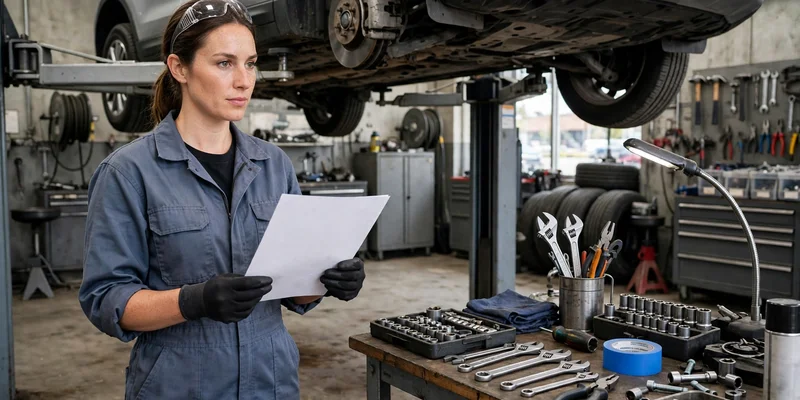
Most fixes cost $150 to $600 in the US in 2026, while a clutch job costs $1,200 to $2,500.
Most US shops charge $100 to $180 per hour in 2026, so a belt job stays cheap while a 6 hour clutch job gets costly fast.
Typical US repair costs in 2026
- Serpentine belt replacement costs $150 to $400, and the belt itself is $25 to $75. The job takes about one hour.
- A stuck brake caliper costs $300 to $600 per wheel, with pads and a rotor on top. A full brake job on one axle runs $250 to $500.
- An oil leak onto the exhaust costs $150 to $600, based on the source. A valve cover gasket is cheapest, while a rear main seal can pass $1,000.
Our guide on the classic car vs antique car difference explains how age changes a car, and our guide on the auto repair shop profit margin shows why rates differ between shops.
How do you find and fix a burning rubber smell at home?
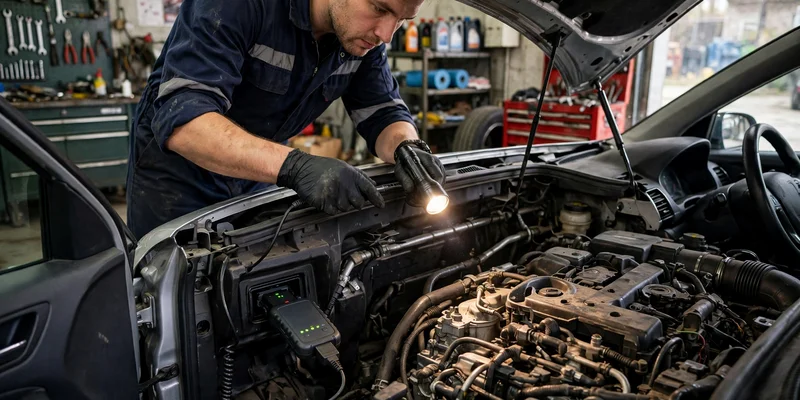
Start with your nose, your eyes, and your hands. Sniff near each wheel and under the hood, and look for cracks and leaks.
Do these checks only when the engine is off and cool. Never touch a hot exhaust or brake rotor.
A simple 15 minute check
- Look at the serpentine belt with a flashlight for cracks and shine. Cracks across three or more ribs in one inch, or a shiny glazed surface, mean the belt is done. A driver in Michigan found his fault this way and paid $190 at a local shop.
- Check the oil level and look for dark drips under the car. Low oil with a burning smell points to a leak onto the exhaust. If the fluid is red and slick, read our guide to check transmission fluid at home first.
You can change a belt with tools and a manual, but leave brakes and clutches to a shop. An Autel diagnostic tool reads engine fault codes, and our guide on the cost to open auto repair shop shows what goes into shop rates.
Frequently Asked Questions
Why does my car smell like burning rubber when I accelerate?
A slipping belt or a worn clutch is the most common cause when you speed up. The belt slips under load, and a worn clutch slips when you ask for more power. Both faults cook rubber fast, so have them checked if the smell grows.
Can low oil cause a burning rubber smell?
Low oil alone does not smell like rubber, but an oil leak does. Oil that drips onto a hot exhaust manifold burns off and smells sharp, and many drivers call it a rubber smell. Check the oil level and fix the leak first.
Why does my car smell like burning rubber after new brakes?
New brake pads smell for the first 200 miles while the pad surface beds in, and that smell is normal. A strong smell past 200 miles points to a stuck caliper or a pad fitted wrong. Go back to the shop and ask them to check the caliper.
How long can you drive with a burning rubber smell?
Drive only a few miles, at low speed, to the nearest shop. A stuck brake can catch fire, a belt can snap, and a clutch can fail with no warning. If you see smoke or a warning light, stop somewhere safe and call a tow truck.
Does a burning rubber smell mean my clutch is bad?
It can mean the clutch is worn, but it is not proof on its own. A clutch smells worst when you pull away or climb a hill, and a slipping clutch makes revs rise with no extra speed. A belt or brake fault can smell the same.
Why does my car smell like burning rubber with no smoke?
Rubber starts to scorch before it starts to smoke, so a mild fault can smell strong with no smoke. A slipping belt, a dragging brake, or a small oil drip can smell bad while the car looks fine. Find the cause fast.
Can an oil leak cause a burning rubber smell?
Yes, an oil leak is a common cause. Oil from a valve cover or a gasket drips onto the exhaust manifold, which runs at 600 to 900 degrees Fahrenheit. The oil burns off at once, and the smell drifts into the cabin when you stop.
What should I do first when my car smells like burning rubber?
Pull over somewhere safe, switch the engine off, and let the car cool for 30 minutes. Then check for smoke, feel each wheel for heat, and look at the belt. If you see smoke or a warning light, call a tow truck.
Conclusion
So, in this article, we covered why does my car smell like burning rubber in detail. You now know the five main causes, from a slipping belt to a stuck brake caliper, an oil leak, and a worn clutch. You also know the US repair costs for 2026, the warning signs that mean you must stop, and the simple checks you can do at home. My advice is plain: do not drive on and hope the smell fades, since a $190 belt job can turn into a $2,500 clutch job. Check the belt, the wheels, and the oil level today, then book a shop if the smell comes back. Share this guide with a friend who drives an older car.