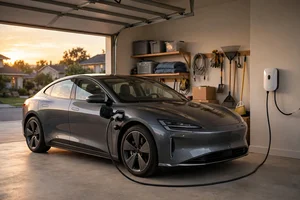
Most US drivers can fully charge an electric car at home overnight with a Level 2 charger, in about 6 to 12 hours. A standard 120V outlet adds only 3 to 5 miles of range per hour, so a full charge can take more than a day. This guide covers charging times, Level 1 and Level 2 speeds, home charging costs, and habits that keep your battery healthy.
You plug in your car after dinner, go to bed, and wake up to a full battery. That is the promise of home charging, and for most US drivers it works exactly like that. But the real answer to how long does it take to charge an electric car at home depends on your outlet, your charger, and your battery. A standard wall outlet may add only 30 to 50 miles overnight, while a 240V Level 2 charger can fill most batteries as you sleep. Here is the thing: the charger you pick matters more than the car you drive. A bigger battery takes longer, cold weather slows things down, and the last 20 percent always charges slower than the first 80. In this guide, you will see real numbers for Level 1 and Level 2 charging, what a full charge costs, and how to set up a routine that fits your daily driving.
How long does it take to charge an electric car at home?
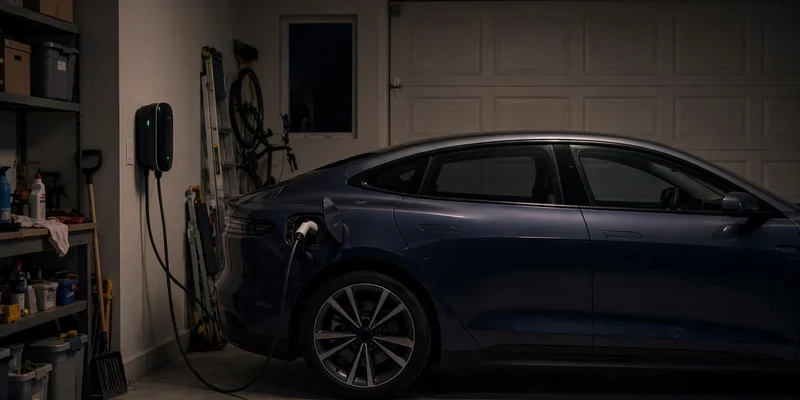
Most US drivers need 6 to 12 hours for a full charge at home with a Level 2 charger, while a standard 120V outlet can take 24 to 50 hours.
The time depends on three things: battery size, how much charge is left, and how much power your charger can deliver. A Tesla Model 3 with a 60 kWh battery charges far faster than a Ford F-150 Lightning with a 131 kWh battery. If you are new to EVs, start with what is an electric vehicle before you pick a charger.
Most drivers never charge from empty. The average US driver covers about 40 miles a day, so a normal overnight session only replaces 40 to 60 miles.
- Think in miles per hour, not just hours. A Level 2 charger adds 20 to 40 miles per hour, so divide the miles you need by your charger speed.
How fast is Level 1 charging at home?
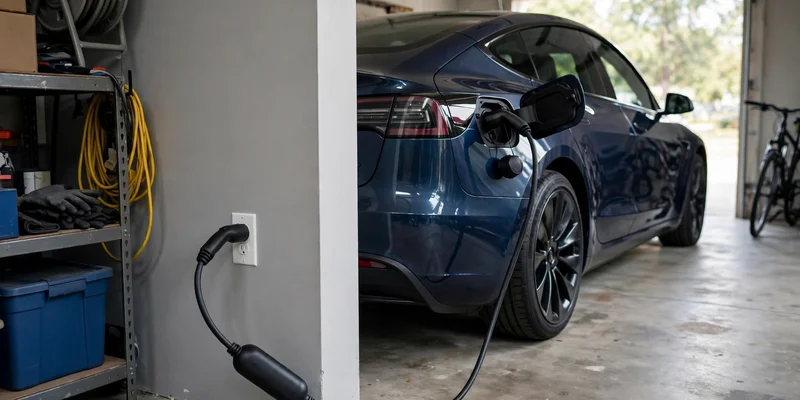
Level 1 charging adds 3 to 5 miles of range per hour, so an 8 hour overnight session gives you about 25 to 40 miles.
Level 1 uses the same 120V outlet you use for a lamp. Every EV sold in the US comes with a portable Level 1 cable, so you can charge on day one with no install cost.
Who Level 1 works for
- Short commutes under 30 miles a day. An 8 hour overnight charge adds 25 to 40 miles, which covers a short commute with room to spare.
- Plug in hybrid cars with small batteries. A Toyota RAV4 Prime has a battery near 18 kWh, so Level 1 can fill it in about 12 hours.
When Level 1 is too slow
- You drive more than 50 miles a day. At 3 to 5 miles per hour, a 10 hour charge adds at most 50 miles, so a long commute drains the battery a little more each day.
How fast is Level 2 charging at home?
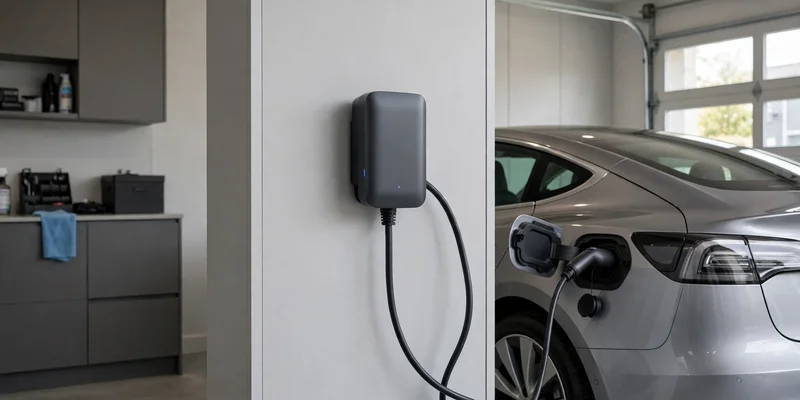
Level 2 charging adds 20 to 40 miles of range per hour, so most cars charge from empty to full in 6 to 12 hours.
Level 2 runs on 240V, the same voltage as a clothes dryer. Most home units deliver 7.2 kW to 11.5 kW.
A basic install runs $500 to $1,200 if your panel has space and the garage is close to it, while a long wire run or a panel upgrade can push the bill to $2,000 to $3,500. Get two or three quotes, since the auto repair shop profit margin on install jobs is one reason quotes differ.
One cost note matters for 2026: the federal EV tax credit ended for vehicles acquired after September 30, 2025, and the 30C home charger tax credit ended June 30, 2026. Check the electric car tax credit 2026 USA rules first.
How to pick the right Level 2 charger
- Match the charger to your car, not to the biggest number on the box. A 40 amp charger covers nearly every car on the road.
What affects how long home charging takes?
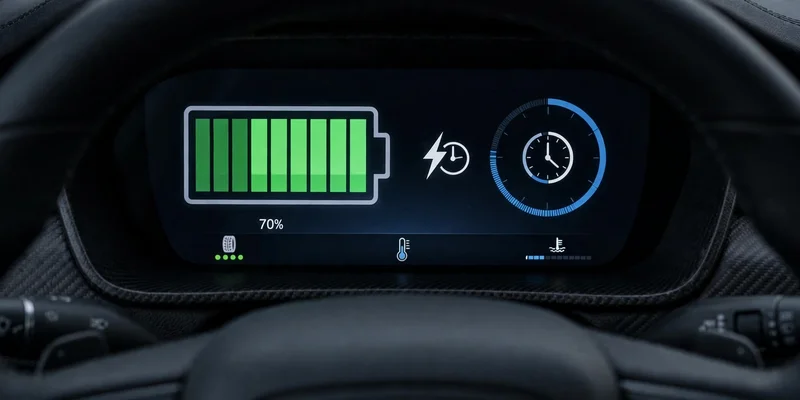
Battery size, starting charge level, charger power, and temperature have the biggest effect on home charging time.
A bigger battery holds more energy, so it needs more time on the same charger. A 40 kWh Nissan Leaf fills in half the time of an 80 kWh Tesla Model Y.
Temperature is the factor most new owners miss. A car parked outside in 20 degree weather can take 30 to 40 percent longer to charge than the same car in a warm garage. See how electric cars lose range in winter so you can plan for cold months. Cold also drains a stored gas car battery, so if you store a classic car for winter, use a trickle charger.
Two things that slow charging down
- Your car has a built in limit. The onboard charger caps the power it can take, so a 7.2 kW car gains nothing from a bigger charger.
- A weak battery charges slower than a healthy one. If your car charges far slower than it used to, a shop can check it with an Autel diagnostic tool.
How much does it cost to charge an electric car at home?
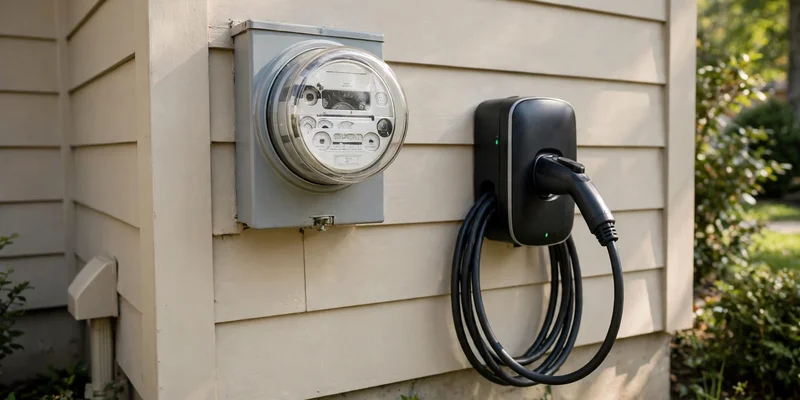
A full home charge costs about $9 to $14 for a 75 kWh battery at the US average rate of 16 cents per kWh.
The US average home rate sits near 16 cents per kWh in 2026, though it ranges from 11 cents in Washington to over 30 cents in Hawaii. Your cost is simple math: battery size times your rate. A 60 kWh charge costs $9.60, while a 100 kWh charge costs $16.
Home charging beats gas by a wide margin. An EV that goes 3.5 miles per kWh costs about 4.6 cents per mile, while a gas car at 30 mpg and $3.50 per gallon costs about 11.7 cents per mile.
- Charge at night if your utility offers off peak rates. Many utilities charge 8 to 12 cents per kWh after 11 p.m., which can cut a $12 charge to $7 or less.
- A loan changes the total cost of owning an EV, not the charging bill. If you bought your car with a loan, the car loan interest deduction 2026 rules may help with the loan cost.
Should you charge your electric car every night?
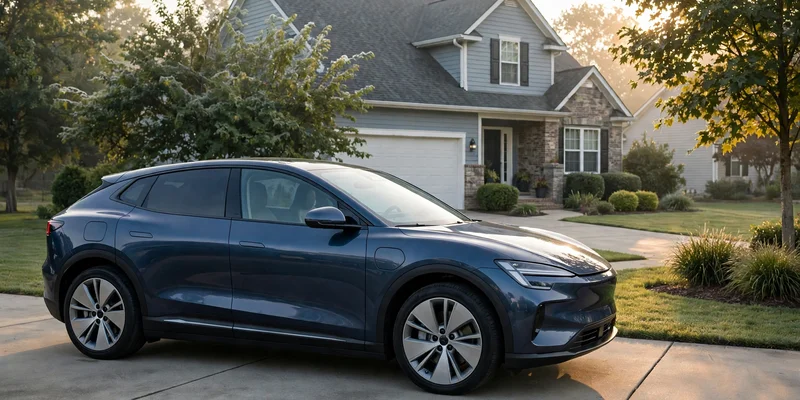
Yes, you can plug in every night. For daily driving, keep the battery between 20 and 80 percent.
Charging every night is the easiest habit you can build. You plug in when you get home, the car charges while you sleep, and you leave with a full battery. The system stops at your set limit, so you do not need to watch it.
The 20 to 80 percent rule protects long term battery health. Lithium batteries wear faster when they sit at 100 percent or near zero, so most owners set a daily limit of 80 percent.
A simple nightly routine that works
- Set your charge limit to 80 percent for daily use. Your car holds the setting, so you set it once.
- Charge to 100 percent only before a long trip. A full charge the night before is fine, since the battery will not sit full for long.
Drivers who start a car detailing business from home often charge overnight too.
Frequently Asked Questions
How long does it take to charge an electric car at home?
Most US drivers need 6 to 12 hours for a full charge at home with a Level 2 charger. A standard 120V outlet takes 24 to 50 hours for the same charge. Your real time depends on battery size and temperature.
Is Level 1 charging enough for daily driving?
Level 1 works if you drive under 30 miles a day, since an 8 hour overnight charge adds 25 to 40 miles. It falls short for long commutes and cold winters, so most drivers add a Level 2 charger within a month.
How long does it take to charge an electric car at home with a Level 2 charger?
A Level 2 charger adds 20 to 40 miles of range per hour, so most cars charge from empty to full in 6 to 12 hours. A 60 kWh battery takes about 7 to 9 hours, while a 100 kWh battery takes about 11 to 14.
How much does it cost to charge an electric car at home?
A full charge for a 75 kWh battery costs about $9 to $14 at the US average rate of 16 cents per kWh, or about 4.6 cents per mile. A gas car at $3.50 per gallon costs about 11.7 cents per mile.
Can I charge my electric car with a normal outlet?
Yes, every EV sold in the US comes with a portable cable that plugs into a standard 120V outlet. It adds only 3 to 5 miles of range per hour, so it suits short commutes. Most owners switch to a 240V Level 2 charger.
Does cold weather slow down home charging?
Yes, cold weather can add 30 to 40 percent to your charging time, since a cold battery accepts power more slowly. A car parked in a warm garage charges faster than one left outside in 20 degree weather. Preconditioning the battery helps a lot.
Should I charge my electric car to 100 percent every night?
No, keep the battery between 20 and 80 percent for daily driving, since sitting at 100 percent wears it faster over time. Set your daily limit to 80 percent and charge to 100 percent only before a long road trip.
Do I need an electrician to install a Level 2 charger?
Yes, hire a licensed electrician to install a 240V circuit and a NEMA 14-50 outlet. The job costs $500 to $1,200 for a basic install, and more if your panel needs an upgrade. Never wire a 240V circuit yourself unless you are licensed.
Conclusion
So, in this article, we covered how long does it take to charge an electric car at home in detail. Most drivers need 6 to 12 hours on a Level 2 charger and far longer on a standard outlet, so the charger you pick shapes your whole routine. A Level 2 unit adds 20 to 40 miles per hour, costs about $9 to $14 for a full charge, and fills most cars overnight. Keep the battery between 20 and 80 percent, plug in each night, and charge to 100 percent only before a long trip. Pick the charger that fits your daily miles, check your local electricity rate, and you will wake up to a full battery every morning. Plug in tonight and let the car do the work.